


Listen to the article
Azerbaijani Media Agency Warns Against Social Media Disinformation Campaign
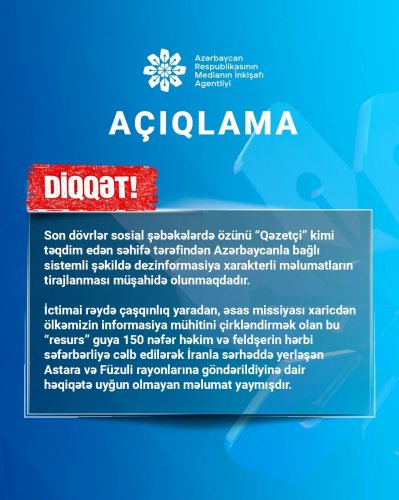
A social media page falsely identifying itself as “Qəzetçi” has been caught spreading disinformation about Azerbaijan in what officials describe as a deliberate attempt to sow confusion and contaminate the country’s information landscape from foreign sources.
According to a statement released by Azerbaijan’s MEDIA agency, the fraudulent page recently circulated fabricated claims that 150 doctors and paramedical staff had been mobilized for military service and deployed to the Astara and Fuzuli districts along the Iranian border. Officials have categorically denied these assertions.
“We strongly condemn such information provocations and declare that such disruptive activities entail legal liability,” the agency stated in its official response to the misinformation campaign.
The targeting of border regions with Iran for these false reports appears particularly calculated, as relations between Azerbaijan and Iran have experienced periodic tensions over the past several years. Security concerns along this border have been a sensitive issue for both nations, making it a prime target for information warfare.
This incident comes amid growing concerns about information security across the Caucasus region, where geopolitical interests frequently clash. Azerbaijan, which recently reclaimed territories in Karabakh after the 2020 conflict with Armenia, has been vigilant against attempts to destabilize its information space.
Media analysts suggest this type of disinformation could be designed to create anxiety about potential military escalation or to strain Azerbaijan’s relations with neighboring countries. The false claims about medical personnel mobilization could potentially trigger unwarranted public concern about imminent conflict or health system disruptions.
The MEDIA agency has urged all legitimate news organizations, journalists, and public figures to exercise caution and verify information through official channels before sharing content that might alarm the public. This call highlights the growing challenge of combating sophisticated disinformation campaigns that target specific vulnerabilities in regional politics.
“We call on all media outlets, journalists, and public activists to rely only on official sources in their activities and to refrain from sharing posts that may cause anxiety in society,” the agency emphasized in its statement.
Information security experts note that social media platforms have become increasingly important battlegrounds for influence operations worldwide, with state and non-state actors employing increasingly sophisticated tactics to manipulate public opinion. The ability to create convincing false personas and disseminate targeted misinformation represents a significant challenge for governments and media organizations alike.
Azerbaijan has been working to strengthen its information security frameworks since the 2020 Karabakh conflict, during which social media became a critical front in the information war between Azerbaijan and Armenia. The country has invested in media literacy programs and enhanced monitoring capabilities to counter foreign disinformation campaigns.
The MEDIA agency, which serves as Azerbaijan’s primary media regulatory body, has taken a more proactive stance in recent months, issuing regular advisories about information threats and working to promote responsible journalism practices.
Authorities have not yet disclosed whether they have identified the specific actors behind the “Qəzetçi” page or their potential motives. However, they have indicated that legal measures may be pursued against those responsible for spreading deliberate falsehoods that could undermine national security or public order.
As digital information threats continue to evolve, this incident serves as a reminder of the ongoing challenges facing media consumers and producers in distinguishing legitimate news from sophisticated disinformation.
Fact Checker
Verify the accuracy of this article using The Disinformation Commission analysis and real-time sources.

10 Comments
The claim about mobilizing medical staff for military service seems particularly egregious and callous, even for a disinformation campaign. I hope Azerbaijan is able to hold the perpetrators accountable through legal means.
While it’s concerning to see these types of information attacks, I’m encouraged that the Azerbaijani government is taking a firm, proactive stance. Swiftly debunking false claims and warning of legal consequences sends a clear message.
Agreed. A whole-of-government approach to identifying and addressing disinformation is essential. By maintaining vigilance and responding decisively, Azerbaijan can help safeguard its national interests and public trust.
This highlights the importance of having robust systems in place to quickly identify and debunk false claims, particularly those that could impact national security. Kudos to Azerbaijan for swiftly addressing this disinformation campaign.
I’m curious to know more about the specific foreign sources behind this disinformation campaign. Understanding the motivations and tactics of those seeking to undermine Azerbaijan’s information landscape could help improve the country’s defenses against such attacks.
Good point. Identifying the origins and drivers of these coordinated disinformation efforts is crucial for developing effective countermeasures. Transparency and international cooperation may be needed to effectively combat cross-border information warfare.
The targeting of border regions with Iran is concerning, as these areas tend to be sensitive flashpoints. Vigilance against foreign-backed disinformation efforts that could inflame tensions is prudent for the Azerbaijani government.
Absolutely. Azerbaijan needs to remain on high alert for attempts to weaponize information and destabilize the country, especially regarding its borders and regional relationships. Fact-checking and transparent communication will be key.
Glad to see Azerbaijan taking a strong stance against disinformation campaigns. Spreading false reports about military mobilization could create unnecessary tensions, so it’s important for the government to quickly address and debunk these claims.
Indeed, these types of information provocations seem designed to sow confusion and discord. Responsible journalism and transparent communication from officials are crucial to combat such malicious attempts to manipulate the public.