


Listen to the article
Azerbaijan and Kazakhstan have pledged to deepen cooperation in the media sector during high-level talks focused on combating disinformation and enhancing information security across the region.
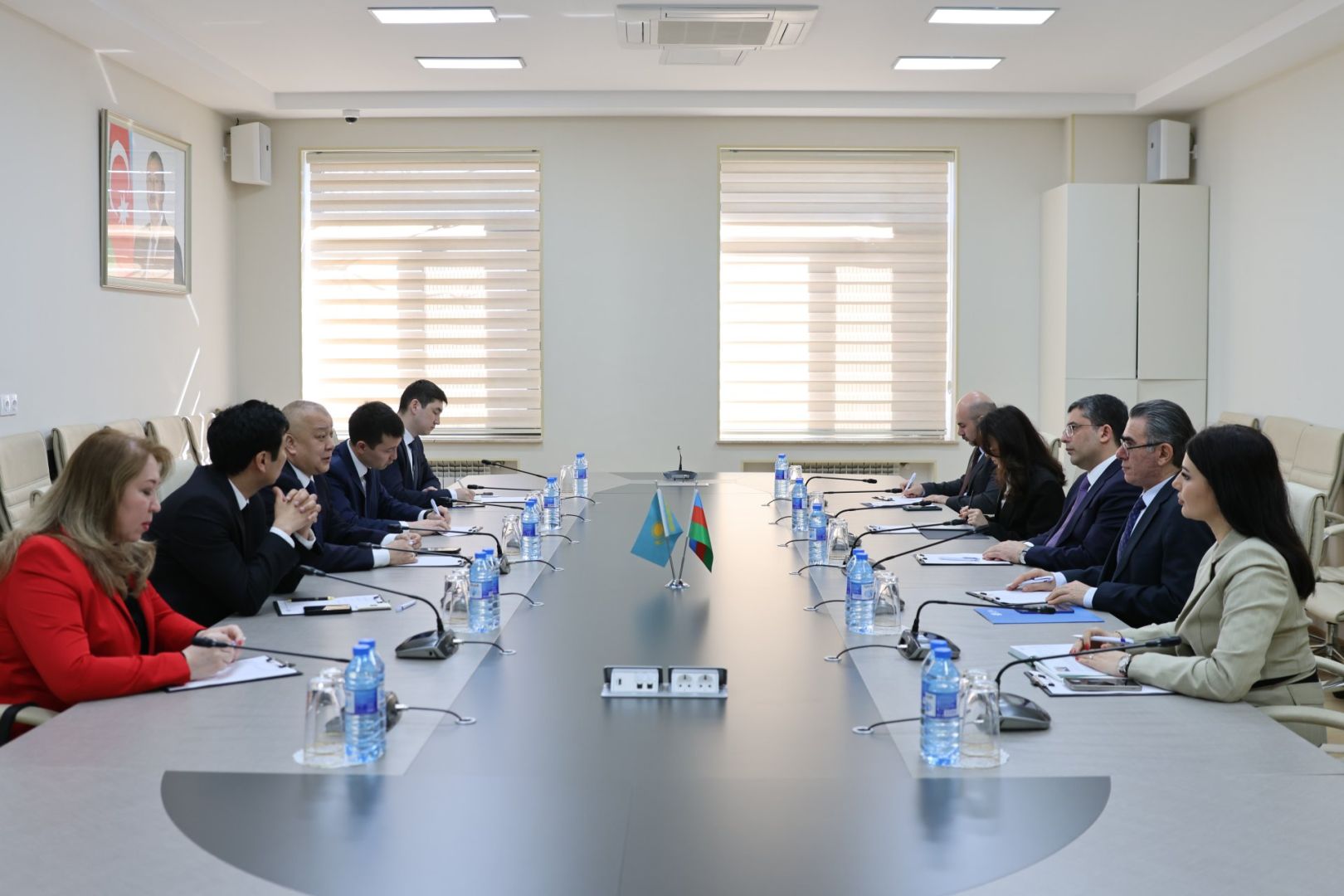
Representatives from both nations met on April 8 at Azerbaijan’s Media Development Agency (MEDIA), where they discussed shared challenges and opportunities in the rapidly evolving media landscape. The Kazakh delegation was led by Rustam Ali, Deputy Minister of Culture and Information.
During the discussions, MEDIA Executive Director Ahmad Ismayilov highlighted the strong foundation of friendship and partnership that continues to drive Azerbaijan-Kazakhstan relations. He emphasized that this solid bilateral relationship provides an ideal framework for expanding collaboration specifically in media development.
“Our countries face similar challenges in the information space,” Ismayilov noted during the talks. “By adopting advanced practices together and sharing expertise, we can better respond to these challenges while maintaining the integrity of our respective media environments.”
The meeting reflected growing concerns across Central Asia and the Caucasus region about the spread of misinformation and the need for more robust media literacy initiatives. Both sides acknowledged that strengthening cooperation could help address these issues while preserving independent journalism.
Deputy Minister Ali echoed these sentiments, stressing the importance of regular exchanges between media institutions from both countries. He proposed implementing joint projects specifically targeting the spread of false information, which has become increasingly problematic with the rise of social media platforms and digital news sources.
“In today’s interconnected world, misinformation doesn’t respect national boundaries,” Ali said. “Our collective response must be equally borderless and coordinated.”
The talks come at a time when both Azerbaijan and Kazakhstan are working to modernize their media sectors amid rapid technological change. Both nations have recently implemented reforms aimed at supporting traditional media organizations while adapting to digital transformation.
Alisher Askarovich Suleymenov, Advisor to Kazakhstan’s Minister of Foreign Affairs, who was also present at the meeting, underscored the significance of these efforts in the context of growing digitalization.
“The digital era presents both opportunities and risks for our information spaces,” Suleymenov remarked. “Coordinated actions between our countries can help build more secure and resilient media environments that serve our citizens with reliable information.”
The discussions also touched on potential joint training programs for journalists and media professionals, which could enhance reporting standards and promote ethical journalism across both countries.
Media cooperation between Azerbaijan and Kazakhstan has gained importance in recent years as both nations seek to diversify their economies and strengthen regional ties. As strategic partners in the Caspian region, they share interests in energy security, transportation corridors, and regional stability—all areas where accurate media coverage plays a critical role.
The meeting represents the latest step in growing cultural and information exchanges between the two Turkic nations, which have historical and linguistic connections stretching back centuries.
Before concluding, the officials agreed to establish a working group that will develop specific proposals for collaborative projects, including possible journalist exchange programs, joint media monitoring initiatives, and shared digital platforms for fact-checking and media literacy.
Both sides expressed optimism that enhanced cooperation in the media sphere would not only strengthen bilateral relations but also contribute to a more informed and resilient regional information environment.
Fact Checker
Verify the accuracy of this article using The Disinformation Commission analysis and real-time sources.

12 Comments
It’s good to see Azerbaijan and Kazakhstan taking proactive steps to enhance information security cooperation. Tackling disinformation requires a collaborative, multilateral approach.
Agreed. Sharing best practices and aligning policies can help the countries in this region develop more effective responses to the challenge of online misinformation.
This media partnership is an interesting development. Disinformation is a complex, cross-border issue, so regional coordination will be important for crafting effective solutions.
Definitely. Strengthening information integrity across the region can help build public resilience and trust in democratic institutions.
It’s encouraging to see these nations taking proactive steps to address shared disinformation challenges. A unified, regional approach could yield more effective solutions.
Agreed. Aligning media policies and response strategies across borders can help strengthen the resilience of democratic institutions and public trust.
Combating the spread of misinformation is a growing priority for countries in Central Asia and the Caucasus. This media partnership could set a positive example for others in the region.
Absolutely. Strengthening the integrity and resilience of media environments is critical for maintaining public trust and democratic discourse.
The discussions between Azerbaijan and Kazakhstan highlight the growing recognition that disinformation threats require a coordinated, multilateral response. Sharing expertise is a wise approach.
Yes, cooperation on media development and information security policies will be crucial for the countries in this region as they navigate the evolving digital landscape.
Interesting to see Azerbaijan and Kazakhstan working together to tackle disinformation challenges. Coordinating media policies across the region could help strengthen resilience against malign influence campaigns.
Yes, regional cooperation is crucial for addressing common information security concerns. Sharing best practices and expertise will be key.