


Listen to the article
Australia Faces “Proliferation” of Climate Misinformation, Senate Inquiry Warns
Australia is experiencing a dangerous spread of misinformation and disinformation about climate change and renewable energy, according to a comprehensive Senate inquiry report released on Wednesday. The report calls for a coordinated government approach to address what it describes as a growing threat to “information integrity” on these crucial issues.
“The integrity of Australia’s information ecosystem is threatened by a proliferation of misinformation and disinformation, which is polarising public discourse and eroding trust in science and knowledge institutions,” the report states.
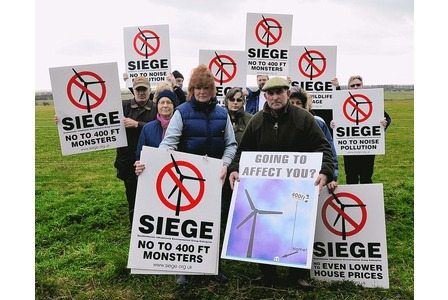
The inquiry, launched in July last year, examined how social media, artificial intelligence, and misleading claims are distorting public perceptions of climate change and renewable energy. Evidence presented to the committee revealed disturbing incidents of threats against landowners, harassment of bushfire victims, and sophisticated social media campaigns targeting community groups.
The report outlines 21 recommendations for the federal government to combat this problem, including increased funding for regional and independent journalism, monitoring of “dark money” influence operations, stronger regulatory powers to fight greenwashing, improved digital literacy education, and enhanced support for the Australian Energy Infrastructure Commissioner (AEIC).
This “whole-of-society” approach has earned praise from the Climate Action Against Disinformation (CAAD) coalition, which notes that Baltic states have successfully employed similar strategies against Russian propaganda.
“Countries like Finland and Estonia that have long been besieged by Russian propaganda have demonstrated how a ‘whole of society’ approach works to protect the public against deliberate campaigns of deception,” said Philip Newell, CAAD Communications co-chair. “Australia would be wise to pursue these recommendations quickly, and with full funding.”
Among the report’s more surprising recommendations is a call for updated research on potential health impacts from wind turbines, despite previous scientific findings. The National Health and Medical Research Council (NHMRC) has previously determined no consistent evidence links wind farms to health problems, and a 2021 Woolcock Institute study found that infrasound from wind turbines had no measurable health effects on participants.
The report also highlights concerns about artificial intelligence’s role in spreading what some witnesses called “AI slopaganda” – low-quality, AI-generated content that perpetuates misinformation. The committee pointed to an embarrassing incident involving the now-defunct Rainforest Reserves Australia, which was exposed for using AI to create fabricated citations in its submission.
To address this issue, the report recommends developing guidelines for disclosing AI use in submissions and implementing penalties for fraudulent contributions to planning applications and parliamentary inquiries.
Industry representatives warn that the deteriorating information environment is already affecting public attitudes toward renewable energy. William Churchill, Clean Energy Council chief policy officer, said: “Scare campaigns against renewable energy are preventing thousands of regional jobs and new economic opportunities. They weaken Australia’s energy resilience at a time when global political instability has only increased the case for renewables.”
Churchill emphasized that renewable energy represents both an economic and strategic opportunity for Australia. “Utilizing Australia’s abundance of sun and wind is not only in our national interest, it makes good economic sense, creating jobs, procurement from small businesses, and supporting regional councils and communities.”
The inquiry’s work faced opposition from three dissenting senators who argued that any attempt to regulate information amounts to censorship. Nationals senator Matt Canavan called the inquiry “an attempt to bully and cajole people into silence,” while One Nation’s Malcolm Roberts and United Australia Party’s Ralph Babet dismissed scientific consensus and characterized climate action as authoritarian overreach.
However, the committee’s final report explicitly recommended against heavy-handed approaches that might silence legitimate debate, instead urging “a nuanced approach that does not dismiss legitimate community concern or stifle public debate.”
As Australia grapples with energy transition challenges, the report suggests that addressing misinformation will be crucial to maintaining social cohesion and enabling evidence-based policy decisions in the years ahead.
Fact Checker
Verify the accuracy of this article using The Disinformation Commission analysis and real-time sources.

10 Comments
The proliferation of climate disinformation is troubling. Aggressive campaigns targeting community groups and even individuals are unacceptable. Robust fact-checking and media literacy efforts should be a priority.
This is a concerning issue that demands attention. Disinformation can have serious consequences, especially around crucial topics like climate change. Fact-based, transparent approaches are needed to address this problem.
The dangers of misinformation around climate change and renewable energy are made clear in this report. Urgent reform is needed to address this threat to informed public debate on critical issues.
Australia’s climate disinformation crisis is concerning. Polarized public discourse and eroded trust in scientific institutions are dangerous outcomes. Decisive action is required to protect information integrity.
This is a timely and important inquiry. Disinformation is a serious problem that warrants a comprehensive, government-led response to safeguard public understanding of climate science and energy policy.
The report’s findings on the proliferation of climate misinformation in Australia are concerning. Coordinated action to combat this trend and restore trust in institutions is clearly needed.
This Senate inquiry highlights an important problem that needs to be addressed. Threats, harassment, and sophisticated social media manipulation undermine public understanding of critical environmental issues.
Agreed, the report’s recommendations for increased funding and a coordinated government strategy seem like reasonable steps to combat the spread of disinformation in this domain.
Misinformation is a threat to public discourse and trust in important institutions. A coordinated government response is necessary to combat the spread of false claims, especially on complex issues like renewable energy.
I agree, misinformation can be particularly damaging in areas like climate science that have significant public policy implications. Proactive measures are needed to protect information integrity.