


Listen to the article
In a troubling development at the intersection of sports, politics, and digital misinformation, a network of Facebook pages has launched a coordinated campaign of false information targeting Australian tennis star Alex de Minaur and fabricating a non-existent feud with Prime Minister Anthony Albanese.
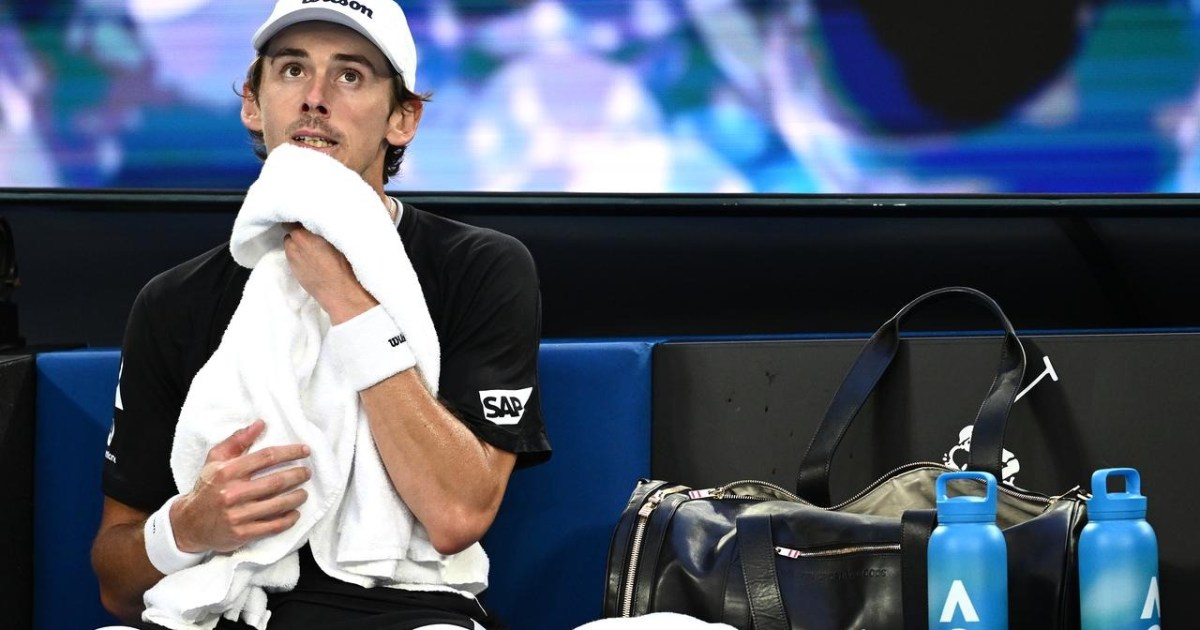
The disinformation operation, traced to Vietnam-based operators, has created numerous baseless claims about the 26-year-old tennis player, many appearing to be generated using artificial intelligence. These fabricated stories come as de Minaur competes in the Australian Open following his recent appearances at the United Cup tournaments in Perth and Sydney.
Digital media analysts have identified a consistent pattern in these posts: vague, sensational claims designed as clickbait to drive engagement by exploiting current news events and recognizable names. The network has demonstrated a tactical flexibility, previously focusing on Australian politics and the aftermath of the Bondi terror attack before shifting attention to tennis.
One particularly egregious post falsely claims that de Minaur lashed out after a United Cup defeat, alleging the match was unfair because Prime Minister Albanese supported his Polish opponent, Hubert Hurkacz. The fabricated quote reads: “Albanese manipulates the match because I defended the people and supported Mrs [Pauline] Hanson, it’s disgraceful that the most powerful person in Australia harms his own countrymen.”
The post further alleges that Albanese responded on social media by calling de Minaur “a mediocre player, loses but won’t accept it and blames others.” No evidence exists that either statement was ever made. Moreover, the post contains factual errors about the United Cup itself—de Minaur actually defeated Hurkacz in the quarter finals, though Australia was later eliminated when teammates lost subsequent matches against Poland.
Another fabricated narrative claims de Minaur accused the Prime Minister of influencing referees and called him a “coward” who “tried to harm me when I dared to stand up and expose his truth.” Additional posts falsely suggest de Minaur threatened to withdraw from the United Cup due to “political interference.”
The disinformation operation employs a sophisticated engagement strategy. Posts typically end with teasing statements like “a shocking statement was issued,” encouraging users to click links in the comments that lead to external websites containing more elaborate fabrications.
One Nation leader Pauline Hanson has also been drawn into these fabrications. Multiple posts falsely claim she defended de Minaur and criticized Albanese for using “despicable tricks” against the tennis star. The linked story fabricates quotes from a non-existent “late-night interview” where Hanson allegedly questioned why the Prime Minister would “harm the person who brings glory to Australia itself.”
Perhaps most disturbing is how the campaign has expanded to include de Minaur’s family. One post with the headline “DON’T YOU DARE TOUCH MY SON” falsely claims that Esther de Minaur “broke her silence” to defend her son against critics. The post features what appears to be an AI-generated image purporting to be de Minaur’s mother.
This coordinated disinformation campaign represents a concerning evolution in digital misinformation tactics, targeting a high-profile Australian athlete during a major tournament and fabricating political controversies where none exist. The sophistication of these efforts—including AI-generated content and strategic topic-switching—highlights the growing challenges of combating false information in the digital landscape.
As de Minaur continues his Australian Open campaign, these fabricated controversies risk distracting from his athletic performance while potentially misleading social media users about both sports and Australian politics.
Fact Checker
Verify the accuracy of this article using The Disinformation Commission analysis and real-time sources.

14 Comments
This is a troubling development that highlights the growing problem of online disinformation. Athletes should not have to deal with coordinated campaigns of false claims and sensationalized narratives. Protecting the integrity of sports must be a priority.
Absolutely. Social media platforms need to do more to detect and shut down these kinds of coordinated disinformation networks before they can spread. Fact-checking and enforcement of anti-manipulation policies is crucial to safeguarding sports and public figures.
This disinformation campaign against Alex de Minaur is deeply concerning. Targeting athletes with false and sensational claims undermines the integrity of the sport. I hope the relevant authorities take strong action to identify and hold accountable the perpetrators behind this.
You’re absolutely right. Sports should be a respite from politics and drama, not a battleground for coordinated disinformation campaigns. Protecting the integrity of sports and the well-being of athletes must be a top priority.
It’s troubling to see how easily misinformation can spread online, even around sports events. We need stronger safeguards to prevent these kinds of coordinated disinformation campaigns from targeting athletes or other public figures.
Absolutely. Social media platforms have a responsibility to detect and shut down these kinds of disinformation networks before they can cause real damage. Transparent fact-checking and enforcement of anti-manipulation policies is crucial.
Fabricating feuds and false narratives around athletes is a disturbing trend. I hope the relevant authorities can identify the perpetrators behind this campaign and hold them accountable. The integrity of sports should be protected from such malicious interference.
You’re right, this kind of coordinated disinformation is unacceptable. Sports should be a respite from politics and drama. I hope the response to this incident leads to stronger safeguards for athletes in the future.
As a fan of tennis, I’m dismayed to see Alex de Minaur targeted by this disinformation campaign. Athletes deserve to be recognized for their talent and sportsmanship, not dragged into fabricated controversies. I hope the authorities investigate this thoroughly.
Agreed. Spreading false information about public figures, especially athletes, is unacceptable and can have real consequences. The focus should be on the athletes’ performance, not manufactured drama.
As someone who follows tennis closely, I’m disappointed to see Alex de Minaur targeted with these false and sensational claims. He’s a talented player who deserves to be recognized for his skill and sportsmanship, not dragged into fabricated controversies.
I agree, the focus should be on the athletes’ performances, not manufactured drama. Disinformation campaigns like this threaten to undermine the integrity of the sport. I hope the relevant authorities take strong action to address this issue.
This disinformation campaign against Alex de Minaur is deeply concerning. Athletes should not be targeted with false and sensational claims, especially during major tournaments. I hope the relevant authorities are investigating this to protect the integrity of the sport.
Agreed. Spreading misinformation about public figures is unacceptable and can have real consequences. The focus should be on de Minaur’s performance, not fabricated drama.