


Listen to the article
The Armed Forces of the Philippines (AFP) has launched an investigation into what it describes as a “deliberate and orchestrated disinformation campaign” targeting the military and designed to erode public trust in the institution.
The investigation comes amid renewed allegations about P15-billion ghost projects allegedly within the military’s purview, claims the AFP has categorically rejected.
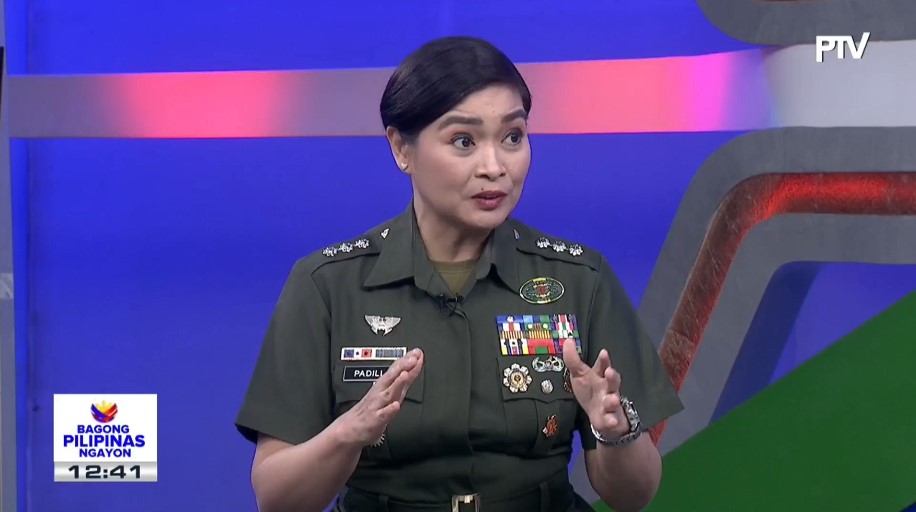
Speaking to reporters on Thursday, AFP spokesperson Col. Francel Margareth Padilla revealed that military intelligence is examining a series of coordinated activities, including strategic press conferences, synchronized social media posts, and amplified online content that appear to follow a deliberate pattern.
“It appears to be part of a sophisticated and multi-layered disinformation campaign. You can see the unfolding events. They are deliberate. The pattern is synchronized,” Padilla explained.
She specifically cited recent developments that raised red flags for military analysts, including a press conference conducted by prominent political figure Chavit Singson and social media posts by Colonel Audie Mongao. According to Padilla, these seemingly disparate events appear connected when viewed as part of a larger pattern.
“The narratives, even in social media, involving such issues seem to indicate that these are not isolated incidents,” she said. “We have to look at the timing, the content, and the amplification of issues that come out in social media.”
The military’s preliminary assessment suggests these actions may be designed to create a “crisis narrative” against the AFP and the broader security sector. Defense analysts note this comes at a particularly sensitive time, with the apparent goal of stirring public discontent ahead of a planned mass rally in the National Capital Region scheduled for February 25—a historically significant date in the Philippines marking the anniversary of the 1986 People Power Revolution.
“This pattern of distorted claims, emotional appeals, and repeated misinformation is meant not only to weaken confidence in our armed forces, but to also create instability,” Padilla stated.
The AFP is currently working to identify the sources behind these narratives, examining how they are being disseminated, and investigating whether external actors might be supporting or directing the campaign. Such concerns about external influence operations have grown across Southeast Asia in recent years, as regional tensions and great power competition have intensified.
Regarding the specific allegation about P15 billion in ghost projects, the AFP clarified that the figure apparently references the TIKAS Program, which is exclusively implemented and managed by the Department of Public Works and Highways (DPWH), not the military.
The AFP also strongly refuted allegations that its chief, Gen. Romeo Brawner Jr., violated the Philippine Military Academy Honor Code. “No complaint, investigation, or finding exists to support this accusation. It is a fabricated narrative intended to malign the reputation of a senior military officer,” the AFP stated in an official release.
Despite these challenges, Padilla assured the public that the AFP remains focused on its mandate to protect the Philippines and its citizens. “We remain solid, professional, disciplined, and united in one purpose. We won’t be carried away by the noise, and we are steadfast with our mandate,” she emphasized.
The military has urged citizens to exercise critical thinking when consuming media and to rely on verified information from credible sources rather than potentially misleading social media narratives.
This incident highlights the growing concern about disinformation campaigns in the Philippines, which has one of the highest social media usage rates globally. Security experts have long warned that the country’s digital landscape makes it particularly vulnerable to coordinated influence operations, whether from domestic political factions or foreign entities seeking to destabilize the nation’s democratic institutions.
The AFP has pledged to continue addressing legitimate concerns through proper legal and institutional channels while maintaining its operational readiness and institutional integrity.
Fact Checker
Verify the accuracy of this article using The Disinformation Commission analysis and real-time sources.

9 Comments
Interesting to see the Australian authorities investigating an alleged disinformation campaign. Maintaining public trust in institutions like the military is crucial, especially when it comes to sensitive issues like defense spending. I wonder what evidence they have uncovered so far.
Agreed, transparency and accountability are key. I hope the investigation provides clarity on the matter and any misinformation is swiftly addressed.
Allegations of a deliberate disinformation campaign targeting the military are quite serious. I’m curious to see what evidence the authorities uncover and how they plan to address the issue. Maintaining trust in key institutions is vital for a healthy democracy.
This case highlights the ongoing challenge of combating online disinformation campaigns. The military’s role in society is a sensitive topic, so it’s understandable they would want to protect their reputation and public standing. I wonder what steps they plan to take to counter the alleged propaganda.
Yes, the potential impact of these kinds of coordinated disinformation efforts is concerning. Transparency and fact-based communication will be crucial in restoring public confidence, if the allegations prove true.
Disinformation can be a serious problem, undermining faith in legitimate institutions and processes. It’s good to see the authorities taking it seriously and looking into the alleged coordinated efforts to erode trust. Curious to learn more about the specific tactics they’ve identified.
This case highlights the ongoing challenge of combating coordinated online disinformation campaigns. The military’s role in society is a sensitive topic, so it’s understandable they would want to protect their reputation and public standing. I’m curious to learn more about the specific tactics the authorities have identified.
It’s good to see the Australian authorities taking the alleged disinformation campaign seriously. Protecting the integrity of public institutions is crucial, especially when it comes to sensitive matters like defense spending. I’ll be interested to follow the investigation and see what conclusions are reached.
Agreed. Transparent and fact-based communication will be essential in countering any confirmed disinformation efforts. Restoring public trust in this context is of the utmost importance.