


Listen to the article
In a groundbreaking study on digital polarization, researcher Dr. Joshua Uyheng has revealed how Filipino online communities fragment into sharply divided narrative groups when discussing political issues. His research team employed advanced computational methods including text analysis, network analysis, and machine learning to map these divisions.
The study found that identical political topics can trigger dramatically different emotional responses across online groups, with some experiencing hope and euphoria while others react with fear and skepticism. This polarization extends beyond mere opinion differences, often aligning with language preferences—whether Filipino or English—and reflecting deeper value divides.
“What we’re seeing is a fundamental split in core values,” explains Uyheng. “One camp frequently prioritizes public security concerns and expresses anti-elite sentiments, while the opposing group emphasizes human rights, rule of law, and democratic principles.”
The research highlights how crisis situations intensify these divisions. During periods of social or political turbulence, users gravitate more strongly toward like-minded communities, creating deeper echo chambers. This digital clustering has real-world consequences, potentially influencing policy formulation and offline political outcomes.
While manipulation by automated accounts and coordinated campaigns exists, Uyheng cautions against attributing all polarization to inauthentic activity. “Many emotional spikes in online discourse stem from genuine human reactions,” he notes. “Bots and coordinated actors often function like gasoline on already-existing flames, accelerating and amplifying tensions that were already present.”
Despite these concerning findings, Uyheng’s research offers reasons for optimism. His data shows that narratives focused on cooperation and global unity correlate strongly with better collective outcomes during crises. Additionally, interventions that deliberately reshape communication networks can shift the narratives that groups construct about each other.
“This suggests that repairing democracy isn’t just about policy reform,” Uyheng states. “It’s also a practical project of rebuilding meaning and relationships within online communities.”
The findings have significant implications for the Philippines, where social media penetration ranks among the highest globally and platforms like Facebook serve as primary news sources for many citizens. As digital spaces increasingly influence electoral politics and governance, understanding these polarization dynamics becomes critical for safeguarding democratic processes.
Media scholars have long observed how the Philippines serves as a testing ground for digital manipulation strategies later deployed globally. Uyheng’s research provides valuable insights that may help combat divisive tactics both domestically and internationally.
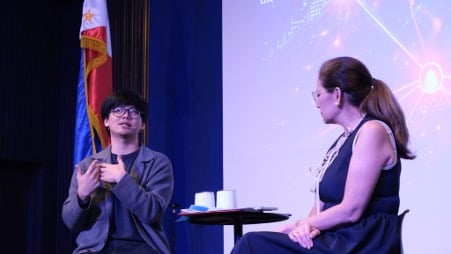
The research was presented at the inaugural lecture of the Ateneo Breakthroughs series, a new initiative from Ateneo de Manila University. Conceived by Dr. Maria Luz C. Vilches, Vice President for Higher Education, the series aims to spotlight research that meaningfully engages with urgent social questions and informs constructive action.
At the launch event, Dr. Filomeno Aguilar, Jr., Assistant Vice President for Research, Creative Work, and Innovation, spoke on behalf of University President Fr. Roberto Yap, SJ, emphasizing the broader meaning of academic achievement: “Breakthroughs are not only the results that we publish in prestigious journals; breakthroughs also happen when we awaken curiosity, and when we continue to hope despite evidence to the contrary.”
As digital platforms continue evolving and new technologies like artificial intelligence reshape online discourse, research like Uyheng’s provides crucial frameworks for understanding and addressing the challenges facing democratic societies in the digital age.
Fact Checker
Verify the accuracy of this article using The Disinformation Commission analysis and real-time sources.

8 Comments
This study raises important questions about the role of language and cultural values in shaping online discourse and political engagement. Understanding these underlying drivers of polarization is vital for building more inclusive, resilient digital communities.
The study’s insights into how language preferences and values align with online discourse patterns are quite eye-opening. I wonder how these dynamics play out in other countries experiencing political divides. More cross-cultural research in this area would be valuable.
This research underscores the critical need to promote media literacy and critical thinking skills, especially around politically charged topics. Helping people understand and manage their emotional responses could go a long way in reducing online toxicity.
Absolutely. Building greater empathy and finding common ground across polarized groups will also be essential. It’s a complex issue without easy solutions, but this kind of data-driven analysis is an important first step.
Kudos to the research team for employing advanced computational methods to map these complex social dynamics. Quantifying the emotional and ideological dimensions of online polarization provides a crucial foundation for developing effective interventions.
Agreed. The next step will be translating these academic findings into practical solutions that social media platforms, policymakers, and civil society can implement. Bridging the gap between research and real-world impact will be key.
Fascinating study on digital polarization in the Philippines. It’s concerning how political topics can trigger such divergent emotional responses based on language preferences and underlying values. Efforts to address disinformation and online hate will need to grapple with these deep-rooted divisions.
You’re right, the findings highlight how crisis situations can intensify these divisions as people retreat further into their ideological echo chambers. Bridging these gaps will be a major challenge.