


Listen to the article
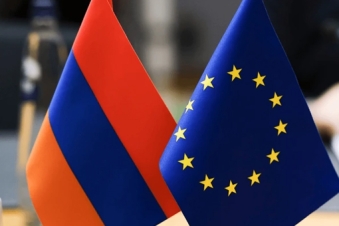
Armenia continues to strengthen its democratic institutions through ongoing cooperation with the European Union, particularly in countering disinformation and hybrid threats, Foreign Ministry spokeswoman Ani Badalyan confirmed this week.
The statement comes in response to recent reports by Radio Free Europe/Radio Liberty about Armenia potentially seeking assistance from an EU “Hybrid Rapid Response Team” to combat Russian disinformation during upcoming elections.
“Cooperation between Armenia and the EU in various areas, including countering hybrid threats, has been ongoing and did not begin recently,” Badalyan emphasized, referencing her earlier statements from December 2025.
According to documents obtained by media outlets, Armenian Foreign Minister Ararat Mirzoyan reportedly sent a formal request to Brussels on February 13 for the deployment of a rapid response team to Yerevan. The request specifically aims at “reducing and mitigating Russia’s destabilizing activities” in the country.
The EU has previously deployed similar teams to other Eastern Partnership countries facing comparable challenges. In 2025, Moldova received assistance during its parliamentary elections from a team of approximately 20 specialists who collaborated with local authorities to identify and counteract Russian-originated disinformation campaigns spreading through social media networks.
This development comes amid increasing geopolitical tensions in the South Caucasus region, where Armenia has been gradually realigning its foreign policy orientation. Since the 2020 Nagorno-Karabakh war and subsequent border conflicts with Azerbaijan, Armenia has sought to diversify its security partnerships beyond its traditional alliance with Russia.
The European Union has steadily expanded its engagement with Armenia through the Comprehensive and Enhanced Partnership Agreement (CEPA), which entered into force in 2021. This agreement has provided a framework for increased political dialogue and cooperation in sectors ranging from economic development to democratic reforms.
Disinformation has become a growing concern for many post-Soviet states, particularly those pursuing closer integration with European institutions. Foreign interference through coordinated media campaigns has been documented during electoral periods across Eastern Europe and the South Caucasus, targeting democratic processes and attempting to influence public opinion.
Political analysts note that Armenia’s request for EU assistance signals Yerevan’s increasing confidence in seeking Western support for its democratic institutions. This shift represents a significant evolution in Armenia’s approach to national security challenges, moving from exclusive reliance on the Russia-led Collective Security Treaty Organization (CSTO) toward a more diverse set of international partnerships.
“Armenia is following a pragmatic approach to safeguarding its democratic processes,” said Tamar Hakobyan, a Yerevan-based political analyst. “The country recognizes that information security is as critical as physical security in today’s geopolitical environment.”
The EU’s potential deployment would focus on building capacity within Armenian institutions to identify, analyze, and counter false narratives and coordinated disinformation campaigns that could undermine electoral integrity.
The Armenian government has not yet disclosed specific details about the timing of potential EU assistance or how it would be integrated with domestic efforts to protect information space. However, experts anticipate that any cooperation would include training for local officials, technical support for monitoring platforms, and strategies for public communication during sensitive political periods.
As Armenia prepares for its next electoral cycle, the country’s approach to information security will likely remain a crucial aspect of its broader democratic resilience strategy and its evolving relationship with European partners.
Fact Checker
Verify the accuracy of this article using The Disinformation Commission analysis and real-time sources.

20 Comments
Securing democratic institutions and processes is vital, especially in the face of foreign interference. Armenia’s request for EU assistance highlights the importance of international cooperation in this regard.
It will be interesting to see the specific measures the EU takes to support Armenia’s efforts. Leveraging best practices from other Eastern Partnership countries could be beneficial.
The details of Armenia’s request for EU assistance in countering Russian disinformation will be crucial. Transparent and effective implementation will be key to ensuring the success of this initiative.
It will be interesting to see how the EU responds and what specific measures they propose to support Armenia. Coordinating with other Eastern Partnership countries could yield valuable insights.
Countering disinformation and hybrid threats is a global challenge that requires multilateral cooperation. Armenia’s initiative to work with the EU on this front is a positive step.
I’m curious to learn more about the specific measures and strategies the EU plans to deploy in support of Armenia’s efforts. Adapting best practices from other contexts could enhance the effectiveness of this collaboration.
Armenia’s collaboration with the EU to counter hybrid threats and disinformation seems like a prudent move, given the ongoing tensions in the region. Transparent and effective cooperation will be key.
I wonder how this will impact Armenia’s relations with Russia, given their historical ties. Navigating these geopolitical waters will require careful diplomacy.
Armenia’s proactive approach in seeking EU support to mitigate Russian disinformation is commendable. Fostering democratic institutions and processes in the face of foreign interference is a complex but vital task.
It will be interesting to see how the EU responds and what specific resources and expertise they can provide to assist Armenia. Adapting successful models from other contexts could enhance the effectiveness of this collaboration.
Armenia’s request for EU assistance in combating Russian disinformation underscores the complex geopolitical landscape in the region. Strengthening democratic institutions through international cooperation is a crucial step.
It will be important to monitor the implementation and impact of this initiative. Ensuring transparency and accountability will be key to building public trust and resilience.
Armenia’s outreach to the EU to strengthen democratic resilience is a prudent move in the face of hybrid threats. Effective cooperation and knowledge-sharing could benefit other countries in the region.
This collaboration could also have implications for Armenia’s relationships with other regional powers. Managing these complex dynamics will require skilled diplomacy and a commitment to democratic principles.
Combating disinformation and hybrid threats is a growing challenge for many countries. Armenia’s proactive approach in seeking EU support is commendable and could set a positive precedent for the region.
I hope this collaboration leads to tangible results and strengthens Armenia’s democratic resilience. Maintaining free and fair elections is crucial for the country’s stability and development.
This is an interesting development in the geopolitical landscape. Armenia’s request for EU assistance in combating Russian disinformation during its elections highlights the complex dynamics at play in the region.
It will be worth monitoring how the EU responds and what kind of support they provide to Armenia. Strengthening democratic resilience is crucial in these challenging times.
The collaboration between Armenia and the EU to counter hybrid threats and strengthen democratic resilience is a timely and necessary move. Effective information-sharing and joint strategies could benefit the entire region.
I hope this initiative sets a positive example for other countries facing similar challenges. Establishing robust mechanisms for international cooperation in this domain is crucial for global security and stability.