


Listen to the article
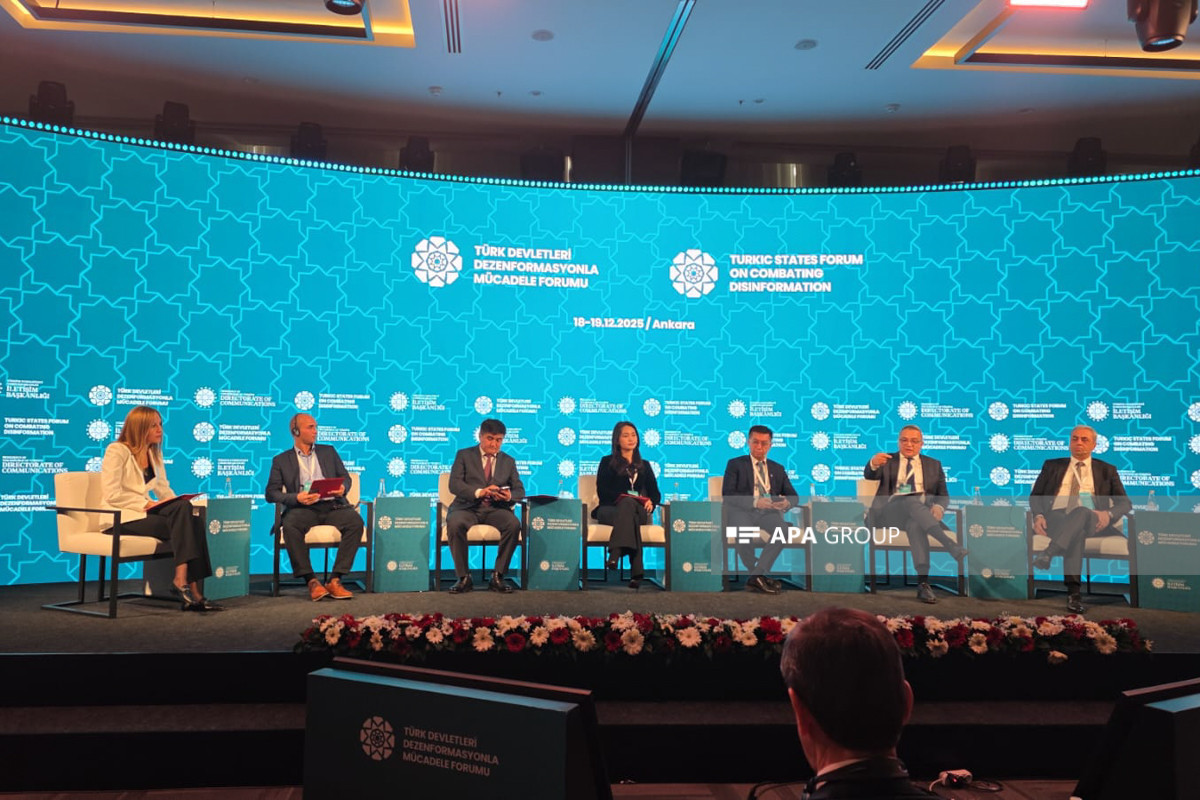
Turkish officials and representatives from across the Turkic world wrapped up a landmark two-day forum in Ankara focused on combating the growing threat of disinformation, an issue increasingly viewed as vital to regional security and stability.
The event, hosted by the Communication Directorate of Turkey’s Presidential Administration, brought together government officials, media executives, security experts, and journalists from Azerbaijan, Turkey, Kazakhstan, Kyrgyzstan, Uzbekistan, and other Turkic-speaking nations in a show of unified purpose against what many participants described as a modern hybrid threat.
During intensive panel discussions, delegates explored the multifaceted challenges of false information spreading across digital platforms and its potential to undermine national and regional security. The forum highlighted how disinformation campaigns have evolved into sophisticated operations that can destabilize societies, influence elections, and exacerbate existing tensions between nations.
“Disinformation represents one of the most significant elements of hybrid warfare in our digital age,” noted one senior official during the proceedings. “Countering this threat effectively requires more than individual national responses—it demands a unified, principled stance across our Turkic family of nations.”
The timing of the forum reflects growing concerns across Eurasia about information warfare and its impact on geopolitical stability. In recent years, the region has experienced numerous instances of targeted disinformation campaigns that have strained diplomatic relations and fueled public confusion on critical issues.
Participants emphasized that professional journalism standards must be reinforced as a frontline defense against misleading content. Media literacy education was also identified as a crucial component in building societal resilience against disinformation, with several countries sharing their existing initiatives to educate citizens on critical information consumption.
The forum dedicated significant attention to practical mechanisms for cooperation. Delegates discussed establishing rapid-response information exchange systems that would allow Turkic nations to alert one another about emerging disinformation narratives that could potentially spread across borders.
“We cannot afford to work in isolation when disinformation travels at the speed of a click,” remarked a media executive from Kazakhstan. “Our newsrooms need direct channels of communication with trusted partners in neighboring countries to verify facts when suspicious narratives emerge.”
Beyond government and media cooperation, the forum explored technological solutions, including the potential development of shared fact-checking resources specifically designed to address regional concerns and linguistic nuances particular to Turkic languages.
Regional experts note that this initiative aligns with broader efforts to strengthen cooperation among Turkic states, which have gained momentum in recent years through entities like the Organization of Turkic States (formerly the Turkic Council). The focus on information security represents an evolution of this cooperation into new domains beyond traditional economic and cultural ties.
By the conclusion of the forum, participants had reached a consensus on continuing their collaborative efforts through regular consultations, joint training programs, and information-sharing protocols. They agreed to develop common approaches to information security challenges while respecting the sovereignty and unique circumstances of each nation.
The initiative comes at a time when global attention to disinformation has intensified, with international organizations like the United Nations and the European Union also developing frameworks to address the phenomenon. The Turkic states’ approach represents a regionally tailored response to what is increasingly recognized as a global challenge.
As the delegates departed Ankara, they emphasized that this forum should be viewed not as a conclusion but as the beginning of a sustained cooperative effort that will be essential to preserving the information integrity and security of Turkic nations in an increasingly complex digital landscape.
Fact Checker
Verify the accuracy of this article using The Disinformation Commission analysis and real-time sources.

9 Comments
The description of disinformation as a ‘modern hybrid threat’ is concerning. Tackling this challenge will require innovative, multilayered strategies across the digital landscape.
Indeed, the evolving tactics of disinformation campaigns demand a comprehensive, adaptive response. Continuous monitoring and adjustment will be key to staying ahead of this threat.
Curious to see how the forum’s outcomes will translate into concrete actions and policies to address disinformation. The devil will be in the details of implementation.
Interesting to see Turkic nations coming together to address the growing threat of disinformation. Coordinating efforts across the region could help build resilience against these hybrid threats.
Agreed, disinformation campaigns can have serious security implications if left unchecked. Proactive collaboration is key to developing effective countermeasures.
Glad to see officials and experts from across the Turkic world coming together to tackle this challenge. Sharing best practices and coordinating policies could make a real difference.
Yes, a unified, regional approach is essential. Disinformation knows no borders, so a collaborative effort is the best way to counter this threat effectively.
The forum highlights how digital platforms have amplified the spread of false information and its destabilizing impacts. Strengthening media literacy and source verification will be crucial.
Absolutely, building public awareness and critical thinking skills is vital to combat the manipulation of information. Empowering citizens is an important part of the solution.