


Listen to the article
Amid Chaos in Mexico, False Images and AI-Generated Content Fueled Fear
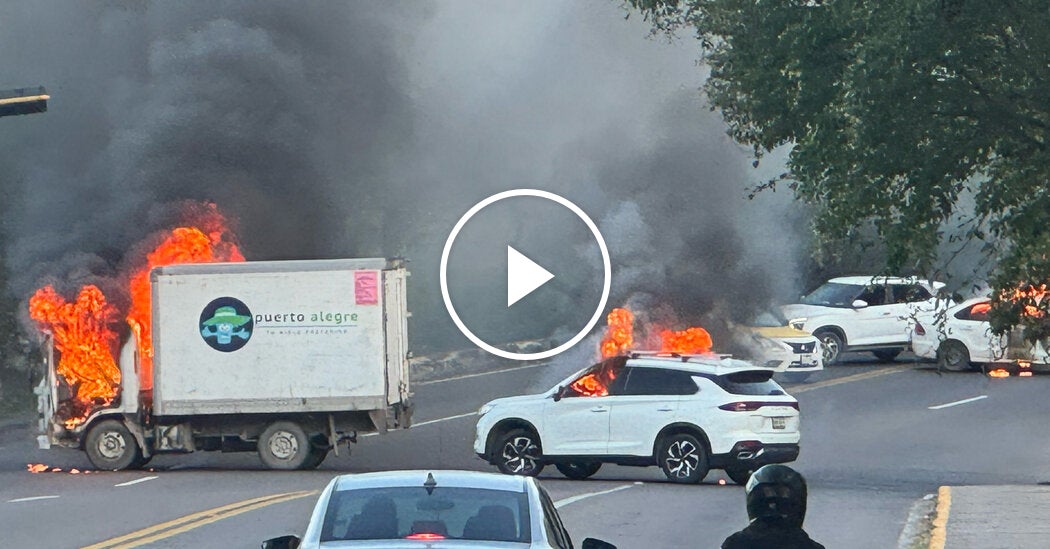
The recent killing of a top cartel leader by Mexican military forces triggered a wave of misinformation that spread rapidly across social media platforms, creating panic among locals and tourists in affected areas. As violence erupted in parts of Mexico, digitally manipulated images and artificial intelligence-generated content amplified fears far beyond the actual situation on the ground.
“There were images and videos that were not real,” reported one resident. “People started posting that gangs were shooting randomly and killing people in town. That wasn’t true.”
The digital misinformation campaign included sophisticated AI-generated images showing local landmarks ablaze. One resident described seeing fabricated images of “a church downtown being burned,” which created panic among community members. Mexican officials have suggested that some of this false content may have been deliberately created and disseminated by criminal organizations seeking to maximize chaos and fear.
The information vacuum from official channels exacerbated the situation. “There’s no official news report. The authorities have not really said much. We’re all just kind of in the dark,” explained another resident, highlighting how the absence of timely, accurate information from government sources allowed rumors to flourish unchecked.
In the absence of reliable information, some locals turned to unconventional methods to verify what was happening around them. One resident used a personal drone to assess the actual situation: “It really became my eyes to be able to know what was happening on the ground. It looked like all of Costco was on fire. But in reality, I took the drone out and I could see that it was just vehicles in the parking lot.”
While some reports were clearly fabricated, real violence did occur in the aftermath of the cartel leader’s death. One tourist recounted a terrifying encounter: “There was a young man running at us with a gun, came around and pointed through the window at my head, and was screaming in Spanish, ‘Get out of the car. Get out of the car.’ He threw an incendiary device in the car, which quickly exploded in flames.”
This incident reflects a troubling pattern emerging in modern conflicts and civil unrest: the weaponization of misinformation to amplify the psychological impact of violent events. Security experts note that criminal organizations increasingly recognize the power of manipulated digital content to extend their influence beyond physical violence.
The proliferation of AI tools capable of generating realistic but fake imagery has significantly complicated crisis response efforts. Local authorities found themselves fighting not just actual violence but also a parallel information war that made it difficult to reassure the public and coordinate effective security responses.
Tourism officials expressed concern about the long-term impact on Mexico’s vital tourism industry, which accounts for approximately 8.5% of the country’s GDP. The speed at which false images spread internationally could have lasting consequences for regions that depend on visitor confidence.
Digital literacy experts point to this crisis as a stark example of the need for improved verification mechanisms on social platforms and greater public awareness about the increasing sophistication of digitally manipulated content. Several fact-checking organizations mobilized to debunk the most viral false images, but they acknowledged the difficulty in keeping pace with the volume of misinformation.
The Mexican government has since announced plans to establish a dedicated communication protocol for future security incidents, promising more timely updates to fill information voids that can be exploited by malicious actors.
As communities recover from both the actual violence and the psychological impact of the misinformation campaign, this case highlights the evolving nature of modern conflicts, where battles are fought not just on streets but in the digital information space, with consequences that can be equally damaging to public safety and social stability.
Fact Checker
Verify the accuracy of this article using The Disinformation Commission analysis and real-time sources.

14 Comments
The use of AI-generated content to exacerbate a crisis situation is deeply troubling. It’s a stark reminder that technological advancements can also be weaponized to sow discord and fear. Proactive measures are needed to address this emerging threat.
It’s concerning to see how quickly misinformation can spread and create panic, especially when it’s amplified by sophisticated digital tools. This highlights the need for robust fact-checking and media literacy efforts to help the public navigate online information.
The exploitation of digital tools to amplify fear and chaos is a concerning tactic. Addressing this issue will require a multifaceted approach, including strengthening crisis communication, improving fact-checking, and investing in media literacy education for the public.
This story highlights the importance of media literacy and being cautious about content circulating online, especially during times of uncertainty. It’s crucial for authorities to provide timely and reliable information to the public.
Agreed. Effective crisis communication from official channels could help mitigate the spread of harmful misinformation and restore public trust. A coordinated response is needed to address these challenges.
This is a frustrating situation where misinformation has caused real harm and disruption. The authorities need to address the root causes and find ways to combat the spread of false content, whether it’s digitally manipulated or AI-generated.
Absolutely. Improving transparency and communication from official channels could help rebuild public trust and counter the influence of these malicious actors. A multifaceted approach is needed to tackle this complex issue.
It’s troubling to see criminal organizations potentially exploiting digital tools like AI to sow chaos and fear. This kind of malicious misinformation can have real-world consequences for people’s safety and wellbeing.
You’re right, this is a complex issue that highlights the need for improved digital literacy and fact-checking to counter the spread of misinformation, especially in crisis scenarios.
This is a concerning situation where false images and AI-generated content have amplified fear during a crisis. It’s a stark reminder of the potential for misinformation to spread rapidly online and disrupt communities, especially when official communication is lacking.
Absolutely, the authorities need to be more proactive in debunking false content and providing accurate information to the public. Relying on social media alone can exacerbate these kinds of situations.
This is a complex issue that underscores the challenges of maintaining public order and trust during times of crisis. Improving communication and transparency from authorities, as well as strengthening digital literacy, could help counter the spread of harmful misinformation.
The use of AI-generated content to amplify fear is a concerning tactic. It’s a reminder that technological advancements can also be exploited for malicious purposes. Stronger safeguards and regulation may be needed to prevent such misuse.
That’s a good point. As AI technology continues to advance, we’ll need to be vigilant about potential misuse and find ways to ensure it’s not weaponized against the public. Proactive measures are essential.