


Listen to the article
Civil Rights Center Expands AI-Powered Disinformation Monitoring Tool with $350,000 Grant
Wayne State University Law School’s Damon J. Keith Center for Civil Rights has received a $350,000 grant from the John D. and Catherine T. MacArthur Foundation to expand VERDAD, an innovative AI-powered tool designed to combat disinformation in ethnic media.
The technology, whose name stands for “Verifying and Exposing Disinformation and Discourse,” currently monitors Latino radio stations across the United States for false or misleading information. With this new funding, the program will expand its reach to all 50 states and incorporate multiple languages beyond Spanish.
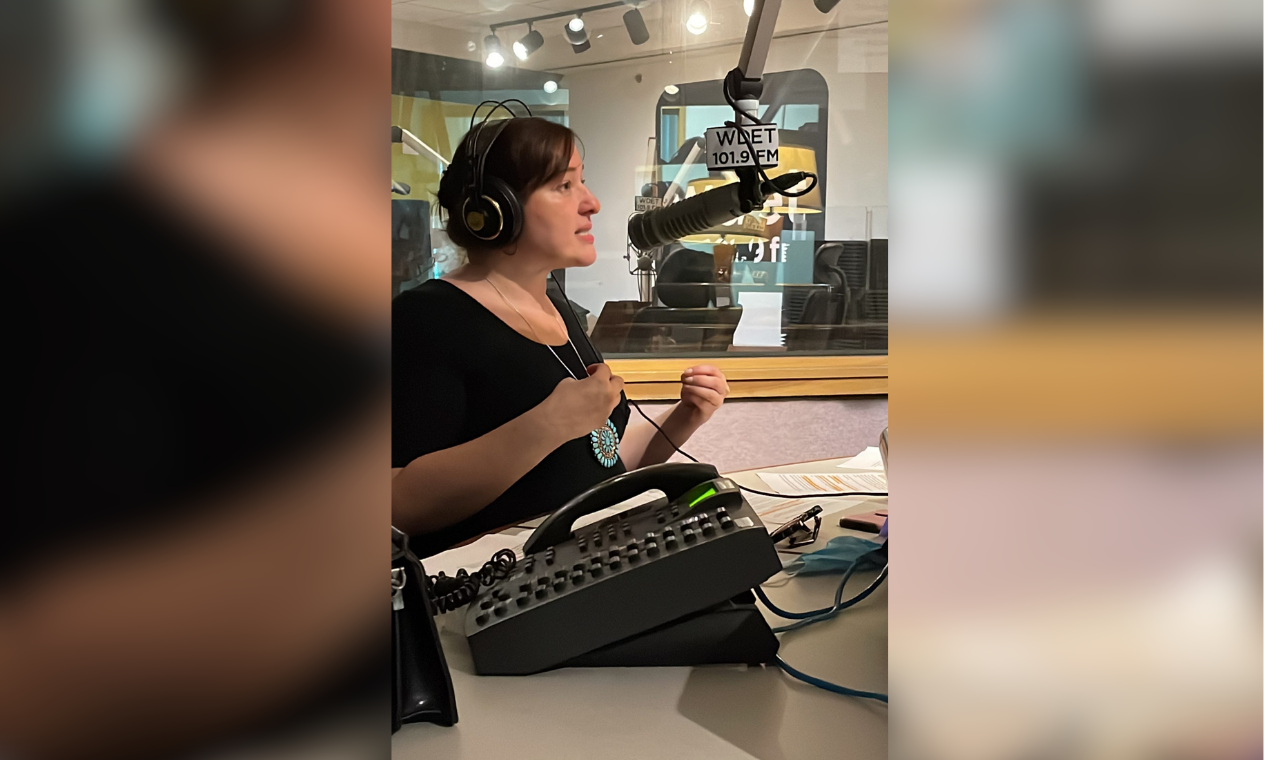
Martina Guzmán, founder of VERDAD and an experienced journalist, explained that the tool’s focus on radio broadcasting fills a crucial gap in media monitoring. “Oftentimes, people think there’s going to be like, this commercial that’s complete disinformation. And what happens is on Latino radio stations, on ethnic radio stations, people have talk shows. And on those talk shows, it is often those people that host the talk shows that are spreading disinformation,” she said.
The sophisticated monitoring system operates continuously, scanning broadcasts for specific keywords associated with misinformation. “The tool records 24 hours a day, and once it hears misinformation, right? And it hears it based on hundreds and hundreds of disinformation keywords that we’ve uploaded into its system. And once it hears one of those words, it begins to really focus… it has an analysis component,” Guzmán explained.
VERDAD initially focused on battleground states ahead of the 2024 presidential election, targeting areas where electoral outcomes could be particularly influenced by misinformation. “We felt that the election would be won or lost in those states at the time. And that was the capacity we had that we could do these eight battleground states and maybe a few more,” Guzmán noted.
Since its launch last year, the platform has gained significant traction among media professionals and researchers. More than 320 academics and journalists have registered to use the free tool through Verdad.app, utilizing its data to write articles and research voting trends within Latino communities.
The expansion plans include adding several critical languages beyond Spanish, including Arabic, Haitian Creole, and Vietnamese. This multilingual approach reflects the diverse demographics of American voters who may be targeted with language-specific disinformation campaigns.
The grant comes at a time when concerns about misinformation in ethnic media have grown substantially. Research has shown that non-English language communities can be particularly vulnerable to disinformation, as these information ecosystems often receive less scrutiny from mainstream fact-checkers and media watchdogs.
Media experts note that radio remains a powerful medium in many immigrant and ethnic communities, where it serves as both an information source and a cultural touchstone. Unlike social media platforms, which have faced increasing pressure to address misinformation, radio broadcasts have operated with comparatively less oversight.
The Keith Center for Civil Rights’ involvement underscores that combating disinformation is increasingly viewed as a civil rights issue. By providing accurate information to minority communities, VERDAD aims to protect voting rights and democratic participation.
The tool’s expansion comes amid growing recognition that disinformation targeting specific ethnic and linguistic communities can suppress voter turnout or manipulate electoral outcomes. By providing journalists, researchers, and community organizations with data about disinformation trends, VERDAD hopes to enable faster and more effective responses to false narratives.
As VERDAD expands nationally and eventually globally, it represents a new approach to preserving information integrity across diverse communities—one that recognizes the unique challenges of multilingual media landscapes and the enduring influence of radio in many communities around the world.
Fact Checker
Verify the accuracy of this article using The Disinformation Commission analysis and real-time sources.

12 Comments
I hope the VERDAD tool will be able to identify and address disinformation in a wide range of languages beyond just Spanish. Expanding the linguistic capabilities is crucial.
Good point. The ability to monitor multiple languages will be essential as the project scales up.
It’s concerning to see the rise of disinformation on ethnic radio stations. I’m glad to see this grant will help VERDAD expand its monitoring capabilities in this area.
Disinformation can have a real impact on vulnerable communities, so this is an important initiative.
While this grant is a positive step, I wonder about the long-term sustainability of the VERDAD project. Ongoing funding will be crucial to maintain and expand its capabilities.
That’s a good point. Securing consistent financial support will be key to the tool’s continued effectiveness.
Curious to learn more about how the VERDAD tool actually works in practice to identify and expose disinformation. The technical details would be interesting.
Yes, understanding the AI-powered approach and how it detects false or misleading information would be valuable.
This is an important initiative to combat disinformation, especially in underserved media markets. Expanding the VERDAD tool to monitor a wider range of ethnic radio stations is a smart move.
Agreed, the focus on monitoring talk show hosts spreading misinformation is a key gap that needs to be addressed.
Kudos to the Damon J. Keith Center for Civil Rights for taking on this important work. Combating disinformation in ethnic media is vital for protecting vulnerable communities.
Absolutely. This is a much-needed initiative that deserves widespread support.