


Listen to the article
Families of Drug War Victims Targeted by Disinformation Campaign
Families of victims in the Philippines’ controversial drug war have become the latest targets of an organized disinformation campaign, according to human rights advocates. The fabricated content appears to be an attempt to discredit family members who are currently participating in International Criminal Court (ICC) proceedings related to former President Rodrigo Duterte’s anti-drug operations.
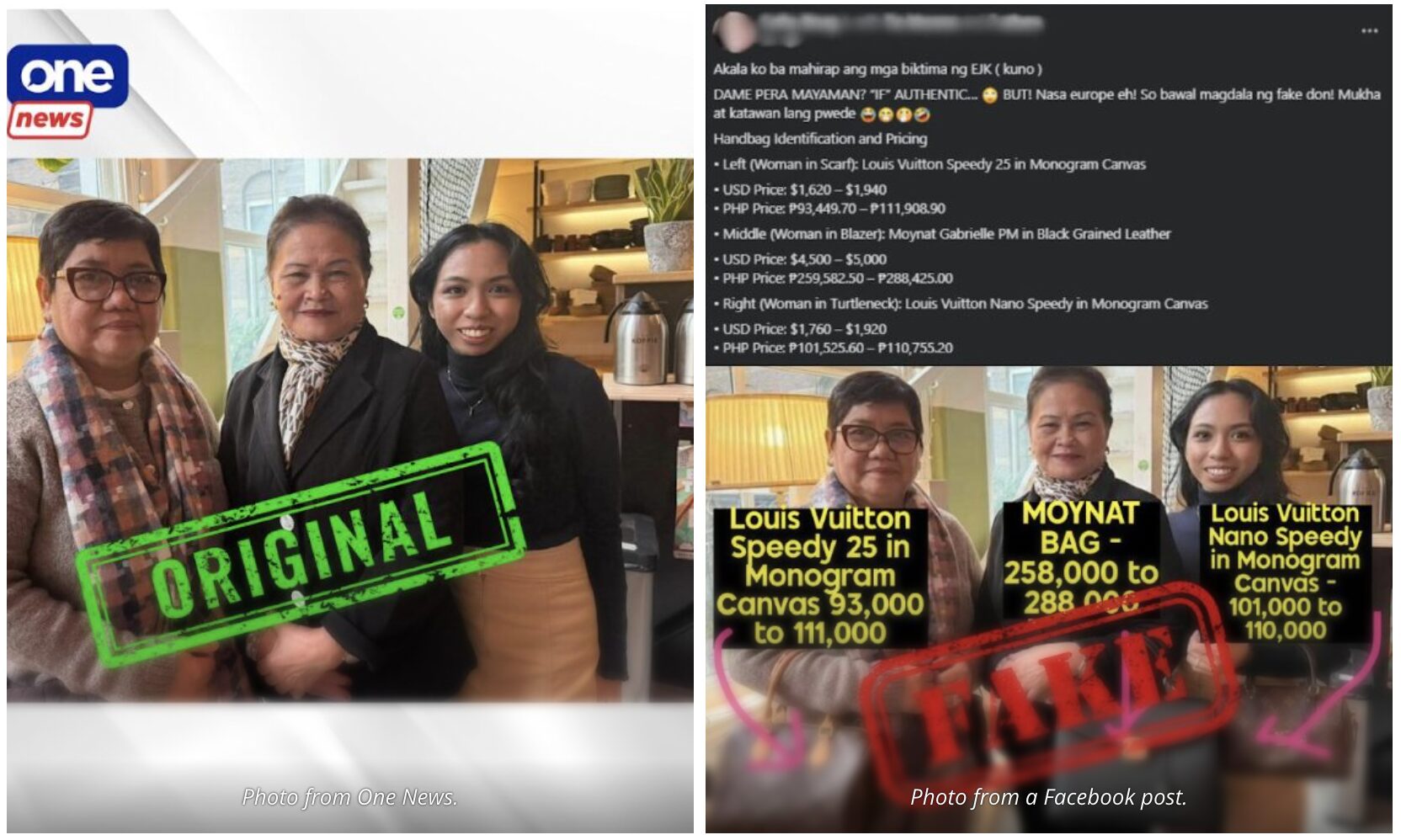
Pro-Duterte vlogger Cathy Binag recently posted an altered image showing victims’ family members supposedly flaunting expensive handbags while in The Hague, Netherlands. The doctored photograph, which received over 100,000 engagements before being removed, was quickly flagged as fake by One News, which had published the original, unaltered image.
“Duterte supporters and their bot network are fabricating lies in their desperation to bury the truth being told by relatives of drug war victims,” said human rights lawyer Maria Sol Taule, who urged the public to report such posts. “They cannot debunk the narratives of the victims, hence they resort to malicious disinformation tactics.”
Among those targeted were Llore Pasco, whose sons Crisanto Antonio and Juan Karlos were found dead in Quezon City in May 2017, and Sheerah Escudero, whose brother Ephraim was discovered bound and with his head wrapped in packaging tape in September 2017, more than 100 kilometers from their home. Rubilyn Litao, national coordinator of Rise Up for Life and for Rights, was also victimized by the disinformation.
Legal experts say the fabricated content may constitute cyber-libel under the Philippines’ Cybercrime Prevention Act. Grace Salonga, Executive Director of Movement Against Disinformation (MAD), pointed out that the altered image meets the basic elements required for cyber-libel charges: defamatory statements, online publication, identifiable persons, and malicious intent.
“The image was altered, and the caption implied that the families were not genuine victims but people enjoying a luxury trip,” Salonga explained. “The edited image suggests intent to mislead.”
Taule emphasized that the families’ presence at the ICC hearings was made possible through donations and support from concerned citizens, not from luxury funds as implied. “They are able to go there through the kindness and support of those who believe in their fight for justice,” she said. “They are among the poor targeted by Duterte’s drug war.”
The ongoing ICC proceedings have highlighted that the primary targets of Duterte’s drug war were people from lower socioeconomic backgrounds, particularly the urban poor. Gilbert Andres, speaking during the ICC hearing, noted that many victims were breadwinners, pushing their families into deeper poverty after their deaths.
This is not the first time victims’ families have faced online harassment. Prior to their departure for The Hague, ICC Assistant to Counsel Kristina Conti anticipated an intensification of attacks. “We are still studying it but we are asking for everyone’s help to protect the victims. We have already identified their inauthentic behavior: same timing, same script, same accounts,” Conti said during a press conference.
The disinformation campaign has expanded to include false claims that ICC investigators received millions of dollars from politicians critical of Duterte. Jojo Lacanilao of Duterte Panagutin Campaign Network referenced a circulating claim that ICC investigators allegedly received $2 million from former Senator Antonio Trillanes IV and former Congressman Zaldy Co.
“The Dutertes are trying to manufacture a conspiracy between the ICC and some politicians critical of the Dutertes. This fictitious narrative fits Nicholas Kaufman’s ridiculous claim that the ICC case is politically motivated,” Lacanilao said.
Media outlets like Bulatlat have implemented policies to limit comments on posts related to the ICC hearings, particularly those featuring victims’ testimonies, to prevent further trauma through hate speech and harassment.
Rights advocates are urging the public to remain vigilant and critical, verify information, and rely on reputable sources as the ICC confirmation of charges hearings continue and disinformation campaigns intensify.
Fact Checker
Verify the accuracy of this article using The Disinformation Commission analysis and real-time sources.

8 Comments
This is a concerning development, as families of drug war victims should be able to seek justice without facing disinformation campaigns. Efforts to discredit them only serve to obfuscate the truth and undermine accountability.
Fabricating evidence and spreading false narratives is a despicable tactic to try and silence victims’ families. The public should be vigilant in identifying and reporting such malicious disinformation.
The mining and energy sectors are not immune to the spread of disinformation, as this case demonstrates. Maintaining transparency and credibility should be a top priority for all industries.
You’re right, disinformation can target any industry or issue. Fact-checking and calling out falsehoods is crucial to protect the integrity of information, especially when vulnerable communities are involved.
The use of disinformation to target vulnerable communities is a disturbing trend that must be addressed. Families of drug war victims should be able to seek justice without facing these kinds of attacks.
This is a worrying trend, as the families of drug war victims should be able to seek justice without facing such reprehensible attacks. Disinformation tactics must be condemned and exposed to protect the truth.
I’m appalled to hear that these families are being subjected to disinformation campaigns. Their pursuit of justice should be supported, not undermined by fabricated content and smear tactics.
You’re absolutely right. Victims’ families deserve to have their stories heard without facing these malicious attempts to discredit them. Combating such disinformation is critical for upholding human rights and the rule of law.