


Listen to the article
Linguists Uncover Features of Fake News, Warn of AI-Generated Disinformation Challenges
A comprehensive linguistic study has revealed that fake news exhibits distinct language patterns, though these characteristics vary significantly across different languages and contexts, making universal detection difficult.
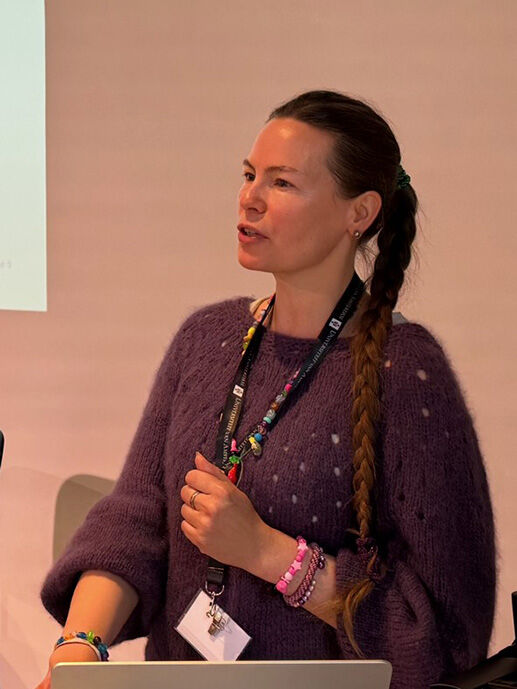
Silje Susanne Alvestad, lead researcher of the “Fakespeak – the language of fake news” project, and her colleagues analyzed fake news in English, Russian, and Norwegian, comparing genuine and fabricated articles to identify telling differences in writing style.
Building on research from the University of Birmingham that examined articles by disgraced New York Times journalist Jayson Blair, who was fired in 2003 for fabricating news stories, Alvestad’s team found several notable linguistic markers of deception.
“An interesting finding was that he predominantly wrote in the present tense when he was lying, and in the past tense when he was writing genuine news,” Alvestad explained.
The researchers discovered that Blair’s fake articles featured a more conversational tone, shorter average word length, and frequent use of emphatic expressions like “truly” and “really.” His genuine reporting, by contrast, employed more formal language and complex vocabulary.
The team also found that the linguistic features of fake news vary depending on the writer’s motivation. “Blair says in his autobiography that his motivation was primarily money, and we found his fabricated news contained few metaphors. When the motivation is ideological, on the other hand, more metaphors are used, often from domains such as sport and war,” Alvestad noted.
Another key indicator is the level of certainty expressed in fake news. “In fake news, the writer often gives the impression of being absolutely certain that what is being reported is true,” said Alvestad. “There is an overrepresentation of expressions such as ‘obviously,’ ‘evidently,’ and ‘as a matter of fact.'” This pattern of “epistemic certainty” appears more prominently in Russian texts than in English ones.
Despite these findings, the researchers concluded there is no universal language of fake news. “The linguistic features of fake news vary within individual languages and between languages. They depend on context and culture,” Alvestad emphasized.
This variability creates significant challenges for developing automated fact-checking tools. Nevertheless, as part of the project, the team collaborated with computer scientists from the research institute SINTEF to build a fact-checking tool now available on SINTEF’s website.
Alvestad criticized the overly broad definition of fake news in practical applications, noting that “one cannot quite know what the differences between fake and genuine news are due to.” She stressed the importance of balanced datasets and sophisticated linguistic approaches for developing effective verification tools.
As the research progressed, the rapid advancement of artificial intelligence shifted the landscape of misinformation, prompting the launch of a follow-up project called NxtGenFake. This initiative focuses specifically on identifying AI-generated disinformation, which Alvestad considers more problematic than completely fabricated news.
“Purely fabricated news, which there was quite a lot of six or seven years ago, may not have great impact. A bigger problem is fake news that can be a mix of true and false,” she explained. The researchers now prefer the term “disinformation” to describe content that contains some truth but omits critical context or is deliberately misleading.
Early findings from the NxtGenFake project, scheduled to run until 2029, reveal that AI-generated propaganda shows less variation in persuasive techniques than human-written content. Two patterns stand out in AI-generated texts: generic appeals to authority (using phrases like “according to researchers” or “experts believe”) and concluding statements that appeal to values such as fairness or public trust.
Particularly concerning is how audiences respond to AI-generated content. In a study with American participants, AI-generated disinformation was rated as both more credible and more informative than human-written equivalents. Participants also expressed a stronger preference for continuing to read the AI-generated texts.
“I was personally a little surprised that the AI-generated texts did not score highly on emotional appeal. Instead, they were perceived as both more informative and more credible than texts written by humans,” Alvestad said.
These findings suggest AI-generated disinformation may be particularly difficult to detect because large language models can package misleading information in formats that readers instinctively trust.
Alvestad hopes her research will increase public awareness about the risks associated with large language models, especially as these tools become more widely adopted across industries and communication channels.
Fact Checker
Verify the accuracy of this article using The Disinformation Commission analysis and real-time sources.

16 Comments
The findings about Jayson Blair’s writing style are quite intriguing. I wonder if similar patterns could be detected in AI-generated content as well. Rigorous linguistic analysis will be key to staying ahead of these evolving deception tactics.
You raise a good point. Expanding this research to cover AI-generated content could yield valuable insights. Staying vigilant and proactive will be essential as the technology advances.
Fascinating study on the linguistic patterns of fake news. It’s concerning how AI-generated content could be used to enhance the credibility of misinformation. We’ll need sophisticated detection tools to stay ahead of these evolving deception tactics.
Agreed, the ability to automatically generate fake news that mimics real writing styles is worrying. Robust fact-checking and media literacy will be crucial to combat the spread of disinformation.
This research highlights the importance of understanding the subtle language cues that distinguish fabricated content. While AI can be a powerful tool, we must be vigilant about how it could be misused to manipulate information.
Absolutely. As AI capabilities advance, we’ll need to invest in developing effective detection algorithms and educating the public on media discernment. Maintaining trust in information sources will be an ongoing challenge.
This is a concerning development, but not entirely unexpected given the rapid progress of AI language models. The ability to automatically generate credible-sounding misinformation is a serious threat that must be addressed.
I agree. Robust fact-checking, media literacy programs, and technological countermeasures will be crucial to mitigate the risks of AI-enabled disinformation. Maintaining public trust in information sources will be an ongoing challenge.
Fascinating study on the linguistic patterns of fake news. It’s concerning how AI-generated content could be used to enhance the credibility of misinformation. We’ll need sophisticated detection tools to stay ahead of these evolving deception tactics.
Agreed, the ability to automatically generate fake news that mimics real writing styles is worrying. Robust fact-checking and media literacy will be crucial to combat the spread of disinformation.
The findings about Jayson Blair’s writing style are quite intriguing. I wonder if similar patterns could be detected in AI-generated content as well. Rigorous linguistic analysis will be key to staying ahead of these evolving deception tactics.
You raise a good point. Expanding this research to cover AI-generated content could yield valuable insights. Staying vigilant and proactive will be essential as the technology advances.
This is a concerning development, but not entirely unexpected given the rapid progress of AI language models. The ability to automatically generate credible-sounding misinformation is a serious threat that must be addressed.
Agreed. Robust fact-checking, media literacy programs, and technological countermeasures will be crucial to mitigate the risks of AI-enabled disinformation. Maintaining public trust in information sources will be an ongoing challenge.
The linguistic analysis of fake news is fascinating. I wonder if there are any patterns or markers that could be used to detect AI-generated content, beyond just the writing style. Continued research in this area is vital.
That’s a great point. Exploring more advanced detection methods, including analyzing underlying AI generation patterns, could be a valuable next step. Staying ahead of these evolving threats will require a multifaceted approach.