


Listen to the article
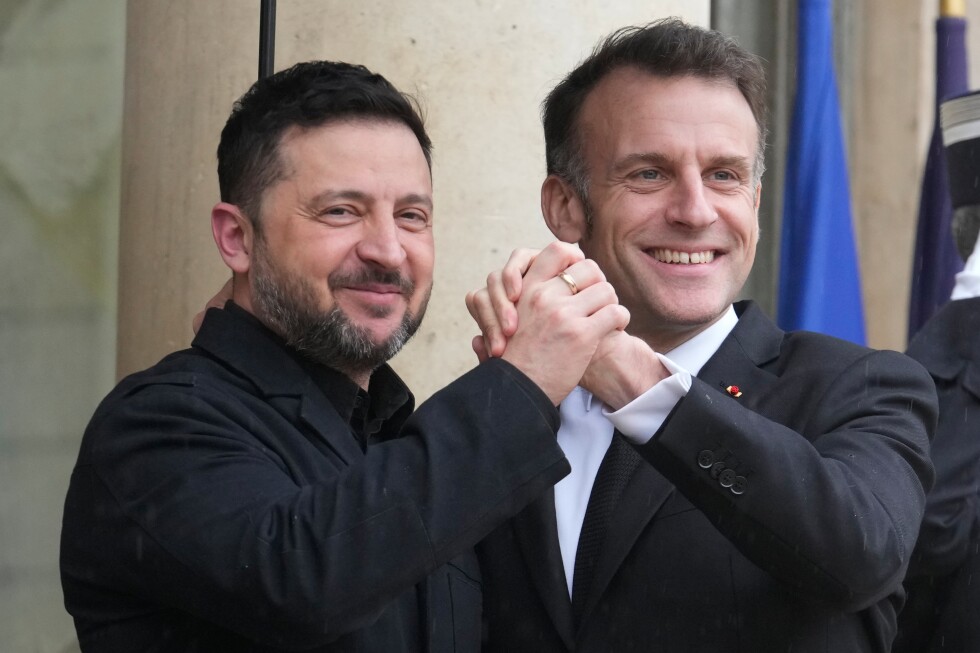
Ukrainian President Volodymyr Zelenskyy criticized the United States’ decision to temporarily waive sanctions on Russian oil, warning the move could provide Moscow with billions in additional war funding during a Friday news conference in Paris alongside French President Emmanuel Macron.
“This easing alone by the United States could provide Russia with about $10 billion for the war,” Zelenskyy said. “This certainly does not help peace.”
The U.S. Treasury Department announced Thursday a 30-day waiver on Russian oil sanctions, intended to free up stranded Russian cargo ships and ease supply shortages resulting from the ongoing conflict in Iran. However, Zelenskyy expressed concern that any financial benefit to Russia would ultimately fuel its military operations against Ukraine.
“I believe that lifting sanctions will, in any case, lead to a strengthening of Russia’s position. It spends the money from energy sales on weapons, and all of this is then used against us,” he explained. “Therefore, ultimately lifting sanctions only so that more drones will later be flying at you is, in my opinion, not the right decision.”
Market analysts point out that rising oil prices caused by disruptions in Persian Gulf production have already benefited the Russian economy, which relies heavily on energy exports to finance its military operations. The sanctions had been increasingly handicapping Moscow’s ability to fund its war effort.
Macron attempted to downplay concerns, noting that the broader sanctions regime against Russia remains intact. “U.S. waivers announced in recent days are limited and taken on an exceptional basis,” the French president said. “It does not broadly or permanently roll back the sanctions that they themselves decided to apply.”
German Chancellor Friedrich Merz took a stronger stance against the American decision, revealing that six of the G7 nations had explicitly opposed such a move during recent discussions with U.S. President Donald Trump.
“We learned this morning that the U.S. government has apparently decided otherwise. Once again, we believe this is the wrong decision,” Merz said during a visit to Norway. “There is currently a price problem, but not a supply problem. And in that regard, I would like to know what additional motives led the U.S. government to make this decision.”
The sanctions controversy comes amid a pause in U.S.-mediated peace talks between Ukraine and Russia. Zelenskyy indicated these negotiations could potentially resume next week, as they had been temporarily halted due to the Iran conflict.
Meanwhile, Ukraine has positioned itself as a potential strategic partner in drone defense technology. Having developed significant expertise in countering drone attacks during more than four years of war, Kyiv has offered to share this knowledge with the United States and its Gulf allies.
“Ukraine is ready to share this experience for the sake of the security of those partners who are helping us,” Zelenskyy said, explaining that Ukrainian assistance extends beyond merely providing interceptor drones. “There must be proper, systematic work with radars and with the entire air defense system.”
According to Zelenskyy, Ukraine has already received requests for drone combat assistance from six countries and has dispatched expert teams to three, though he declined to name specific nations. The Ukrainian president also mentioned that Kyiv was awaiting White House approval for an agreement on producing battle-tested drones.
However, Trump appeared to reject Ukraine’s offer in comments aired Friday on Fox News Radio’s “Brian Kilmeade Show,” stating, “No, we don’t need their help on drone defense.” The apparent contradiction between the leaders’ statements has not been clarified.
The Ukrainian government continues to seek reciprocal military support from Western allies, particularly high-end weaponry that it cannot manufacture domestically, in exchange for sharing its hard-won expertise in drone warfare.
Fact Checker
Verify the accuracy of this article using The Disinformation Commission analysis and real-time sources.

7 Comments
I can understand the U.S. wanting to ease supply shortages, but Zelenskyy is right that any financial benefit to Russia will likely just be used to escalate the conflict. Maintaining sanctions seems crucial at this stage.
As much as ensuring energy supply is important, Zelenskyy’s concerns about the potential consequences of relaxing sanctions are valid. Allowing Russia to profit from energy sales while it wages war on Ukraine seems misguided. A more cautious approach is warranted.
I’m torn on this issue. While I appreciate the difficulty in balancing energy security with supporting Ukraine, Zelenskyy makes a fair point. Anything that strengthens Russia’s financial position risks being used to perpetuate the conflict. Sanctions should remain a priority.
This is a tricky balance between energy security and supporting Ukraine. While I sympathize with the need to ensure adequate oil supply, Zelenskyy’s concerns about strengthening Russia’s position are valid. Careful diplomacy is required here.
Zelenskyy’s perspective is understandable. Easing sanctions, even briefly, risks providing a financial lifeline to Russia that could be used to escalate the conflict. A tougher sanctions regime may be necessary to pressure Russia to end the war.
Zelenskyy makes a compelling case. Even a temporary waiver on Russian oil sanctions could provide substantial war funding for Moscow. Ultimately, the priority should be cutting off resources fueling Russia’s invasion of Ukraine.
Zelenskyy makes a fair point. Allowing Russia to profit from energy sales while it continues its assault on Ukraine seems counterproductive. Sanctions should remain in place to cut off funding for Russia’s war machine.