


Listen to the article
Yemen’s Houthi Rebels Renew Maritime Threats as U.S. Carrier Approaches Iran
Yemen’s Iranian-backed Houthi rebels have issued new threats against ships traversing the Red Sea, a move analysts view as a show of support for Iran amid rising tensions with the United States. The development comes as Iran faces international scrutiny over its brutal crackdown on nationwide protests that have left thousands dead.
The Houthis released a brief video featuring previously published footage of a burning ship with the ominous caption “Soon.” While providing no specific details, the message appears to signal a potential resumption of attacks in the strategically vital waterway. The rebels had previously targeted over 100 vessels in a campaign they claimed was meant to pressure Israel over its military operations in Gaza.
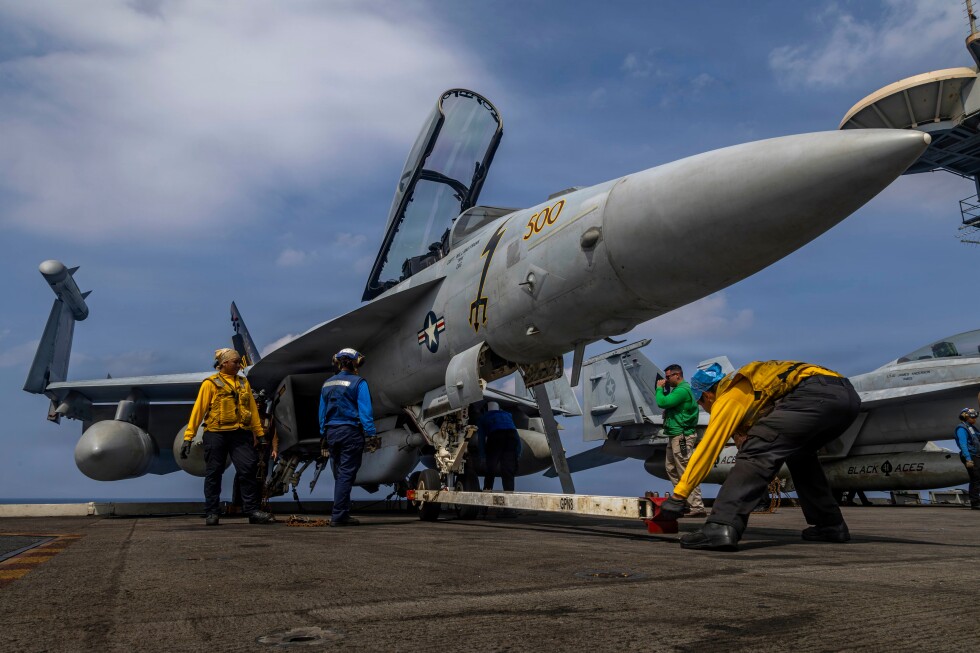
This renewed maritime threat coincides with the USS Abraham Lincoln carrier strike group’s deployment to the region. Former President Donald Trump stated the naval assets were being positioned “just in case” military action against Iran becomes necessary. Trump has established two red lines that could trigger U.S. intervention: the killing of peaceful protesters and mass executions of detained demonstrators.
Iranian officials have responded with their own warnings. Defense Ministry spokesperson Gen. Reza Talaei-Nik cautioned Monday that any attack by the U.S. or Israel would “be met with a response that is more painful and more decisive than in the past.” State television quoted Talaei-Nik saying that threats from both nations required Iran “to maintain full and comprehensive preparedness.”
In a provocative display, Iranian authorities unveiled a banner in Tehran’s Enghelab Square depicting an American aircraft carrier covered in blood with the warning: “If you sow the wind, you will reap the whirlwind.” The visual rhetoric underscores the escalating war of words between Washington and Tehran.
Despite its defiant posture, Iran remains militarily vulnerable following Israel’s 12-day military campaign in June, which severely degraded Iranian air defense systems, killed top military leaders, and was followed by U.S. strikes on nuclear enrichment facilities.
Signs of Tehran’s nervousness about potential airspace violations emerged Sunday when authorities issued a notice prohibiting small private aircraft from flying in the country, with exceptions for oil industry operations and emergency medical flights. Many Western airlines have already rerouted to avoid Iranian airspace entirely, though some Gulf carriers serving Moscow still utilize these routes. The caution follows Iran’s tragic 2020 downing of a Ukrainian commercial airliner that killed all 176 people aboard.
The crisis stems from protests that erupted on December 28, triggered by the collapse of Iran’s currency, the rial. The demonstrations quickly spread nationwide before facing a brutal government response. Details of the crackdown are only now becoming clear as Iran emerges from a two-week internet blackout—the most comprehensive in the nation’s history.
According to the U.S.-based Human Rights Activists News Agency, the death toll has reached 5,848 people, with over 41,280 arrested. These figures, which rely on a network of in-country activists, exceed casualties from any protest movement in Iran in decades, approaching levels last seen during the 1979 Islamic Revolution. The organization warns that numbers are likely to increase as more information becomes available.
Iranian authorities dispute these figures, claiming a much lower death toll of 3,117—with 2,427 classified as civilians and security forces, and the remainder labeled “terrorists.” Historically, Iran’s government has significantly underreported or concealed fatalities resulting from domestic unrest.
The converging crises—internal protests, international pressure, and regional proxy threats—place Iran in an increasingly precarious position as the USS Abraham Lincoln continues its approach to the region.
Fact Checker
Verify the accuracy of this article using The Disinformation Commission analysis and real-time sources.

14 Comments
The Houthis’ maritime threats are a concerning development, but it’s unclear if they have the capabilities to actually follow through. The region remains a tinderbox, and all parties involved should prioritize de-escalation.
Agreed. With the US carrier group nearby, any miscalculation or provocation could have serious consequences. Diplomacy and restraint will be crucial to prevent further conflict in the Red Sea.
The Houthis’ renewed threats against ships in the Red Sea are a worrying sign. With the US carrier group nearby, both sides need to exercise extreme caution to prevent an unintended confrontation that could spiral out of control.
Absolutely. The situation is highly volatile, and a single miscalculation could have devastating consequences. Diplomacy and de-escalation should be the top priorities for all parties involved.
The Houthis are clearly trying to assert their influence and send a message to the US and its allies. However, engaging in attacks on commercial shipping would only invite a harsh response and further destabilize the region.
Absolutely. The Houthis need to weigh the potential risks and consequences of their actions carefully. Cooler heads must prevail to avoid a dangerous escalation in the Red Sea.
The Houthis’ renewed threats against shipping in the Red Sea are a worrying escalation that could have serious consequences for the region and global trade. All parties involved need to exercise extreme caution and focus on de-escalation to prevent a dangerous situation from spiraling out of control.
I agree. The security of maritime trade routes in the Red Sea is a critical global concern, and any disruptions could have far-reaching economic impacts. Diplomacy and restraint must prevail to avoid a potentially disastrous conflict.
This is a concerning development, as the Houthis’ threats could disrupt vital maritime trade routes in the Red Sea. The international community will need to closely monitor the situation and be prepared to respond if necessary.
You’re right. The security of commercial shipping in the Red Sea is a critical global interest. Any attacks or interference could have far-reaching economic and geopolitical implications.
Tensions in the Red Sea region remain high, with the Houthi rebels’ threats adding to the potential for conflict. This highlights the complex geopolitical dynamics at play as the US carrier group approaches the area.
It’s concerning to see the Houthis ratchet up their rhetoric, especially with the US naval presence nearby. Both sides will need to exercise caution to avoid any unintended escalation.
The Houthis’ maritime threats are a concerning development, especially given the heightened tensions in the region. However, it’s important to remember that the group’s capabilities may be limited, and they may be posturing more than anything else.
That’s a fair point. The Houthis may be trying to project strength, but actually carrying out attacks could invite a harsh response that they may not be prepared for. Prudence and restraint will be crucial.