


Listen to the article
Sexual Abuse Allegations Against César Chavez Highlight Progress in Farmworker Rights Movement
Almost two decades ago, labor rights icon Dolores Huerta stood alongside Mónica Ramírez at a Chicago event promoting the Bandana Project, a campaign raising awareness about sexual violence against women farmworkers. At that event, Huerta emphasized the need to educate women farmworkers about their rights and empower them to speak out against sexual exploitation. What remained hidden then was Huerta’s own experience of sexual abuse at the hands of César Chavez, the man with whom she co-founded the United Farm Workers in 1962.
The recent allegations against Chavez by Huerta and other women reveal that the culture of intimidation enabling sexual abuse in agricultural fields had also existed within the upper echelons of the labor movement fighting for farmworker rights. Huerta, now 96, disclosed that Chavez raped her in the 1960s, a secret she kept for decades fearing that “exposing the truth would hurt the farmworker movement.”
For advocates like Ramírez, founder and president of Justice for Migrant Women, these revelations feel like a profound betrayal. “It feels a little bit bewildering because so many of us have grown up looking up to César Chavez,” said Ramírez, whose parents were migrant farmworkers in Ohio. “But we have to remind each other that this is a long-standing movement that is made of many, many people, including women leaders.”
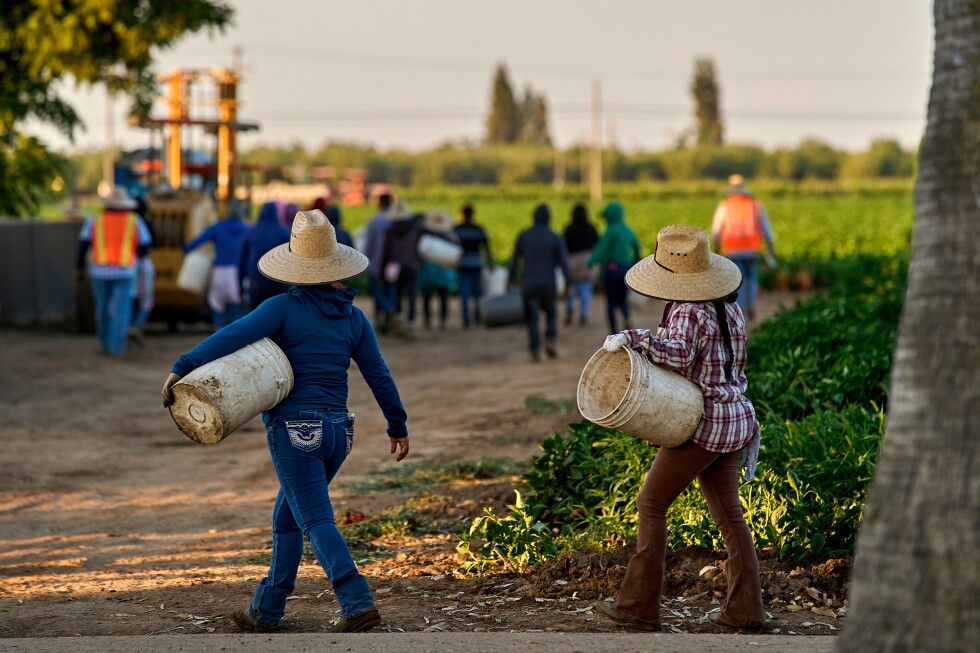
The farmworker landscape today reflects both persistent challenges and significant progress. Women constitute approximately 25% of America’s more than one million hired farm workers, according to government figures. The prevalence of sexual harassment remains difficult to quantify as it often goes unreported, but field surveys conducted by Human Rights Watch, the Southern Poverty Law Center, and UC Santa Cruz have found that roughly 80% or more of women crop workers report experiencing some form of sexual harassment.
A turning point came in 1999 when the U.S. Equal Employment Opportunity Commission won a $1.85 million settlement against a major lettuce grower on behalf of a California worker who was subjected to sexual advances by managers and fired after complaining. This landmark case emerged from years of outreach by EEOC investigator Bill Tamayo to farmworker groups, including the women-led organization Líderes Campesinas.
Women farmworkers described abuse so pervasive they referred to “fields of panties” because of what they had to do to keep their jobs. Tamayo, who discussed his work in the 2013 PBS documentary “Rape in the Fields,” noted that grassroots groups became the EEOC’s “eyes and ears” in efforts to educate workers and file complaints. Since then, the EEOC has secured millions more in compensation for farmworkers reporting sexual harassment.
Despite these advances, substantial barriers persist. Fear, isolation in fields, language barriers, and immigration status continue to make farmworkers particularly vulnerable. Over 40% of agricultural workers lacked work authorization between 2020 and 2022, according to government estimates, with many in the country on H2-A visas tied to their employment, heightening fears of dismissal and deportation if they speak out.
“During meetings, majorities of women still report being victims of sexual abuse,” said Darlene Tenes, executive director of Farmworker Caravan, noting that immigration crackdowns have forced cancellations of educational conferences, pushing advocacy groups to provide resources through direct community visits.
In regions with robust legal protections, however, conditions have begun to improve. Nelly Rodriguez, who experienced sexual abuse as “bread and butter” when she worked in fields decades ago, said she only fully understood her rights after joining the Coalition of Immokalee Workers in Florida. Their Fair Food Program, a partnership with major produce buyers including Walmart and McDonald’s, requires growers to implement sexual harassment training and create systems for investigating complaints.
The program also mandates moveable bathrooms near fields—a crucial improvement for women previously forced to accept rides from managers to distant facilities, where assaults often occurred.
For many advocates, the most significant change has been breaking the taboo around discussing sexual abuse. Maria Ines Catalan, who worked packing produce in California from 1988 to 1994, recalled that despite regulatory improvements for farmworkers, sexual abuse remained unaddressed. “You had to stay quiet,” she said. Today, nonprofits provide information and referrals, making farmworkers aware they can speak out.
The farmworker women’s movement gained broader recognition following the 2017 global #MeToo movement. Alianza Nacional de Campesinas, co-led by Ramírez at the time, published an open “Dear Sisters” letter of solidarity with Hollywood women that went viral. This letter, alongside long-standing advocacy, helped establish the TIME’S UP Legal Defense Fund, which provides legal aid to low-income women facing sexual harassment and abuse.
Patricia Campos-Medina, executive director of the Worker Institute at Cornell University, observed that the allegations against Chavez demonstrate that the labor movement “is not immune” to power abuses. “I can imagine when she was trying to co-create this union with him, how much it would have cost her to speak up,” she said of Huerta.
Despite ongoing challenges, farmworker women have established themselves as leaders in the fight against sexual abuse. “We’ve been accused of so many different things and that has not stopped us,” said Mily Treviño-Sauceda, a former farmworker and executive director of Alianza Nacional de Campesinas.
Ramírez believes the #MeToo movement helped give victims, including Huerta, the language to articulate their experiences. “Do I think it’s still a widespread problem? Yes. Do I think that there are many survivors who do not feel like they can come forward? Yes,” she acknowledged. “But farmworker women have exerted their power and shown their leadership on this issue, and I don’t want that to get lost.”
Fact Checker
Verify the accuracy of this article using The Disinformation Commission analysis and real-time sources.

10 Comments
It’s disheartening to see these allegations against Chávez, a revered figure in the labor movement. While the movement has made progress, this shows there is still much work to be done to eliminate sexual abuse and create a truly safe and empowering environment for all workers.
This is a heartbreaking and complex situation. The farmworker rights movement has made important strides, but these allegations against Chávez show that more work is needed to address sexual abuse and create a truly safe and equitable environment for all workers, regardless of the perpetrator’s status.
The allegations against Chávez are deeply disturbing and underscore the challenges of addressing sexual abuse, even within social justice movements. While the progress made is laudable, this situation highlights the need for continued vigilance and a willingness to confront the wrongdoings of revered figures.
Absolutely. Protecting vulnerable workers and creating a culture of accountability should be the top priorities, even when it means challenging the legacy of prominent leaders. Only then can the farmworker movement truly live up to its ideals of justice and empowerment.
This is a complex and disturbing situation. On one hand, the farmworker rights movement has achieved important gains in protecting vulnerable workers. On the other, the allegations against Chávez are a sobering reminder that even revered figures can be complicit in abuse. Maintaining transparency, accountability, and a steadfast commitment to worker safety must be the top priorities going forward.
These revelations are a profound betrayal for the farmworker rights movement. While the progress made is commendable, the culture of intimidation and abuse that enabled this behavior must be rooted out. Empowering women farmworkers to speak up is crucial, even against revered figures.
Agreed. The farmworker movement has done important work, but must reckon with its own failings. Protecting vulnerable workers from exploitation and abuse, regardless of the perpetrator’s status, should be the top priority.
This is a disturbing but important story. The sexual abuse allegations against César Chávez highlight the need for continued vigilance and progress in protecting vulnerable workers, even within social movements. It’s heartbreaking that Dolores Huerta felt compelled to keep this secret for so long.
This is a complex and troubling situation. On one hand, the farmworker rights movement has achieved important gains. On the other, the revelations about Chávez’s alleged actions are a sobering reminder that even respected leaders can be complicit in abuse. Maintaining vigilance and transparency is critical.
The revelations about Chávez’s alleged actions are deeply troubling and highlight the ongoing challenges in addressing sexual abuse, even within social movements ostensibly dedicated to protecting vulnerable workers. While the progress made is commendable, this situation underscores the need for continued vigilance and a willingness to confront wrongdoing, no matter the perpetrator’s reputation.