


Listen to the article
Air travel in the United States has become increasingly fraught with challenges as multiple crises converge to test both the system’s resilience and travelers’ patience.
Recent back-to-back winter storms, tensions following hostilities in Iran, government funding disputes, and a fatal runway collision between a jet and a fire truck have all contributed to widespread travel disruptions. These extraordinary events compound the routine frustrations of commercial air travel—seat selection complications, baggage fees, overbooked flights, and regular delays.
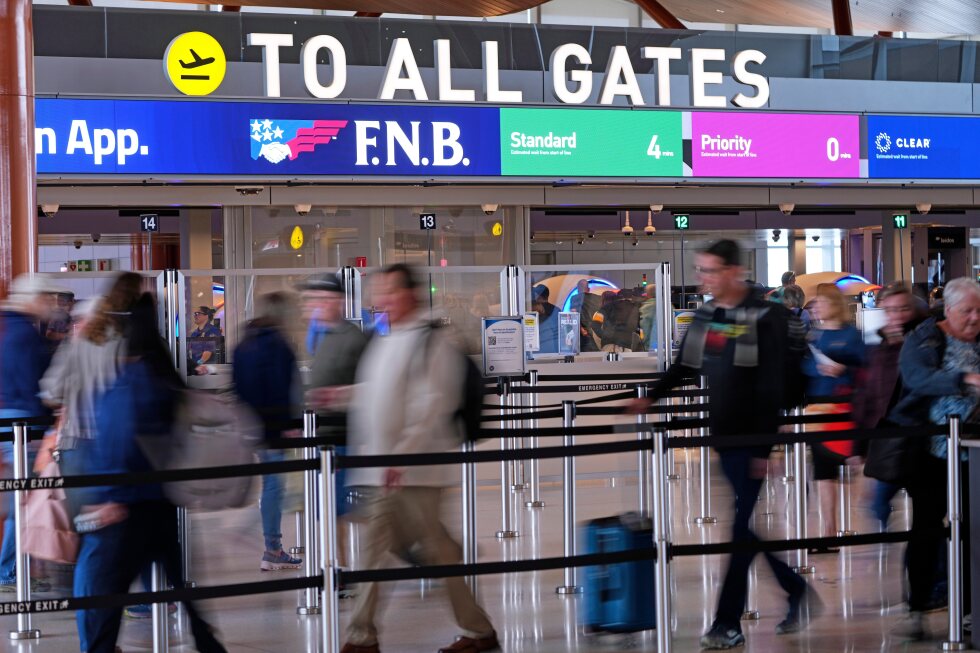
At airports nationwide, security checkpoint congestion has reached critical levels due to the ongoing funding standoff in Congress. The situation became so dire that President Trump deployed Immigration and Customs Enforcement officers to supplement Transportation Security Administration staff. The severity of these delays was highlighted when a National Transportation Safety Board air-traffic control specialist, attempting to reach New York’s LaGuardia Airport to investigate the recent runway collision, spent three hours stuck in a TSA line in Houston, according to NTSB chair Jennifer Homendy.
For passengers like John Hoffman at New Orleans’ Louis Armstrong International Airport, the consequences have been direct and costly. After missing his flight to Spokane due to a four-hour security wait, Hoffman returned the following day to find conditions had improved with the additional federal personnel. However, he questioned the fiscal logic of the solution: “The lines are shorter today, but in my mind, we can fund TSA a lot less expensive than we can send ICE here, put them up in hotels and all the things that go along with that.”
The ripple effects extend beyond security lines. At Reagan Washington National Airport, college student JD Foster missed an important appointment and lost a $500 deposit when his Boston-bound flight faced repeated delays. “They just kept saying ‘it’ll be a little bit longer’ every 15 minutes until they admitted it was a part malfunctioning and they switched planes,” Foster reported. “I would have had enough time to get an earlier flight if they would have been honest about the delay.”
Despite these widespread issues, airline industry representatives are projecting optimism. Chris Sununu, former New Hampshire governor and current president and CEO of Airlines for America, characterized the current problems as “truly temporary” during a recent interview. “People should know that solutions are being presented, and I think there are some solid long-term fixes and even some short-term fixes here, so people should feel confident buying in,” Sununu stated.
Mental health experts acknowledge that air travel inherently provokes anxiety for many, and today’s conditions only amplify these feelings. Dr. Michael Ziffra, psychiatrist and associate professor at Northwestern University’s Feinberg School of Medicine, recommends travelers adopt a mindset of acceptance. “You’re gonna get delays, you’re gonna get complications, you might get long lines,” he advised. “So just try to somehow be at peace with the fact that air travel can be inherently unpredictable.”
While preparation helps, Dr. Ziffra cautions against attempting to anticipate every possible scenario. Instead, he suggests travelers equip themselves with enjoyable distractions like snacks, entertainment, and music, while avoiding alcohol, unnecessary medications, or engaging in social media complaints that could exacerbate negative emotions.
Dr. Zaid Fadul, a U.S. Air Force flight surgeon and CEO of Bespoke Concierge MD, emphasizes mental grounding techniques. “I always tell people, all’s fair in love and travel. Delays are normal, it’s a part of life, and you have to find ways to really reground yourself,” he explained. Deep breathing exercises, focusing on physical sensations, and practicing gratitude can all help manage travel-related stress.
In a recent personal experience, Dr. Fadul countered his frustration with security delays by thanking a TSA agent. “She lit up,” he recalled. “Just seeing her response made me feel a little better, and it made it less about me.”
As the summer travel season approaches, the industry faces the dual challenge of addressing operational issues while rebuilding traveler confidence in a system that appears increasingly vulnerable to disruption.
Fact Checker
Verify the accuracy of this article using The Disinformation Commission analysis and real-time sources.

7 Comments
Wow, the air travel situation in the US sounds like quite a mess. Delays, staffing issues, and general disruptions are really making it a stressful experience for passengers. I hope they can get a handle on the problems soon.
It’s alarming to hear about the NTSB investigator stuck in a security line for 3 hours. That really highlights how severe the delays have become. I wonder what other critical personnel are being impacted by these issues.
This is a complex problem with no easy solutions. The air travel system seems to be buckling under the strain of various crises. Passengers are rightfully feeling anxious and frustrated. I hope the industry can find ways to improve the experience and restore confidence.
The combined impact of weather, staffing, and other factors is really taking a toll on air travel reliability. It’s no wonder passengers are feeling so much anxiety about flying these days. The industry needs to find more sustainable ways to handle these disruptions.
As someone who travels by air frequently, this news is quite concerning. The routine frustrations of air travel have been amplified to an extreme level. I hope the government and airlines can work together to improve the situation for passengers.
It’s concerning to hear about the severe delays at security checkpoints. Deploying ICE officers to help the TSA is a bit of an unusual move, but I suppose they’re desperate to alleviate the congestion. Hopefully it provides some temporary relief.
You’re right, using ICE agents is an unusual solution. I wonder if it will actually help or just create more confusion at the checkpoints.