


Listen to the article
Thailand’s construction industry is facing intense public scrutiny following a string of deadly accidents that have raised serious questions about safety standards and regulatory oversight in the country.
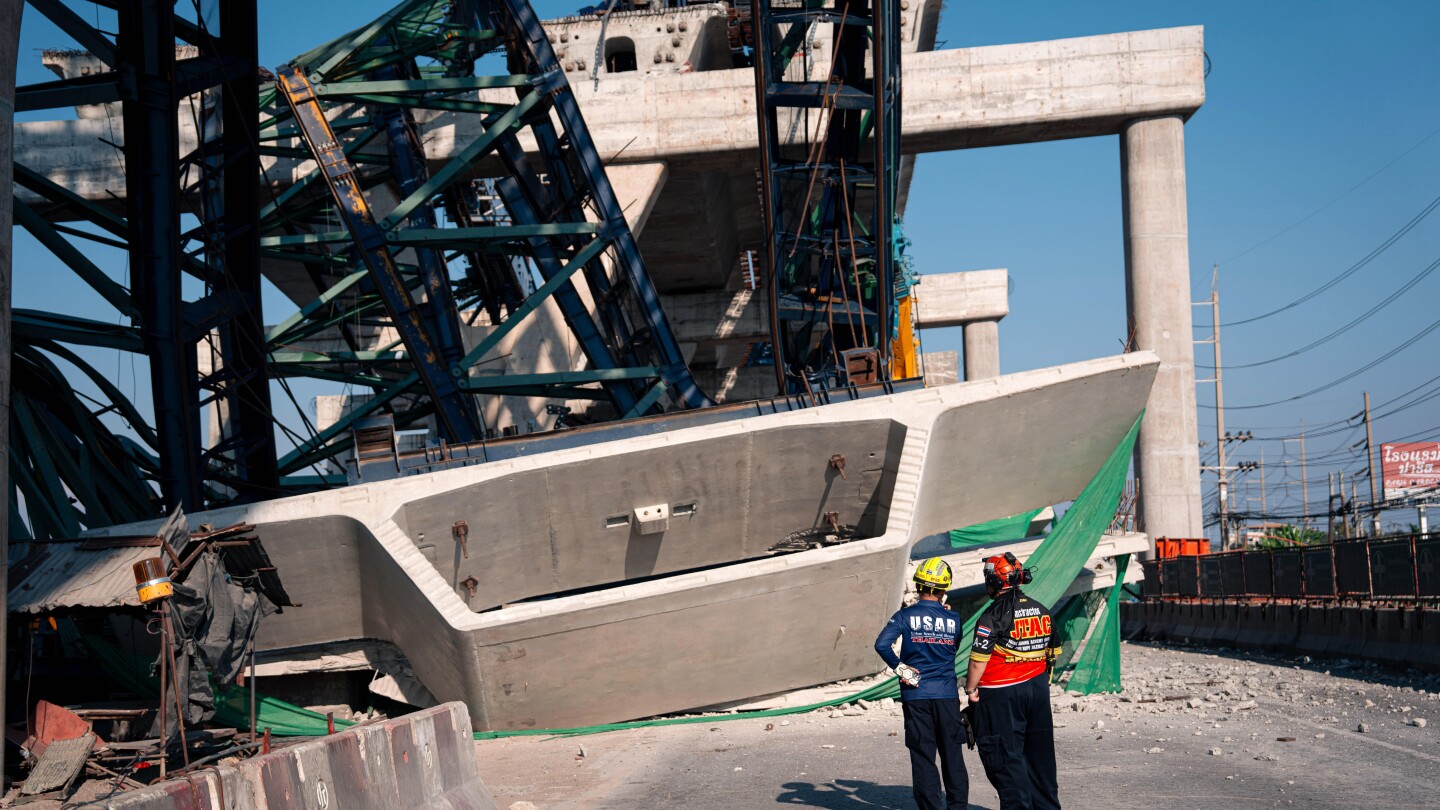
The most recent incidents occurred just days apart. On Thursday, a construction crane collapsed in Bangkok, killing two people. This tragedy came just one day after a crane fell onto a moving passenger train, resulting in 32 deaths. These accidents follow last year’s catastrophic collapse of a 33-story office tower that killed nearly 100 workers.
At the center of public outrage is Italian-Thai Development (Italthai), the contractor responsible for both sites where the past week’s accidents occurred. The company was also the joint lead contractor for the State Audit Office building that collapsed in March while under construction. Notably, it was the only major structure in Thailand to fall during an earthquake whose epicenter was in Myanmar, more than 1,300 kilometers away.
The State Audit Office collapse has led to indictments against 23 individuals and companies, including Italthai’s President Premchai Karnasuta. Charges include professional negligence causing death and document forgery. Italthai, which has secured numerous government contracts as a major developer in Thailand, has denied wrongdoing in all cases.
Prime Minister Anutin Charnvirakul has responded decisively to these incidents, ordering the Transport Ministry to terminate contracts with the companies involved, blacklist them from future projects, and pursue legal action. The government plans to fund unfinished projects by seizing performance bonds and bank guarantees, while reserving the right to sue for additional costs. A “scorecard” system to track contractors’ safety records is expected to be implemented by early February.
Industry experts point to deeper systemic issues behind these accidents. While investigators can often identify technical causes such as human error or equipment failure, critics argue that construction safety in Thailand is compromised by lax regulation, poor enforcement, and corruption. The March building collapse, though triggered by an earthquake, was ultimately attributed to flawed structural design and deliberate evasion of building regulations.
“I don’t think Thailand fails in terms of the body of knowledge in engineering or even in the technical aspects,” said Panudech Chumyen, a civil engineering lecturer at Bangkok’s Thammasat University. “I think there’s a failure in our system; there are so many gaps that I don’t know where we should begin to close them.”
Chumyen highlighted multiple challenges including weak law enforcement, excessive bureaucracy, and fragmented safety policies among project stakeholders. He also noted a critical shortage of truly independent assessors, resulting in performance reports that often fail to reflect reality.
The involvement of Chinese companies in several troubled projects has drawn additional scrutiny. Wednesday’s train accident occurred on a line that is part of a Thai-Chinese high-speed railway project connecting Bangkok to northeastern Thailand. This project is linked to China’s Belt and Road Initiative, which has faced controversy globally, including corruption allegations.
Concerns about Chinese construction practices intensified after last year’s State Audit Office collapse, where China Railway No. 10 served as co-lead contractor with Italthai. The company’s Bangkok representative was charged with violating Thailand’s Foreign Business Act by using Thai nationals as nominee shareholders to conceal Chinese control of its local affiliate.
The collapse sparked widespread outrage among Thais, many of whom took to social media to criticize what they called “tofu-dreg projects” or “tofu buildings” – terms used to describe hastily constructed or substandard infrastructure built with regulatory corners cut. The phrase gained popularity following a devastating 2008 earthquake in Sichuan, China.
China’s ambassador to Thailand, Zhang Jianwei, has stated that China requires its companies to follow local rules when participating in overseas projects and that Beijing is willing to “guide Chinese companies to actively cooperate with the Thai authorities’ investigation.”
As investigations continue, the recurring nature of these accidents has highlighted the urgent need for comprehensive reforms in Thailand’s construction industry to prevent future tragedies.
Fact Checker
Verify the accuracy of this article using The Disinformation Commission analysis and real-time sources.

11 Comments
These fatal accidents are deeply troubling. Thailand’s construction industry clearly has systemic problems that need urgent attention. Authorities must investigate thoroughly, enforce accountability, and implement comprehensive reforms to prevent future tragedies.
The public outrage is understandable. These accidents seem to stem from a pattern of negligence and lack of oversight. Thai authorities must take strong, decisive action to hold the responsible parties accountable and implement comprehensive safety reforms.
As someone with an interest in the mining and energy sectors, I’m curious to see how this situation unfolds. Proper construction safety is essential for the development of critical infrastructure like power plants, refineries, and mining facilities. Thailand needs to get a handle on this issue.
Absolutely. Unsafe construction practices can have far-reaching consequences, not just for workers but for the entire economy. Thailand must demonstrate a strong commitment to safety if it wants to attract continued investment in its mining, energy, and other industrial sectors.
This string of deadly accidents is extremely concerning. Thailand must urgently review its construction regulations and enforcement to ensure proper safety measures are in place and upheld. The public deserves answers and action to prevent future tragedies.
As a mining and commodities investor, I’m closely watching this situation. Construction accidents can have ripple effects on related industries. Robust safety practices are crucial not just for human lives, but also for business continuity and investor confidence.
Good point. Lax safety standards not only put workers at risk, but can also disrupt supply chains and project timelines, which can impact commodity prices and related equities. Responsible construction practices benefit everyone.
This is truly tragic. Construction safety must be a top priority, especially for major projects. It’s concerning to see multiple incidents involving the same contractor, Italthai. Rigorous oversight and accountability are crucial to prevent future accidents.
I agree. Proper safety protocols and thorough inspections are essential to protect workers and the public. Hopefully, these recent events will spur much-needed reforms in the industry.
The collapse of the State Audit Office building during a relatively mild earthquake is very troubling. Poor construction practices and lack of quality control appear to be serious issues that need to be addressed.
Absolutely. Indicting the contractor and other parties responsible is a good first step, but systemic changes are needed to improve safety and accountability across Thailand’s construction sector.