


Listen to the article
Homeownership in California faces reality check amid soaring costs and changing financial landscape, experts say.
It’s the benchmark of success, a milestone of responsible adulthood, a time-tested way to amass wealth for you and your progeny. Homeownership has long been portrayed as the status that every right-thinking person should aspire to—the white-picket-fence-fronted embodiment of the American Dream.
But what if it’s also a little overrated?
For generations, Americans have accepted as near gospel that owning a home is both financially and socially superior to renting, and that public policy should promote this goal. California legislators and housing advocates spent the past year enacting sweeping policies aimed at making it easier to build housing of all kinds. In the coming year, many indicate they plan to focus specifically on providing more plentiful paths to homeownership.
They’ll have their work cut out for them. California’s homeownership rate of roughly 55% is second lowest in the nation, above only New York, and a full 10 percentage points beneath the national average. According to researchers at UC Berkeley, this gap isn’t due to Californians having an unusual affinity for renting—it comes down to cost. While the median price of a detached single-family home across the United States is $426,800, in California it’s a staggering $852,680, and in San Francisco, it exceeds $1 million.
With mortgage rates still hovering above 6%, these prices translate to estimated monthly costs between $4,000 to $6,000 or more—far above typical apartment rental prices in most California neighborhoods. In Orange County, the estimated all-in monthly costs on a home (including taxes, insurance, maintenance and association fees) is four times the average rent, according to a recent analysis by commercial real estate firm CBRE. In Los Angeles and San Francisco, the “buying premium” is three times greater than renting. Nationally, it’s twice as much.
Economists and housing finance experts are careful to note that the rent-versus-buy decision depends on multiple factors: a person’s financial circumstances, their preferences, the local market conditions, how long they plan to stay, and most challenging of all, what the future holds.
Laurie Goodman, an economist at the Urban Institute, points out that across the country, the gap between renting and owning is “way out of line” with historical norms. In 2018, Goodman co-authored a paper concluding that most people would be better off buying a home compared to renting. Today, with dizzying prices, high interest rates, and flat rents in most places, homeownership isn’t nearly the financial slam dunk it once was.
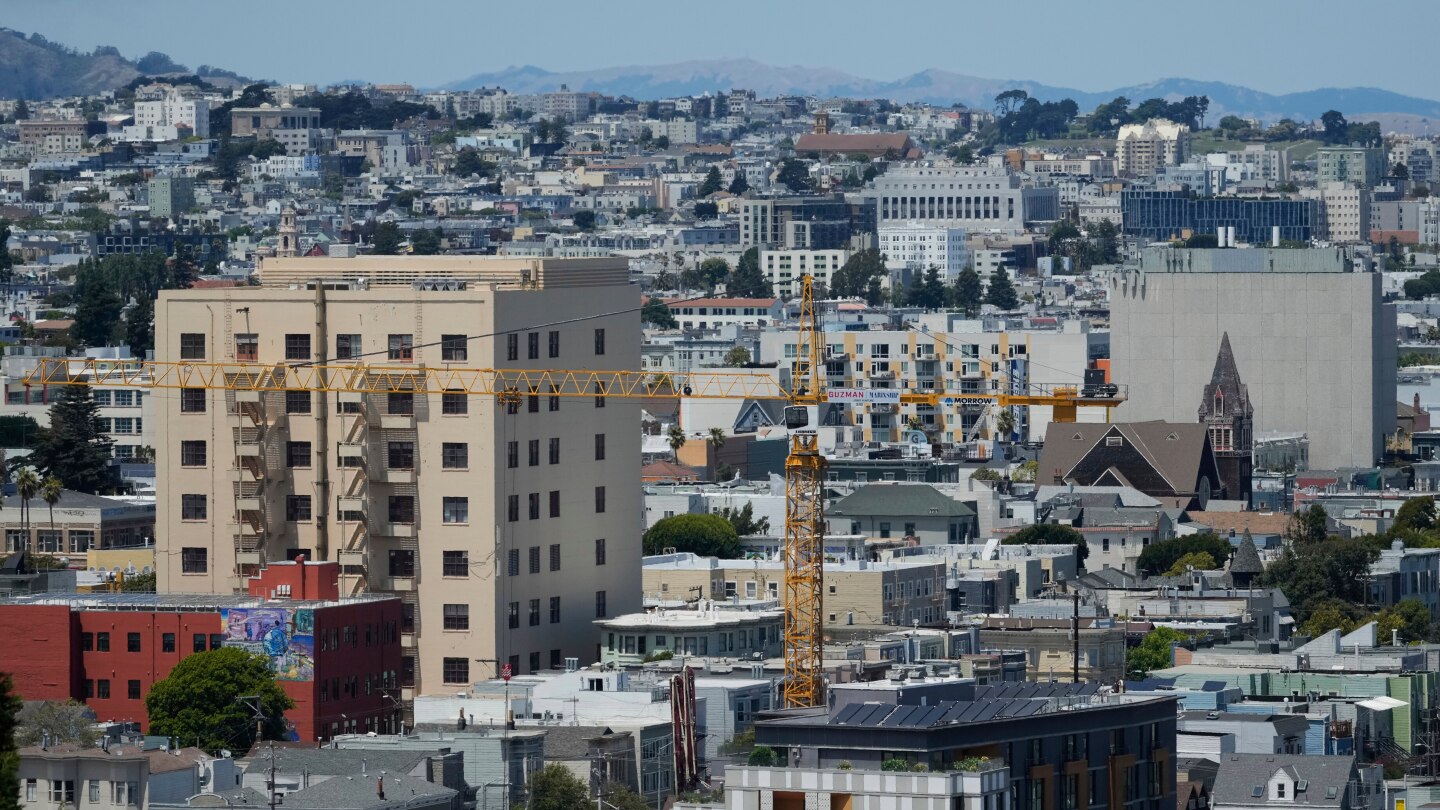
Consider San Francisco, where the average single-family home costs $1.38 million, according to Zillow. That translates to a monthly loan payment of roughly $6,500, while the average rent for such a home is $4,350. For homeownership to pay off financially, property values would need to continue rising dramatically, rents would need to increase significantly, or alternative investments would need to underperform—or some combination of these factors.
For many Californians, this isn’t actually a choice they can make. According to the CBRE report, the percentage of renters who can buy locally while spending less than 40% of their income on monthly homeownership costs is in the single digits in Los Angeles, San Diego, Riverside, Sacramento, San Jose, and Ventura. More than half of California renters are already spending more than 30% of their income on rent.
But for those fortunate enough to rent by choice, it’s not necessarily a bad decision. Wealthy tenants can save and invest the difference between rent and mortgage payments. Though homeownership is often touted as the best way to build wealth, it’s not the only path. Over long stretches of time, the stock market regularly outperforms median home price growth—albeit without the tax benefits and other incentives that governments provide to homeowners.
“I think more people are starting to be interested in renting and saving at the same time, because they’ve been priced out of owning a home, but they still want to achieve their financial goals and they’re looking into those alternatives and getting more savvy about it,” said Redfin economist Daryl Fairweather.
California’s specific conditions—high prices relative to rents, steep maintenance and insurance costs, and the relatively large number of tenants protected by rent control policies—mean the financial argument for renting may be stronger than ever before.
Even so, non-financial factors continue to drive homeownership. Space is one consideration: most rental units are apartments while detached single-family houses are predominantly owner-occupied. For growing families, the choice is often between cramming into an urban apartment or moving to a more affordable area to buy. Education quality is another factor, as rentals are more likely to be in neighborhoods with lower-performing schools.
For many, homeownership also provides intangible benefits like independence, security, and peace of mind. And while diligent savers can invest the difference between rent and mortgage payments, homeownership acts as a forced savings plan that many find valuable.
“It takes more discipline to go against the social trend,” Fairweather noted.
As California grapples with its housing crisis, the conventional wisdom around homeownership is evolving. The decision to rent or buy has become increasingly complex, individualized, and dependent on specific market conditions and personal financial situations—no longer the straightforward path to prosperity it once seemed to be.
Fact Checker
Verify the accuracy of this article using The Disinformation Commission analysis and real-time sources.

11 Comments
The article raises some valid points about the financial realities of homeownership in California these days. It’s no longer the straightforward path to wealth accumulation that it once was. I wonder how this trend might impact the state’s economy and social dynamics going forward.
This article raises some valid points about the shifting realities of homeownership in California. The state’s relatively low homeownership rate compared to the national average is an intriguing data point. I’m curious to learn more about the factors driving this trend and what potential policy solutions might help address the affordability challenges.
Homeownership has been a cornerstone of the American Dream for generations, but this article suggests that the equation is changing, at least in California. I’m curious to learn more about the policy initiatives being considered to try to address the state’s relatively low homeownership rate compared to the national average.
Homeownership has long been considered a key part of the American Dream, but this article suggests that the equation is changing, particularly in California. The state’s low homeownership rate compared to the rest of the country is a noteworthy statistic. I wonder what the long-term implications of this trend might be for the state’s housing market and broader economic landscape.
This article provides a thought-provoking look at how the dynamics of homeownership are shifting in California. The state’s low homeownership rate compared to the rest of the country is a notable statistic. I wonder what implications this could have for the state’s housing market and economic landscape in the years ahead.
Interesting to see how the dynamics of homeownership in California are shifting. Rising costs and a changing financial landscape seem to be making it more challenging for many. I wonder what policy solutions might help address this issue.
Homeownership has long been a key part of the American Dream, but it sounds like that dream is becoming harder to attain in places like California. I’m curious to learn more about the drivers behind the state’s relatively low homeownership rate compared to the rest of the country.
Yes, the article highlights some of the affordability challenges Californians face. It will be interesting to see what policy initiatives legislators pursue to try to boost homeownership in the state.
Homeownership has long been touted as the key to building wealth, but it sounds like that equation is changing, at least in California. The state’s relatively low homeownership rate compared to the national average is an interesting data point. I’d be curious to learn more about the underlying factors driving this trend.
The article provides an interesting perspective on the evolving landscape of homeownership in California. It’s thought-provoking to consider how rising costs and changing financial dynamics are impacting the long-held assumption that owning a home is a surefire path to wealth building. I wonder what this could mean for the state’s economy and social fabric going forward.
It’s fascinating to see how the homeownership landscape is evolving, particularly in a state like California that has long been associated with the American Dream of home ownership. The article raises some compelling points about the financial and practical realities that are making homeownership less of a sure thing these days.