


Listen to the article
Power Utilities Brace for Devastating Ice Storms Across Eastern U.S.
Every morning this week, Newberry Electric Cooperative CEO Keith Avery starts his day by turning on The Weather Channel and coordinating response teams for potential outages from an approaching ice storm that threatens to cripple power systems across South Carolina.
Despite his experience handling disasters—including Hurricane Helene’s aftermath that knocked out power to nearly all 14,000 of his customers earlier this year—Avery admits this weather threat brings a unique level of anxiety.
“I hate ice storms,” Avery said. “They are worse than hurricanes.”
Officials across the eastern two-thirds of the United States have issued urgent warnings about the potential devastation freezing rain could inflict on power infrastructure. The concern is particularly acute in Southern states, where electricity isn’t just about keeping lights on—it’s the primary heat source for most residents.
Census data shows that a majority of homes rely on electric heating in Alabama, Arkansas, Georgia, Kentucky, Louisiana, Mississippi, North Carolina, South Carolina, Tennessee, Texas, and Virginia, making power disruptions during winter storms especially dangerous.
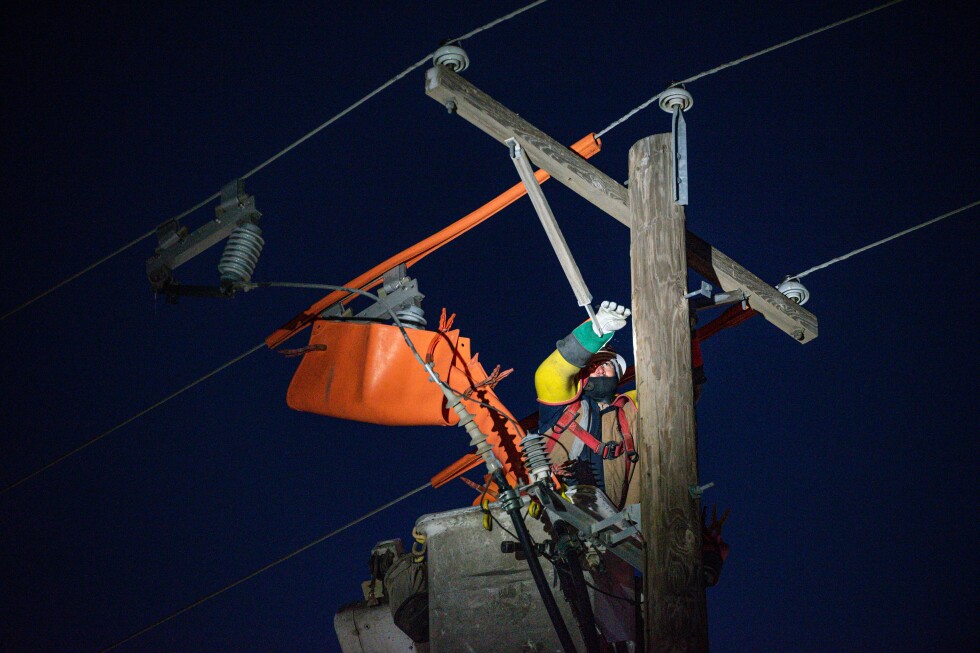
Ice storms present a unique challenge that lingers well after the precipitation stops. As Avery explained, crews face treacherous conditions on ice-covered roads while attempting repairs, and freezing temperatures take a physical toll on workers. Most frustratingly, the damage continues as ice-laden branches keep breaking under the weight.
“You get a power line back up and energized, and just as you leave, you hear a loud crack and boom, there’s a tree limb crashing through what you just repaired,” Avery said.
Texas Takes Precautions After 2021 Disaster
Texas experienced the catastrophic consequences of winter storm infrastructure failures in 2021, when Winter Storm Uri paralyzed the state’s power grid for five days, resulting in 246 storm-related deaths according to the Texas Department of Health Services.
However, experts note that Uri’s devastating impact stemmed primarily from inadequately weatherized power plants and natural gas systems rather than downed transmission lines.
“The main lesson was to enforce requirements for utilities to be ready for cold weather,” explained Georg Rute, CEO of Gridraven, a Texas-based firm that analyzes power system risks for grid operators.
Rute believes utilities have implemented lessons from the 2021 disaster and doesn’t anticipate a similar grid collapse. Nevertheless, he cautions that vulnerabilities remain, including transmission lines that may trip during extreme cold conditions.
Texas Governor Greg Abbott sought to reassure residents on Thursday about the state’s readiness for the approaching storm.
“The ERCOT grid has never been stronger, never been more prepared, and is fully capable of handling this winter storm,” Abbott said. He acknowledged that residents might still lose power from ice-weighted lines and fallen trees but emphasized that energy providers are strategically positioned to quickly address outages.
Vulnerable Communities Hit Hardest
Winter Storm Uri exposed significant disparities in how power outages affect different communities, according to Jennifer Laird, a sociology professor at City University of New York’s Lehman College who specializes in energy insecurity.
Research shows residents in predominantly Hispanic neighborhoods experienced more outages during Uri, while Black residents were more likely to face extended outages lasting a day or more.
Laird explained that outages expose vulnerabilities many don’t anticipate until crisis strikes—from life-sustaining medical equipment requiring electricity to families with infants who depend on refrigeration for breast milk. Younger households and those with lower education levels are particularly at risk, as they’re less likely to have emergency plans in place.
“There are lots of ways that we’re dependent on energy that we don’t realize until a crisis hits—and then it really exposes those vulnerabilities,” Laird said.
Even if this weekend’s storm doesn’t cause widespread outages, financial repercussions could linger for months. Approximately one in six U.S. households are already behind on energy bills, and millions cranking up heat during the cold snap will face higher costs.
“A month or two after the storm hits, suddenly the bill hits,” Laird warned. “We could see a rise in disconnection notices and disconnections.”
Regional Utilities Mobilize Resources
Utilities across the Southeast are warning customers to prepare for potential outages. Duke Energy, serving more than 4.6 million customers in North and South Carolina, advised residents to be ready for multiple days without power and has mobilized over 18,000 workers to respond once conditions permit safe operations.
The Tennessee Valley Authority, which provides power to over 10 million people across seven states, has invested hundreds of millions in weatherization since a 2022 winter storm and has built system redundancies to reroute power when transmission lines fail.
“It takes a lot of snow and ice to down one of those big lines,” TVA spokesperson Scott Brooks noted, expressing confidence in the system’s resilience.
As communities prepare for the approaching storm, both utilities and emergency management officials emphasize the importance of individual preparation—including alternative heat sources, emergency supplies, and family safety plans—as the first line of defense against winter weather’s potentially devastating impact.
Fact Checker
Verify the accuracy of this article using The Disinformation Commission analysis and real-time sources.

8 Comments
Challenging situation for sure. Hurricanes are bad enough, but ice storms can be even more damaging to power infrastructure. It’s good to see officials issuing urgent warnings so people are prepared. Hoping utilities have the resources and plans in place to limit outages as much as possible.
That’s a good point. Freezing rain poses unique risks compared to hurricanes. The weight of ice on power lines and equipment can cause widespread and prolonged outages. Aggressive tree trimming and infrastructure upgrades are probably crucial for utilities to be more resilient.
Ice storms are no joke. The damage to power lines and transformers can be extensive. It’s smart that utilities are closely monitoring the weather and coordinating their response teams. Hopefully they can get the lights back on as quickly and safely as possible for those affected.
Fascinating to see the regional differences in heating sources. Makes sense that Southern states would rely more on electric heating. But that also means they’re more vulnerable when the power goes out in winter storms. Curious what backup power options are available for residents in those areas.
Absolutely, having electric heating as the primary source does increase the risk. Generators, space heaters, and insulation upgrades could be helpful for residents to have on hand as backups. But those options aren’t always affordable or accessible, so utilities need robust preparation and quick response.
Freezing rain can be a real nightmare for power utilities and residents. Keeping the grid running during these ice storms is crucial, especially in the South where electricity is the main heat source. Curious to see how utilities are preparing to minimize outages and restore power quickly if needed.
Absolutely. Proactive coordination and response teams will be key to getting power back on as soon as possible for those affected. Efficient restoration efforts can make a big difference for folks relying on electric heating.
Power outages are always disruptive, but losing heat in freezing temperatures can be life-threatening. Glad to see officials sounding the alarm so communities can take precautions. Curious to learn more about the specific steps utilities and local governments are taking to mitigate the impacts.