


Listen to the article
Chile Battles Devastating Wildfires as Death Toll Rises to 20
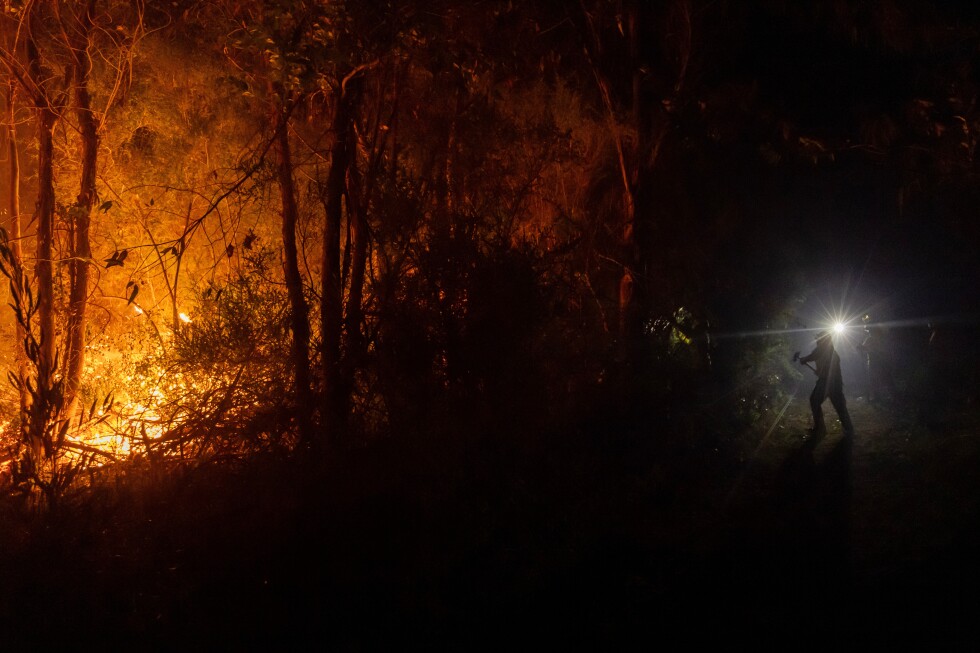
Chile is grappling with one of its worst wildfire emergencies in recent years, as deadly blazes sweep through central and southern regions of the South American country, leaving destruction in their wake. At least 20 people have died, and more than 50,000 residents have been forced to evacuate their homes as flames consume forests, farmlands, and residential areas.
The crisis, which began in mid-January in the Biobio and Nuble regions approximately 500 kilometers south of Santiago, prompted the government to declare a state of catastrophe—a rare emergency designation that allows military coordination in firefighting efforts.
Fire scientists point to a lethal combination of factors driving these unusually destructive blazes. While the number of fires remains within normal ranges, the area they are burning has nearly tripled compared to typical fire seasons.
“We are living a particularly critical situation that is very far from the usual averages that are normally seen in wildfire seasons,” said Miguel Castillo, director of the Forest Fire Engineering Laboratory at the University of Chile.
This pattern of fewer ignitions causing far greater damage mirrors trends seen in extreme wildfire seasons worldwide, creating immense challenges for firefighting teams who must battle multiple fires advancing toward communities simultaneously.
“This is a huge challenge for firefighters,” explained Virginia Iglesias, director of Earth Lab at the University of Colorado Boulder and a fire scientist and statistician.
Chile’s prolonged drought—now spanning more than a decade—has created ideal conditions for fire spread by leaving vegetation unusually dry. High summer temperatures and strong, shifting winds have further elevated the risk. These conditions are particularly dangerous in Chile’s central and southern regions, which are dominated by industrial pine and eucalyptus plantations grown for timber and pulp.
Fire experts identify these plantation landscapes as a significant factor in how fires behave. “Plantations facilitate the rapid spread of fire,” Castillo noted.
Alejandro Miranda, a researcher at Chile’s Center for Climate and Resilience Research, explained that plantations typically have high fuel loads, large continuous areas of similar-aged trees, and abundant dead vegetation on the ground. Without proper management, branches beneath the canopy can create a “ladder,” allowing flames to climb into treetops and generate high-intensity crown fires.
“Pine and eucalyptus are very flammable and will build up more fuels over time,” said Mark Cochrane, a fire ecologist at the University of Maryland’s Center for Environmental Science. These species also tend to send burning embers far ahead of the main blaze, igniting new fires beyond containment lines, especially in steep terrain and strong winds.
“It isn’t usually the direct fire that ignites homes,” Cochrane added. “It is embers landing everywhere.”
By contrast, native forests tend to be more diverse and often more humid, which can slow fire spread. This difference highlights how human-shaped landscapes interact with changing climate conditions to create more dangerous fire environments.
Miranda pointed out that Chile’s recent extreme fire seasons, including those in 2017 and 2023, coincided with record high temperatures and rainfall deficits exceeding 30% below historical averages. “These conditions are the ones that are projected to become more intense in the future,” he warned.
Nearly all wildfires in Chile are caused by human activity, whether intentional or through negligence. Human-caused ignitions can extend the fire season beyond natural patterns, as they aren’t limited to lightning or seasonal storms.
The impacts extend well beyond burned trees. Smoke from the fires degrades air quality and poses serious health risks for vulnerable populations, often far from the flames themselves. After fires pass, soils can become water-repellent, increasing the risk of runoff, floods, and landslides in what scientists call “cascading hazards.” Sediment can contaminate rivers and raise water treatment costs.
In towns like Penco and Lirquen, families are confronting scenes of total destruction—roofs collapsed, vehicles melted into twisted frames, and community buildings reduced to rubble. The human toll has been devastating, with search and rescue efforts continuing in some areas.
Looking ahead, Iglesias emphasized that while firefighting is essential in the current emergency, prevention must be the focus going forward. She advocated for comprehensive measures including reducing ignitions, managing fuels, addressing climate change, and redesigning communities with defensible space around homes.
“These are very concrete actions that we can take to reduce the fire problem,” she concluded.
Fact Checker
Verify the accuracy of this article using The Disinformation Commission analysis and real-time sources.

8 Comments
This is a tragic situation unfolding in Chile. While the number of fire ignitions may be within normal ranges, the massive scale of destruction is deeply concerning. Strengthening firefighting capabilities and implementing preventative measures will be crucial.
The devastation caused by these Chilean wildfires is heartbreaking. The article’s insights into the factors driving the faster spread and higher intensity, like climate change, are deeply concerning. I hope Chile can get the crisis under control and receive the resources needed to recover.
Agreed, this is a grim situation that underscores the critical importance of tackling climate change and building resilience. My thoughts are with the people of Chile during this difficult time.
This is a devastating situation for Chile. Wildfires exacerbated by climate change are wreaking havoc, with tragic loss of life and property. It’s critical that the government and firefighters get the crisis under control as quickly as possible.
Agreed, these wildfires are clearly much more extreme than normal. Chile needs all the support it can get to combat this emergency.
Wildfire disasters like this in Chile are a sobering reminder of the urgent need to address climate change. The article’s details on the unprecedented nature of these blazes are alarming. I hope the government and global community can provide robust support to Chile during this crisis.
Concerning to see the rapid spread and intensity of these Chilean wildfires. The article highlights how climate change is a major factor, with the area burned nearly tripling compared to typical seasons. Urgent action is needed to address the root causes.
You’re right, the article paints a very troubling picture. Climate change is clearly exacerbating the wildfire threat in Chile and many other regions around the world.