


Listen to the article
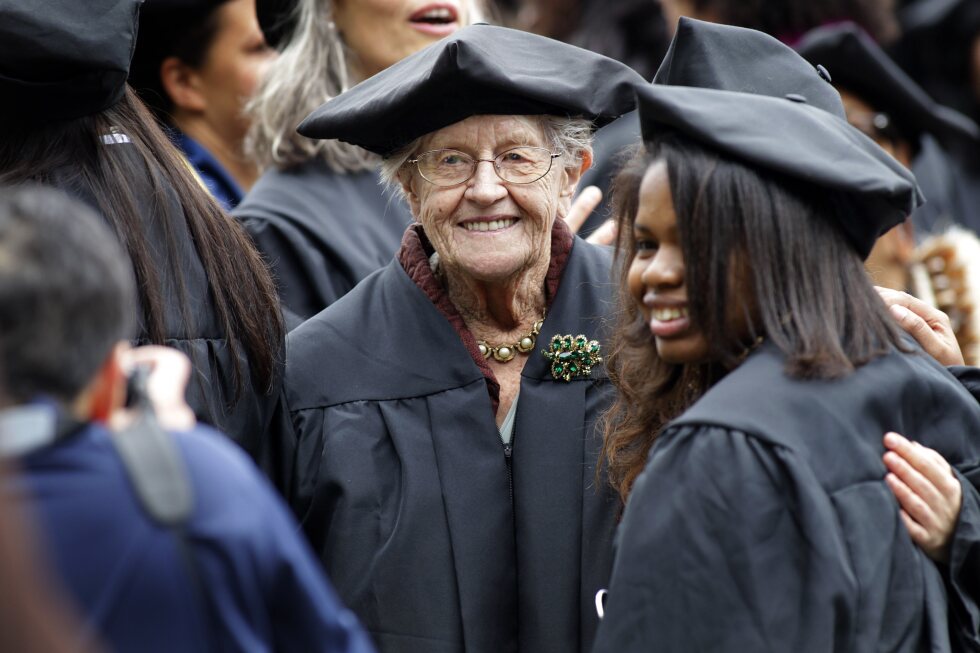
Millions of American adults are heading back to classrooms, both virtual and physical, in pursuit of new skills, career advancement, or personal enrichment. This growing trend reflects changing economic realities and the evolving needs of what experts now call “the new majority student.”
At Northern Arizona University in Flagstaff, Director of Continuing Education Eric Deschamps has observed firsthand the diversity of adult learners. “They might have kids, they might be working full-time, they might be older non-traditional students,” Deschamps explains. For these individuals, returning to education “opens doors that might not have been open to them otherwise.”
The scale of adult education is substantial. UCLA Extension, the continuing education division of the University of California, Los Angeles, enrolled approximately 33,500 students during the last academic year—nearly matching UCLA’s undergraduate population of 32,600. Almost half of these continuing education students were over 35 years old.
UCLA’s interim associate dean for academic programs and learning innovation, Traci Fordham, prefers to call these adult learners “the new majority student,” noting that they “tend to already be employed, often supporting a family, looking for up-skilling or sometimes a career change.”
The offerings at institutions like UCLA Extension are remarkably diverse, spanning more than 90 certificate and specialization programs. These range from practical career-focused programs in accounting, paralegal studies, and early childhood education to more interest-driven courses in photography, novel writing, and even the Japanese art of ikebana (flower arranging).
Economic uncertainty and rapid technological advancement are driving many adults back to school. “A great example of that is artificial intelligence,” Deschamps points out. “These new technologies are coming out pretty quickly, and for folks that got a degree even just 5 or 10 years ago, their knowledge might be a little bit outdated.”
For adults considering a return to education, experts recommend a thoughtful assessment of time, budget, and long-term goals. Deschamps suggests asking yourself where you want to be in 5 to 10 years and how additional education can help get you there. Whether the goal is launching a microbrewery or securing a promotion, targeted education can help bridge the gap between current skills and future aspirations.
Institutions are increasingly recognizing the unique needs of adult learners. Many offer flexible learning formats—including online, in-person, accelerated, and self-paced options—to accommodate busy schedules. Schools like UCLA and Northern Arizona University also work to keep continuing education costs lower than degree-track programs and provide various forms of financial assistance.
Katie Swavely, assistant director for academic advising and student success at UCLA, understands the challenges of returning to school as an adult. After earning her undergraduate degree in anthropology, Swavely waited 10 years before pursuing her master’s in counseling, which she completed in 2020 with the help of employer-sponsored tuition assistance.
“It was hard. And I thought about quitting many times,” admits Swavely, who balanced her studies with marriage and raising two children. “We had to budget to the extreme and find additional ways to make it work.” Despite the challenges, Swavely found the experience rewarding and is now considering a book editing course to further her education.
Beyond financial constraints, many adults face psychological barriers when contemplating a return to education. Concerns about rusty writing skills or inadequate math and technology knowledge can trigger feelings of uncertainty. “Many of our learners haven’t imagined themselves in any kind of higher education environment,” Fordham notes.
Swavely emphasizes the importance of building a support network and taking advantage of available counseling and advising services. She encourages adult learners to set boundaries and seek help when needed. Most importantly, she reminds potential students, “You’re never too old to learn.”
As workforce demands continue to evolve and technological advancements reshape industries, continuing education offers a pathway for adults to remain competitive and fulfilled. For many, the balancing act of work, family, and education is challenging but ultimately rewarding, opening new doors of opportunity regardless of age or background.
Fact Checker
Verify the accuracy of this article using The Disinformation Commission analysis and real-time sources.

8 Comments
Upskilling and personal enrichment are so important in today’s rapidly evolving job market. Programs that enable adults to gain new skills and knowledge are valuable investments.
Returning to education can open up new doors for adults, as the article suggests. I’m curious to learn more about the specific benefits and opportunities these learners are finding.
Yes, access to higher education is crucial for social and economic mobility. It’s great to see universities expanding their offerings to support adult learners.
Continuing education programs are a great way for working professionals to advance their careers or explore new interests. It’s encouraging to see universities adapting to support this growing demographic.
Absolutely, flexibility and accessibility are key for adult learners who may have family or job commitments. Online and evening classes can make a big difference.
Fascinating to see the rise of adult learners pursuing new skills and personal enrichment. This reflects the evolving nature of education and the diverse needs of today’s workforce.
It’s impressive that UCLA Extension’s continuing education program is nearly matching the size of the university’s undergraduate population. Clearly there is strong demand for these types of programs.
The ‘new majority student’ is an interesting concept. I wonder how universities are adjusting their curriculum and delivery models to cater to the unique needs of this diverse group of adult learners.