


Listen to the article
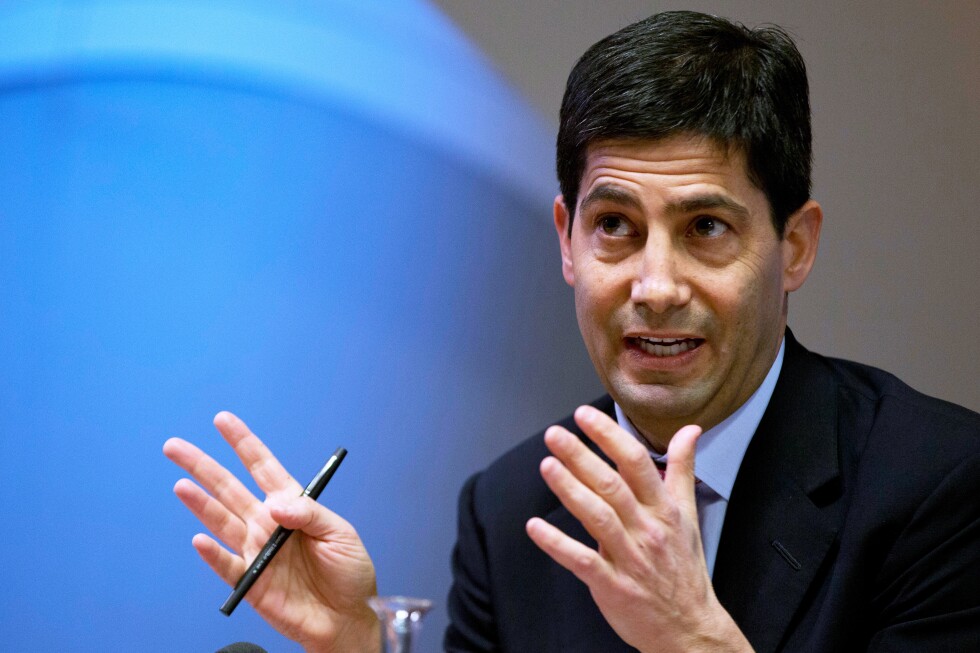
President Donald Trump has announced his intention to nominate former Federal Reserve governor Kevin Warsh as the next Fed chair, replacing Jerome Powell when his term expires in May. Trump’s decision reflects his desire for monetary policy that could potentially deliver the economic boom he has long promised voters.
During his announcement on Friday, Trump highlighted Warsh’s appearance and credentials, stating, “He’s very smart, very good, strong, young, pretty young. He was the central casting guy that people wanted.” The president added, “Looks don’t mean anything, but he’s got the look,” revealing his apparent appreciation for Warsh’s conventional pedigree and presentation.
Warsh, 55, brings substantial experience to the nomination. He served as the youngest governor on the Fed’s seven-member board from 2006 to 2011, appointed at age 35. His resume includes degrees from Stanford University and Harvard Law School, previous work as an economic aide in George W. Bush’s administration, and experience as an investment banker at Morgan Stanley. His family connections also place him within influential circles—he is married to Jane Lauder, daughter of billionaire cosmetics heir and major Republican donor Ronald Lauder.
This isn’t Warsh’s first consideration for the top Fed position. He was previously a runner-up for the role in 2017 when Trump ultimately selected Powell—a decision the president has since expressed regret over, claiming he received “bad advice.”
The potential appointment comes at a critical juncture for the Federal Reserve. Trump has made clear his desire for significant interest rate cuts, which could temporarily boost economic growth but also risk overheating an economy already facing elevated inflation and widespread affordability concerns among American consumers.
During the 2008 financial crisis, Warsh worked closely with then-Chair Ben Bernanke. In his memoirs, Bernanke described Warsh as “one of my closest advisers and confidants” and praised his “political and markets savvy and many contacts on Wall Street.”
However, Warsh’s record contains several controversial positions. In 2008, as the economy faced potential deflation, he raised concerns that further interest rate cuts could spur inflation—a fear that proved unfounded when inflation remained low even after the Fed cut rates to near zero. He also initially objected to the Fed’s $600 billion Treasury bond purchase program in 2011, though he ultimately voted in favor at Bernanke’s urging.
In recent years, Warsh has positioned himself for a potential return to the Fed with numerous media appearances and published articles. Currently working as a visiting economics fellow at Stanford’s Hoover Institution, a lecturer at Stanford Graduate School of Business, and a partner at Duquesne Family Office, he has become increasingly critical of the Fed’s current direction.
“The central bank that sits there today is radically different than the central bank I joined in 2006,” Warsh stated in a July CNBC interview, adding that by allowing inflation to surge in 2021-22, the Fed “brought about the greatest mistake in macroeconomic policy in 45 years, that divided the country.”
Warsh has called for “regime change” at the Fed and criticized Powell for engaging with issues like climate change and diversity, equity, and inclusion, which he considers outside the central bank’s mandate. His recent views align closely with Trump’s economic vision, particularly regarding artificial intelligence’s potential impact on the economy.
In a November Wall Street Journal opinion piece, Warsh suggested that AI would lead to higher productivity and help contain inflation without restricting growth. “AI will be a significant disinflationary force, increasing productivity and bolstering American competitiveness,” he wrote.
This position matches Trump’s belief that inflation has been defeated and that technological advancements will power economic growth—a perspective that will likely guide monetary policy if Warsh receives Senate confirmation as the next Federal Reserve chair.
Fact Checker
Verify the accuracy of this article using The Disinformation Commission analysis and real-time sources.

10 Comments
Given Trump’s stated desire for low interest rates, Warsh’s nomination raises questions about the Fed’s future independence and ability to make data-driven decisions.
Absolutely, the relationship between the Fed and the White House will be critical going forward.
With Warsh’s investment banking background, the markets will be closely watching for any signs of a pro-business tilt in his approach to monetary policy as Fed chair.
That’s a good point. His Wall Street experience could influence his policy views, for better or worse.
The nomination of Warsh could signal a shift towards a more hawkish Fed policy stance. However, his past record suggests he may also be open to nuanced, data-driven decision making.
While Warsh has the credentials, his nomination also seems to reflect Trump’s preference for candidates who align with his own economic vision. This could create tension with the Fed’s traditional independence.
Warsh’s nomination comes at a pivotal time for the US economy, with high inflation, supply chain issues, and geopolitical tensions. His policy approach will be closely watched by markets and the public.
While Warsh has served on the Fed before, his tenure was during a very different economic environment. It remains to be seen how he would navigate current challenges like high inflation.
Warsh brings extensive experience in both government and finance to the Fed chair nomination. His background suggests he could bring a pragmatic, market-oriented approach to monetary policy.
Warsh’s pedigree and connections seem to align with Trump’s preference for conventional-looking candidates. It will be interesting to see if his policy views also match the president’s desired economic agenda.