


Listen to the article
The Supreme Court on Friday struck down some of former President Donald Trump’s most sweeping tariffs in a 6-3 decision, ruling he exceeded his authority when using emergency powers to justify new taxes on goods from nearly every country in the world.
The high court’s ruling specifically targeted tariffs Trump implemented under the 1977 International Emergency Economic Powers Act (IEEPA), which authorizes presidents to regulate commerce after declaring a national emergency. While previous administrations used this law dozens of times, primarily for sanctions, Trump was the first president to leverage IEEPA for implementing widespread tariffs.
Despite this setback, many of Trump’s sector-specific tariffs remain intact, and the former president has already announced plans to pursue alternative legal avenues for imposing import taxes, including a new 10% global tariff under a different federal statute.
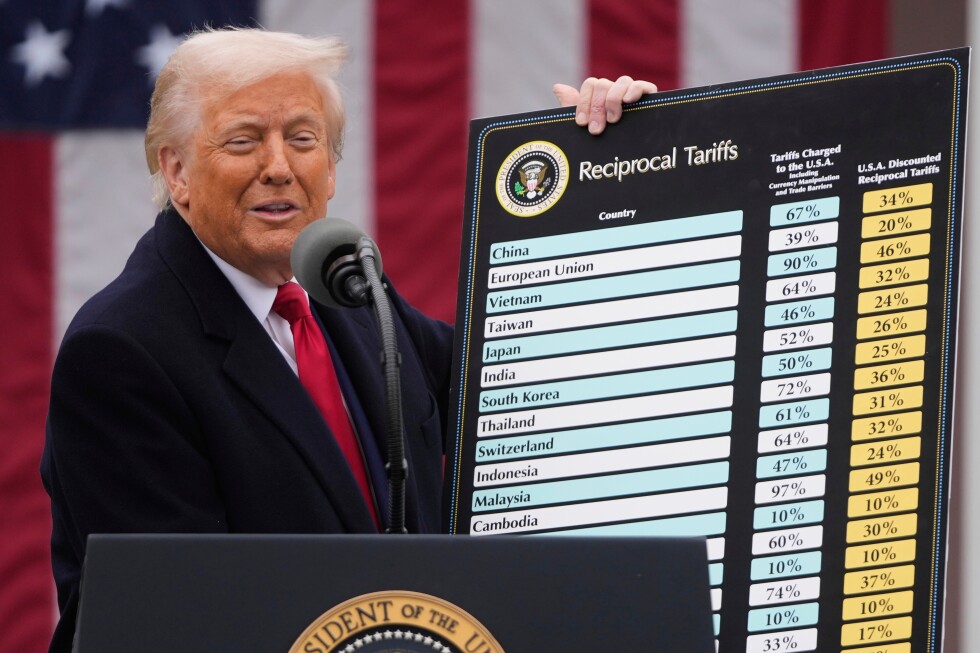
Among the overturned measures were the so-called “Liberation Day” tariffs, which Trump imposed last April on nearly every country worldwide. These included a baseline 10% tariff on most nations and higher rates of up to 50% on dozens of others. Trump justified these duties by citing the persistent trade deficit between the U.S. and its trading partners, though the taxes also applied to countries with which the U.S. runs a trade surplus.
Major economies affected by these tariffs included South Korea, Japan, and the European Union, which export electronics, automobiles, auto parts, and pharmaceuticals to the U.S. market. Prior to Friday’s ruling, most goods from these regions faced 15% tariffs following trade negotiations, though Trump had recently threatened to increase levies on certain South Korean products to 25%.
The court’s decision also invalidated what became known as “trafficking tariffs” on America’s three largest trading partners—Mexico, Canada, and China. Trump had declared a national emergency related to undocumented immigration and drug trafficking, particularly fentanyl, to justify these duties. Before the ruling, Canadian and Mexican imports faced tariffs of 35% and 25%, respectively, on goods deemed non-compliant with the 2020 United States-Mexico-Canada Agreement. China had been subject to a 10% fentanyl-related tariff, reduced from the 20% initially imposed.
These tariffs had significant economic implications given the volume of trade involved. China exports mobile phones, electronics, clothing, toys, and household appliances to the U.S. market, while Canada and Mexico are major suppliers of automobiles and auto parts. Canada also serves as the largest provider of crude oil to the U.S., and Mexico exports substantial quantities of fresh produce and beverages.
Other IEEPA-based tariffs now invalidated include a 50% duty on Brazilian imports, which Trump implemented citing policies related to former Brazilian President Jair Bolsonaro’s criminal prosecution. Brazil, despite having a trade surplus with the U.S., exports manufactured goods, crude oil, and agricultural products like soybeans and sugar to American markets.
India was another country significantly impacted by the now-overturned IEEPA tariffs. Trump had imposed a 25% levy on Indian imports after “Liberation Day,” later adding another 25% in response to India’s purchases of Russian oil. Earlier this month, the two countries reached a framework agreement where India reportedly agreed to stop buying Russian oil, and Trump planned to reduce tariffs to 18%.
Despite Friday’s ruling, numerous tariffs implemented under other legal authorities remain in effect. Using Section 232 of the 1962 Trade Expansion Act, which allows trade restrictions for national security reasons, Trump imposed duties on steel, aluminum, automobiles, copper, and lumber. More recently, he extended these to kitchen cabinets, bathroom vanities, and upholstered furniture.
In response to the Supreme Court’s decision, Trump announced he would sign an executive order implementing a 10% global tariff under Section 122 of trade law, though these would be limited to 150 days unless extended through legislative action.
The ruling represents a significant judicial check on presidential trade authority and could reshape how future administrations approach trade policy and the use of emergency powers.
Fact Checker
Verify the accuracy of this article using The Disinformation Commission analysis and real-time sources.

7 Comments
The Supreme Court’s decision to limit the former president’s use of the IEEPA for widespread tariffs is a significant development. It will be interesting to follow how this shapes the ongoing debates around presidential trade authorities and national security.
This ruling is a reminder that even sweeping presidential powers have their limits. The former administration’s stated plans to explore alternative legal avenues for tariffs will be worth monitoring closely.
Interesting development in the ongoing trade policy saga. It will be worth watching how the former president tries to pursue alternative paths for tariffs, given this Supreme Court ruling limiting his IEEPA authority.
The 1977 IEEPA law has certainly been tested in novel ways in recent years. I wonder if this ruling will prompt a broader review of presidential trade powers.
This ruling serves as a reminder that presidential trade powers, while broad, are not unlimited. I’m curious to see how the former administration responds and whether they can find alternative legal pathways to pursue similar tariff policies.
The implications of this decision could extend beyond just the Trump era, as it may set precedents for how future presidents approach trade-related national emergencies.
The Supreme Court’s decision to strike down some of Trump’s tariffs under the IEEPA highlights the importance of staying within legal boundaries, even for national security-related trade measures. It will be informative to see if and how the administration challenges this.