


Listen to the article
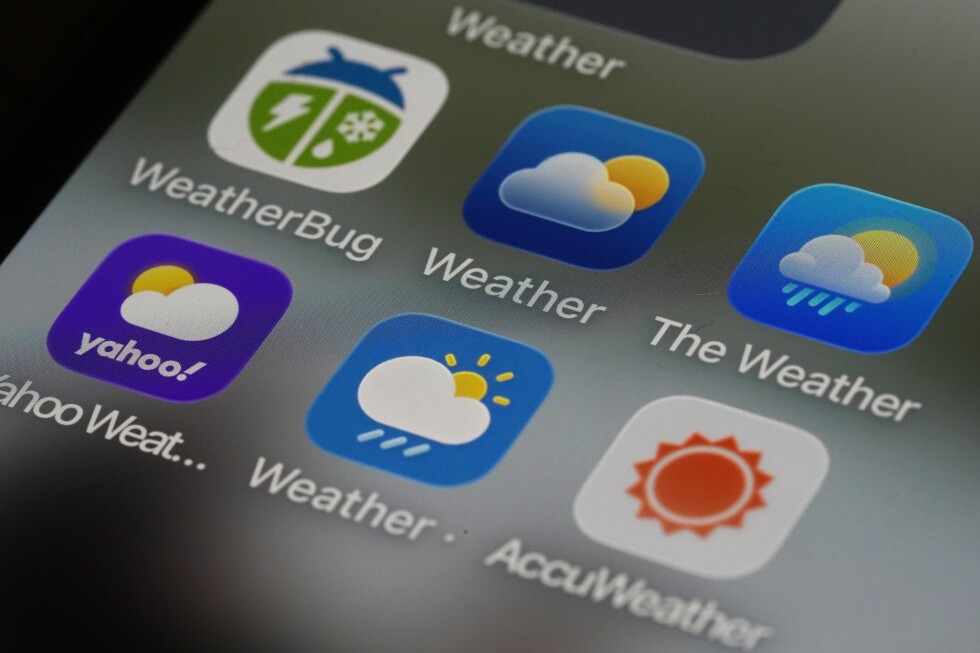
In the midst of a dangerous multistate winter storm, meteorologists are advising the public to look beyond smartphone weather apps for critical forecasting information, emphasizing that human expertise provides superior guidance during complex weather events.
The current storm’s mix of heavy snow, ice, and subzero temperatures across the United States highlights the limitations of simplified app forecasts. Weather professionals interviewed by The Associated Press stress that the rapidly changing conditions and varying precipitation types within small geographic areas require nuanced interpretation that automated systems often miss.
“Weather apps are really bad at storms that have multiple types of precipitation and it really makes messaging hard,” explains Marshall Shepherd, University of Georgia meteorology professor and past president of the American Meteorological Society. “Apps don’t understand the details of why snow, sleet or freezing rain happens.”
The convenience of a snowflake icon on a smartphone screen may prove inadequate when conditions become hazardous. Jason Furtado, meteorology professor at the University of Oklahoma, points out that extreme weather events demand human forecasters who can interpret data and provide localized predictions.
“Many weather forecast apps use AI methods to either make the forecast or ‘interpolate’ from larger grids to your hometown, introducing the potential for significant errors,” Furtado notes.
Most apps derive their information from the National Weather Service, sometimes enhanced with proprietary data and European forecast models. Many offer location-specific forecasts by using software that narrows broader regional predictions to specific geographic coordinates. However, this automated approach can miss critical details during complex storms.
Victor Gensini, meteorology professor at Northern Illinois University, points out that apps frequently “oversimplify uncertainty and present highly precise-looking numbers that imply more confidence than actually exists.” This shortcoming becomes particularly problematic during multifaceted winter storms.
Steven DiMartino, founder of the subscription-based NY NJ PA Weather service, which uses the tagline “Meteorology Not Modelology,” emphasizes the crucial human element. “The problem with the weather app is that it just provides data, but not explanation,” DiMartino says. “Anyone can look at data, but you need a meteorologist, you need that human touch to look at it and say, ‘Hmm, that looks like an error; we’re gonna tweak this.'”
Not all weather apps are created equal, according to experts. Those that combine National Weather Service data with meteorological expertise can provide valuable information. The Weather Channel app, which has seen increased usage during the current storm, employs numerous models, data sources, weather observers, and staff meteorologists.
“It’s an all-hands-on-deck kind of approach that we take,” says James Belanger, vice president of the company that owns the Weather Channel. Their system synthesizes information from over 100 weather models and input from more than 100,000 citizen observers, processed through artificial intelligence and overseen by a team of meteorologists.
Cory Mottice, a National Weather Service meteorologist, developed the EverythingWeather app to provide easier access to weather service data. He emphasizes that his app’s strength lies in utilizing information from professional meteorologists at more than 125 weather service offices rather than relying solely on raw computer modeling.
“You have actual meteorologists that are experts in their field at different places all over the country for that specific area, looking at the data, adjusting it, making the forecast as needed,” Mottice explains.
Experts also caution against relying on social media for weather information, where sensationalism and misinformation can flourish. “Weather is complex, and social media tends to reward confidence and drama, not nuance,” says Gensini.
Kim Klockow McClain, an extreme weather social scientist at the University Corporation for Atmospheric Research, warns that people are “getting misled by hyped forecasts,” adding that “when people are continually exposed to only worst-case forecasts, research suggests they will lose trust over time.”
As this winter storm continues to impact multiple states, meteorologists recommend seeking out local TV or radio newscasts, online livestreams, or detailed websites where professional forecasters can explain the nuances of these dangerous weather conditions and provide the most accurate, localized information possible.
Fact Checker
Verify the accuracy of this article using The Disinformation Commission analysis and real-time sources.

8 Comments
Interesting to hear that weather apps often miss the nuance and complexity of dangerous winter storms. Relying solely on simplified digital forecasts can be risky, especially for rapidly changing conditions with mixed precipitation. Human meteorological expertise seems crucial for public safety during these events.
Agreed. The ability of weather professionals to interpret the details and provide more tailored guidance is invaluable when conditions become hazardous. Apps have limitations in understanding the intricacies of these complex weather systems.
This highlights the importance of not over-relying on weather apps, which can’t match the expertise of human meteorologists, especially for severe winter storms. The article’s point about apps failing to grasp the subtleties of precipitation types is a good reminder to seek out more robust forecasting sources.
Yes, the convenience of weather apps can be deceiving when the weather turns dangerous. Nuanced interpretation by weather professionals is crucial for public safety during extreme events like this multi-state winter storm.
As someone living in a region prone to severe winter weather, I appreciate the emphasis on seeking out expert human forecasting during these critical events. Weather apps may be convenient, but they clearly fall short when it comes to the nuanced interpretation required for hazardous, rapidly evolving storm systems.
Absolutely. Relying solely on weather apps can be risky, especially for extreme winter conditions. Consulting meteorologists who can provide more detailed and tailored guidance is the prudent approach for public safety.
Fascinating insights on the limitations of weather apps during complex winter storms. The human expertise of meteorologists in understanding the details of precipitation types and rapidly changing conditions seems indispensable, even in our increasingly digital world. This is an important reminder to consult authoritative sources, not just rely on simplified smartphone forecasts.
This is a good reminder that technology has its limitations, even in the weather forecasting domain. While weather apps are generally useful, they can’t match the expertise of human meteorologists when it comes to anticipating and communicating the complexities of dangerous winter storms. Heeding the advice of weather professionals is crucial.