


Listen to the article
At least 200 miners have perished in a devastating tunnel collapse at a major coltan mine in eastern Democratic Republic of Congo, highlighting the deadly risks in the region’s conflict-ridden mining sector.
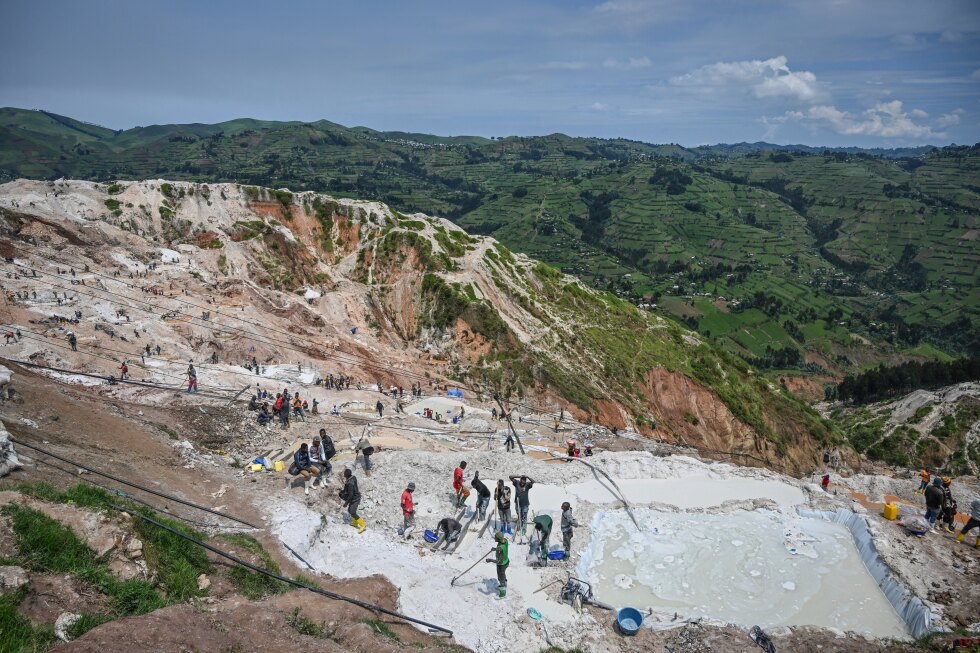
The disaster occurred last Wednesday at the Rubaya mines after heavy rainfall caused several hand-dug tunnels to cave in, according to regional authorities. The site, which produces minerals critical for global electronics and aerospace industries, has been under the control of Rwanda-backed M23 rebels since May 2024.
Rescue efforts have been complicated by the mine’s remote location, approximately 25 miles west of Goma, the regional capital. An unknown number of miners remain missing and trapped beneath the rubble as recovery operations continue.
“People dig everywhere, without control or safety measures,” said Clovis Mafare, a former miner at the site. “In a single pit, there can be as many as 500 miners, and because the tunnels run parallel, one collapse can affect many pits at once.”
The catastrophe has reignited tensions between the Congolese government and rebel forces. Congo’s government expressed solidarity with victims’ families while accusing the rebels of illegally and unsafely exploiting the region’s natural resources. M23 representatives countered by accusing the government of politicizing what they described as a “tragic accident,” pointing to similar collapses at government-controlled mining operations.
The Rubaya mines sit at the center of eastern Congo’s complex conflict, which has raged for decades. The area produces coltan, a metallic ore containing tantalum and niobium, both classified as critical minerals by major economies including the United States, European Union, China, and Japan.
Tantalum is essential for manufacturing mobile phones, computers, automotive electronics, and military hardware, while niobium is crucial for pipelines, rockets, and jet engines. This makes the mines strategically important not only for regional players but also for global technology supply chains.
According to United Nations reports, since taking control of Rubaya, the M23 has imposed taxes on coltan trade and transport, generating at least $800,000 monthly. The minerals are reportedly exported to neighboring Rwanda, though tracing the supply chain to Western markets remains challenging due to complex intermediaries.
The M23 rebel group, one of approximately 100 armed factions operating in eastern Congo, has been on a significant offensive since early 2023. The group, comprised primarily of fighters from the Tutsi minority who failed to integrate into the Congolese army, claims to defend Tutsis and Congolese of Rwandan origin from discrimination.
Critics contend this is merely a pretext for Rwanda to gain economic and political influence over mineral-rich eastern Congo. The Congolese government, United States, and UN experts have accused Rwanda of backing M23, whose fighting force has grown from hundreds in 2021 to approximately 6,500 today.
While Rwanda denies supporting the rebels, it acknowledged last year that it has deployed troops and missile systems in eastern Congo, claiming the presence is necessary for its security. UN experts estimate up to 4,000 Rwandan forces are operating in Congo.
The Trump administration attempted to broker peace in December, hosting leaders from Rwanda and Congo to sign what was described as a “historic” agreement. Critics argue the deal has done little to reduce hostilities in the region, which remains strategically important to U.S. interests.
Eastern Congo’s mineral wealth has drawn particular attention from Washington as it seeks to reduce dependence on China for critical minerals. China currently dominates global rare earth mining and processing, controlling approximately 70% of mining and 90% of processing capacity worldwide.
The collapse at Rubaya represents one of the deadliest mining disasters in recent years in a region already facing a severe humanitarian crisis due to ongoing conflict. It underscores the dangerous conditions faced by thousands of artisanal miners who work with minimal safety protections in pursuit of minerals that power the global technology industry.
Fact Checker
Verify the accuracy of this article using The Disinformation Commission analysis and real-time sources.

5 Comments
This underscores the complex challenges in Congo’s mining industry, from political instability to lack of infrastructure. Stricter safety protocols and better coordination between stakeholders could help prevent such devastating accidents in the future.
It’s concerning to see how unregulated and dangerous these mining operations can be. More needs to be done to ensure worker safety, even in remote and rebel-controlled areas. I hope the recovery efforts can locate any missing miners.
What a terrible tragedy. Miners in Congo face incredible risks, and this disaster highlights the urgent need for reform. I hope the international community can pressure all parties to prioritize worker safety and responsible mining.
This is a tragic loss of life. Mining in conflict zones often lacks proper safety standards, putting workers at grave risk. The Congolese government must work with regional authorities to improve oversight and protect miners’ wellbeing.
The loss of 200 miners’ lives is heartbreaking. While coltan is a critical mineral, the human cost of extracting it in these conditions is unacceptable. More ethical and sustainable mining practices are urgently needed in the region.