


Listen to the article
Tensions Escalate in Strait of Hormuz as Iran Plans Military Drill
The strategic Strait of Hormuz has once again become a flashpoint of international tension as Iran prepares to conduct a live-fire military drill in this vital shipping lane. Iranian authorities have issued warnings to vessels that exercises will take place Sunday and Monday in waters that partially overlap with critical commercial shipping routes.
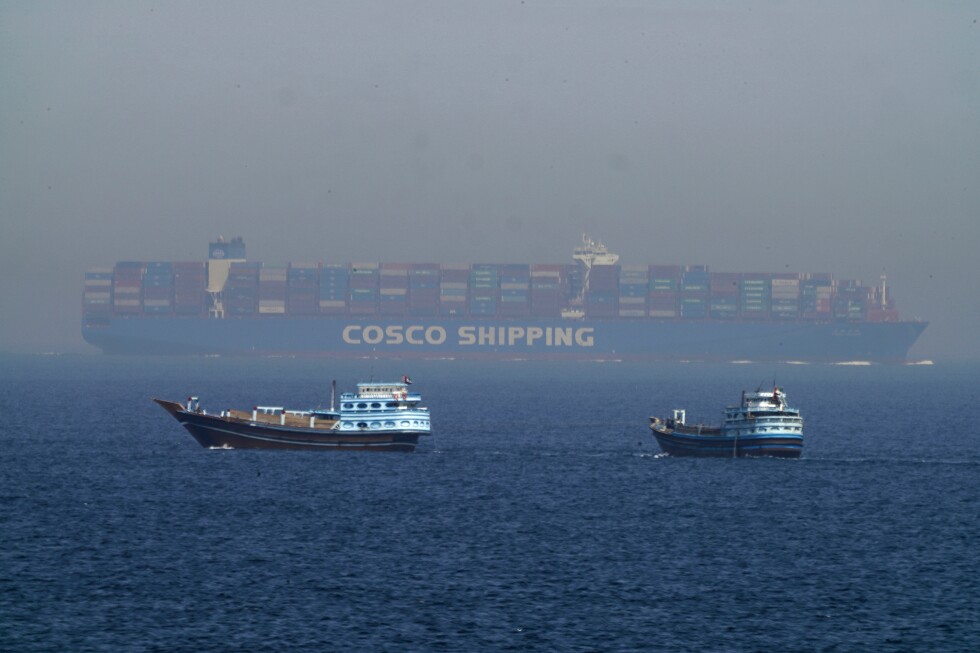
The narrow waterway, just 33 kilometers (21 miles) at its tightest point, serves as the gateway between the Persian Gulf and the Gulf of Oman. It represents one of the world’s most crucial maritime chokepoints, with approximately one-fifth of all globally traded oil passing through this corridor between Iran and Oman daily.
In response to Iran’s announcement, the U.S. military’s Central Command issued a stern warning early Saturday, acknowledging Iran’s right to operate in international waters while cautioning against any actions that might endanger American forces, regional partners, or commercial vessels.
“Unsafe and unprofessional behavior near U.S. forces, regional partners or commercial vessels increases risks of collision, escalation and destabilization,” the statement read, adding that “the U.S. military has the most highly trained and lethal force in the world.”
The coordinates provided in Iran’s notice to mariners indicate that the exercise could encroach upon the Traffic Separation Scheme – a designated two-lane system where northbound ships enter the Persian Gulf and southbound vessels exit toward the Gulf of Oman. The northern lane falls within the announced drill zone.
While Iranian officials have not publicly detailed the scope of the exercises, analysts believe they will likely involve the country’s powerful paramilitary Revolutionary Guard. The Guard operates a fleet of fast-attack vessels in the strait that have had numerous tense encounters with the U.S. Navy in recent years.
Iranian Foreign Minister Abbas Araghchi responded late Saturday with mockery, highlighting a perceived contradiction in U.S. policy. “CENTCOM is also requesting ‘professionalism’ from a national military the U.S. Government has listed as a ‘terrorist organization,’ all while recognizing the right of that same ‘terrorist organization’ to conduct military drills!” Araghchi wrote on social media platform X. “This is the level of absurdity the world is now facing.”
The heightened tensions come amid a complex backdrop of geopolitical strains. U.S. President Donald Trump has threatened military action against Iran over its harsh crackdown on domestic protests and concerns about the country’s nuclear program. The USS Abraham Lincoln aircraft carrier and supporting guided-missile destroyers are currently positioned in the Arabian Sea, within striking distance if ordered to attack.
Iran has warned it might launch a preemptive strike or target American interests across the Middle East and Israel if threatened. The country maintains a substantial arsenal of short and medium-range missiles capable of hitting neighboring Gulf Arab states.
The region is still recovering from a 12-day conflict between Israel and Iran in June, which saw both nations exchange missile fire. During that period, global energy prices spiked due to concerns about potential disruptions to the oil flow through the strait.
Historically, the Strait of Hormuz has been a crucial trade corridor for centuries, facilitating the movement of goods like ceramics, ivory, silk, and textiles from China through the region. In the modern era, it has become indispensable for global energy security. Despite existing pipeline alternatives through Saudi Arabia and the UAE, the U.S. Energy Information Administration notes that “most volumes that transit the strait have no alternative means of exiting the region.” The majority of oil and gas passing through the strait is bound for Asian markets.
As tensions persist, shipping operators and global energy markets remain on high alert, conscious that any miscalculation in this narrow waterway could have far-reaching consequences for regional stability and global commerce.
Fact Checker
Verify the accuracy of this article using The Disinformation Commission analysis and real-time sources.

10 Comments
With Iran planning military drills in the Strait of Hormuz, the situation bears close monitoring. Any disruptions to commercial shipping through this critical energy chokepoint could have far-reaching consequences for global commodity flows and prices.
The Strait of Hormuz is a critical global energy chokepoint, with tensions rising as Iran plans military exercises there. Maintaining safe navigation and avoiding escalation in this strategically important waterway will be crucial.
Geopolitical tensions in the Strait of Hormuz have implications for the energy and commodities sectors. Careful diplomacy and responsible behavior by all parties will be needed to mitigate risks and maintain secure passage through this strategic chokepoint.
Iran’s military drills in the Strait of Hormuz raise concerns given the region’s geopolitical volatility. Ensuring the free flow of maritime trade through this vital shipping lane is essential for global energy markets and economic stability.
Geopolitical tensions in the Strait of Hormuz are concerning given the waterway’s vital role in global energy and commodity supply chains. Diplomatic efforts to de-escalate the situation and ensure uninterrupted shipping will be crucial.
The Strait of Hormuz is a crucial global maritime chokepoint for energy and commodities. Iran’s planned military drills in these waters underscore the region’s volatility and the need for all parties to exercise restraint and uphold international norms.
The Strait of Hormuz is a major strategic energy chokepoint. Iran’s planned military exercises there raise concerns about potential escalation and disruption to maritime trade. Maintaining open and safe passage for commercial vessels will be key.
The Strait of Hormuz is a critical chokepoint for global energy shipments. Iran’s planned military exercises in these waters bear close watching, as any disruption to commercial shipping could roil commodity markets worldwide.
Iran’s military drill in the Strait of Hormuz is a concerning development given the region’s history of tensions. Maintaining the free flow of maritime traffic through this crucial energy chokepoint should be a priority for all stakeholders.
The Strait of Hormuz is a vital global energy chokepoint. Iran’s military exercises there pose risks of escalation and potential supply chain disruptions that could impact commodity markets. Diplomatic solutions will be crucial to avoid destabilization.