


Listen to the article
U.S.-Israeli Strikes on Iran Kill Supreme Leader, Trigger Regional Conflict
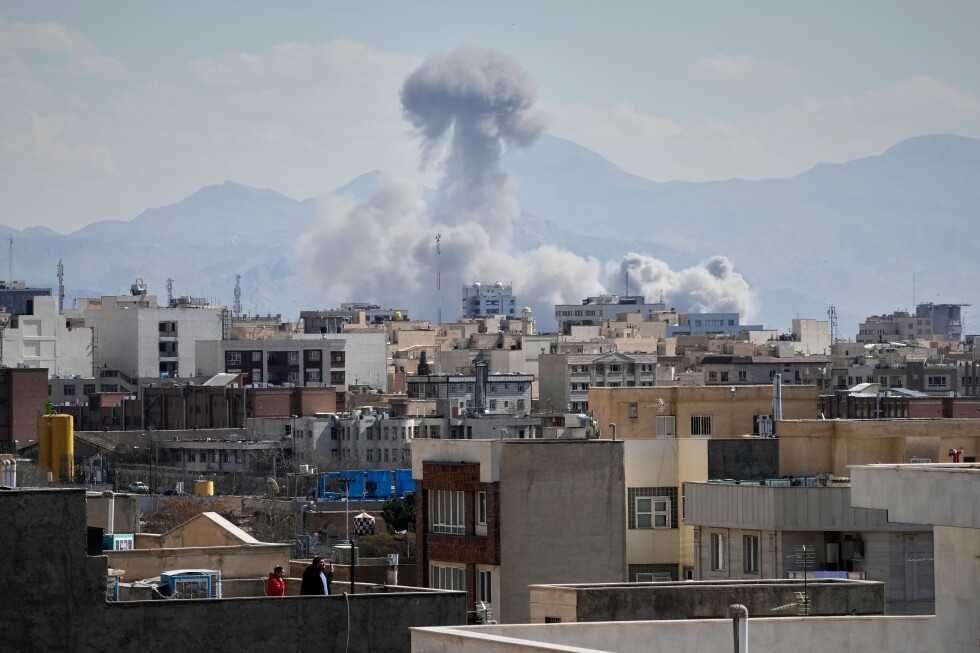
The United States and Israel launched coordinated military strikes against Iran that have killed Supreme Leader Ayatollah Ali Khamenei and dozens of high-ranking military officials, sparking widespread retaliation across the Middle East and raising fears of a broader regional war.
The 86-year-old Khamenei, who had ruled Iran since 1989 with ultimate authority, was among the first casualties in strikes that began Saturday. According to Israeli officials, the attack also eliminated 40 top Iranian military figures, including the commander of Iran’s Revolutionary Guard and the defense minister. Iranian state media reports more than 200 people have been killed in the attacks.
Israel stated it had collaborated with the U.S. for months planning the operation. U.S. military officials confirmed targets included Revolutionary Guard command facilities, air defense systems, missile and drone launch sites, and military airfields across Iran.
“You have crossed our red line and must pay the price,” warned Iran’s parliamentary speaker Mohammad Bagher Qalibaf in a televised address Sunday as Iran launched retaliatory strikes against Israel and U.S. military installations throughout the Gulf region.
The violence quickly escalated beyond Iran’s borders. Iranian missiles and drones targeted Israel, where eleven people have been killed. Nine people died and 28 were wounded when a strike hit a synagogue in the central town of Beit Shemesh, with eleven people still missing as rescue crews search the rubble. Explosions could be heard in Tel Aviv as Israel’s air defenses worked to intercept incoming threats.
Iran also launched attacks against U.S. military bases in Bahrain, Kuwait, and Qatar, resulting in three U.S. service member deaths according to U.S. Central Command. The strikes extended to multiple Gulf states, including Saudi Arabia, the United Arab Emirates, and Oman.
In Dubai, the UAE’s commercial hub long regarded as a safe haven in the turbulent region, residents heard air defense systems activating overhead. Shrapnel from Iranian attacks on Abu Dhabi killed two people according to state media, challenging the emirate’s reputation for stability that has attracted global business and tourism.
The violence has spread beyond direct military confrontation. In Pakistan, at least 22 people were killed in clashes with security forces after hundreds of protesters attempted to storm the U.S. Consulate in Karachi.
The strikes occurred just two days after the latest round of U.S.-Iran talks, with President Donald Trump pressuring Tehran for a nuclear agreement. In Friday remarks, Trump had voiced frustration over the lack of progress in negotiations to constrain Iran’s nuclear program, which Tehran maintains is for peaceful purposes only.
When announcing the “major combat operations,” Trump listed grievances stretching back to the 1979 Islamic Revolution, citing Iran’s ballistic missile program and support for armed proxies in the region. Trump later indicated that “heavy and pinpoint bombing” would continue through the week or longer.
In a provocative message directed at the Iranian population, Trump urged citizens to “take over” their government once military operations conclude. “When we are finished, take over your government. It will be yours to take,” he declared.
Meanwhile, Iran’s provisional governing council has begun work and is expected to soon name a new supreme leader. The Islamic Republic has faced growing domestic dissent in recent years, with nationwide protests initially triggered by economic grievances evolving into broader anti-government demonstrations.
The conflict has already disrupted global commerce and travel. Shipping companies have suspended vessels’ traffic through the Suez Canal, and concerns are mounting about potential disruptions in the Strait of Hormuz, through which a fifth of worldwide traded oil passes. Air travel across the region has been severely impacted, with Israel, Qatar, Syria, Iran, Iraq, Kuwait, and Bahrain closing their airspace. Flight tracking data showed no activity over the United Arab Emirates, leaving hundreds of thousands of travelers stranded or diverted.
The U.S. had been building up military presence in the region for months, deploying the aircraft carrier USS Abraham Lincoln and three guided-missile destroyers in January, later supplemented by the world’s largest aircraft carrier, the USS Gerald R. Ford, and four accompanying destroyers from the Caribbean. This buildup added more than 10,000 U.S. troops to the region.
As the conflict intensifies, U.S. Democrats are leading efforts to limit Trump’s war powers, while global reaction has ranged from jubilation to condemnation, with several world leaders calling for a return to negotiations and peace.
Fact Checker
Verify the accuracy of this article using The Disinformation Commission analysis and real-time sources.

20 Comments
This is a concerning development that could have serious implications for global security and stability. While Iran’s actions are worrying, the US and Israel’s response seems overly aggressive and could further destabilize the region. I hope the parties involved can find a way to de-escalate the situation through diplomacy.
I agree, a diplomatic solution should be the priority here. Unilateral military strikes often lead to unintended consequences and prolong conflict, which is in no one’s interest.
This is a concerning development that could have serious implications for global energy and commodity markets. I hope the parties involved can find a diplomatic solution to de-escalate the situation before it spirals out of control.
Agreed, a peaceful resolution is critical to avoid further disruptions to energy and mineral supply chains. Investors will need to stay vigilant and adapt their strategies accordingly.
As an investor, I’m closely watching how this situation unfolds and its potential impact on commodity markets, especially oil and uranium. Geopolitical risks can create volatility, but also opportunities for savvy investors.
Good point. Investors should stay alert to how this conflict could affect energy and mining-related assets. Diversification and risk management will be key in these uncertain times.
This is a complex geopolitical situation with no easy answers. While Iran’s behavior is problematic, the US and Israel need to be very careful about the ramifications of their actions. Further conflict could have dire consequences for the entire region.
I share your concerns. All parties involved need to exercise restraint and focus on finding a diplomatic solution that addresses the root causes of the tensions.
The targeting of Iran’s leadership is an extremely serious escalation. While Iran’s behavior is concerning, assassinating the Supreme Leader is a dangerous move that could have far-reaching consequences. I hope the parties involved can find a peaceful resolution.
Agreed, this level of retaliation is highly risky and could spiral out of control. Diplomacy and de-escalation should be the priority to avoid a larger regional conflict.
As someone with investments in uranium and lithium, I’m closely watching how this situation impacts those critical minerals. Geopolitical tensions often create price volatility in the commodities markets.
Absolutely, investors in mining and energy-related assets will need to closely monitor the fallout from this conflict. Diversification and risk management are key in these uncertain times.
The loss of life is tragic, but Iran’s support for terrorism and aggression towards its neighbors cannot be ignored. The US and Israel had to take action to protect their interests and citizens. Hopefully this sends a strong message to Iran’s leadership.
I understand the security concerns, but military force should always be the last resort. Diplomatic pressure and economic sanctions may have been a better approach to avoid escalation.
This is a concerning escalation between the US, Israel and Iran. I hope cooler heads can prevail to avoid further violence and loss of life in the region. While Iran’s belligerence is worrying, a measured diplomatic response may be best to de-escalate tensions.
Agreed, a diplomatic solution should be the priority here. Unilateral military strikes often lead to unintended consequences and prolong conflict.
As an investor, I’m closely monitoring how this situation unfolds and its potential impact on the mining and energy sectors. Geopolitical risks can create volatility, but also opportunities for those who understand the dynamics at play.
That’s a wise approach. Staying informed and adaptable will be key for investors navigating the complexities of this geopolitical landscape and its effects on critical commodities.
While Iran’s actions are concerning, the US and Israel’s response seems disproportionate and risky. Assassinating the Supreme Leader is an extremely provocative move that could have far-reaching consequences. I hope cooler heads can prevail and a diplomatic solution can be found.
I share your concerns about the potential for this conflict to escalate further. Diplomacy and measured responses should be the priority to avoid a wider regional war that could be devastating for everyone involved.