


Listen to the article
Iran and Russia Report Projectile Strike at Bushehr Nuclear Plant Amid Ongoing Conflict
Iran and Russia have reported that a projectile struck the grounds of the Bushehr nuclear power plant in Iran on Tuesday evening, raising concerns about potential nuclear safety amid escalating tensions in the region. While officials state no nuclear material was released, the incident highlights longstanding fears about the vulnerability of Iran’s nuclear facilities.
According to Russia’s state-run Tass news agency, Rosatom CEO Alexey Likhachev claimed that “a strike hit the area adjacent to the metrology service building located at the Bushehr Nuclear Power Plant site, in close proximity to the operating power unit.” Likhachev confirmed that no Russian personnel were injured and that “the radiation situation at the site is normal.” Approximately 480 Russian nationals continue to work at the facility, with evacuation plans being prepared.
The Atomic Energy Organization of Iran subsequently issued a statement confirming that “no financial, technical, or human damage occurred and no part of the plant was harmed.” Iranian authorities have attributed responsibility for the incident to the United States and Israel, according to Tass.
The International Atomic Energy Agency (IAEA), which has faced restrictions on its inspection activities in Iran following the U.S. withdrawal from the 2015 nuclear deal, issued a carefully worded statement acknowledging the incident: “The IAEA has been informed by Iran that a projectile hit the premises of the Bushehr NPP on Tuesday evening. No damage to the plant or injuries to staff reported.”
IAEA Director General Rafael Mariano Grossi told journalists in Washington that the damage appeared to have been caused by a drone and “doesn’t seem to be very significant.” However, he emphasized that “any attack on any nuclear facility should always be avoided.”
No independent experts have assessed the damage, and neither Iran nor Russia has released images of the affected area. The exact nature of the “projectile” remains unclear, with no immediate response from the U.S. military’s Central Command, which oversees operations in the region. It’s worth noting that shrapnel from missile interceptions and air defense systems have previously caused damage in the area since the beginning of hostilities.
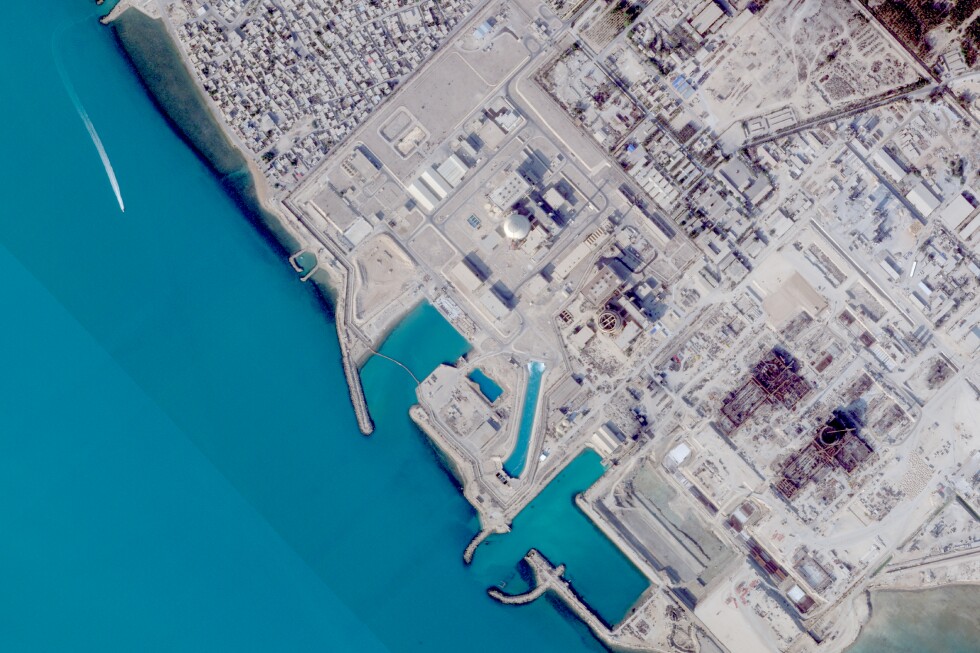
The Bushehr facility, located approximately 750 kilometers south of Tehran on the Persian Gulf coast, holds significant historical and strategic importance for Iran. Initially conceived during the reign of Shah Mohammad Reza Pahlavi in the 1970s as part of an ambitious plan to build 23 nuclear reactors, construction began under German firm Kraftwerk Union in 1975 but was halted by the 1979 Islamic Revolution.
During the Iran-Iraq War of the 1980s, the site suffered repeated bombing by Iraqi forces attempting to derail Iran’s nuclear ambitions. Russia eventually took over the project, connecting the plant to Iran’s power grid in 2011. The facility currently operates a pressurized-water reactor generating up to 1,000 megawatts of electricity, though it contributes only 1-2% of Iran’s overall power supply.
Iran has been working to expand the Bushehr complex with two additional 1,000-megawatt reactors. The existing reactor uses uranium enriched to 4.5% by Russia, a low level appropriate for civilian power generation.
During the brief 12-day conflict between Israel and Iran in June, the Bushehr plant was not targeted, although U.S. forces struck three Iranian uranium enrichment sites, damaging centrifuges and likely trapping Iran’s stockpile of highly enriched uranium underground. Since those strikes, Iran has prevented IAEA inspectors from visiting affected sites.
Any radiation leak from a nuclear power plant strike would have catastrophic implications for the region, particularly for Gulf Arab states that rely heavily on Persian Gulf desalination plants for their water supplies. This concern echoes similar worries about nuclear facilities in Ukraine that have found themselves in conflict zones following Russia’s 2022 invasion.
The incident occurs against the backdrop of ongoing regional tensions following the U.S. and Israeli declaration of war against Iran on February 28, with Iran’s nuclear program cited as one of the primary motivations for the conflict.
Fact Checker
Verify the accuracy of this article using The Disinformation Commission analysis and real-time sources.

7 Comments
I’m curious to know more about the specifics of what was hit and the potential implications. Were any critical systems or infrastructure damaged? And how quickly can repairs be made to restore full operations? Nuclear safety should be the top priority here.
This incident at the Bushehr nuclear plant is concerning, but it’s good to hear that no radiation was released and no one was injured. Russia’s involvement in operating the facility adds an extra layer of complexity. I hope the situation can be resolved safely without further escalation.
Projectiles hitting nuclear plants is never a good sign, even if the immediate damage seems contained. Bushehr is a crucial energy asset for Iran, so they’ll want to get to the bottom of what happened and shore up defenses. This is a worrying development in the region’s ongoing tensions.
It’s reassuring that no radiation was released, but the fact that a projectile managed to strike the Bushehr plant is still quite alarming. Nuclear facilities should be impenetrable, so this raises concerning questions about potential vulnerabilities. Rigorous safety protocols are essential.
As someone invested in the global energy sector, I’m watching this story closely. Disruptions to nuclear facilities can have far-reaching impacts on power supply and commodity markets. I hope the authorities can get a handle on the situation before it escalates further.
Nuclear power plants are inherently risky, and this attack just highlights the need for robust security and safety protocols. While the damage seems limited this time, any breach at a nuclear facility could have catastrophic consequences. Careful monitoring and transparency will be crucial going forward.
As an investor, I’ll be closely monitoring how this situation at Bushehr develops. Disruptions to Iran’s nuclear power capacity could have ripple effects on global energy markets and commodity prices. Maintaining operational continuity will be key to avoiding supply chain issues.