


Listen to the article
San Francisco’s mass power outage on Saturday exposed critical vulnerabilities in Waymo’s self-driving car fleet, as numerous vehicles stalled at intersections throughout the city, creating traffic hazards and forcing the company to temporarily suspend its service.
The outage, which affected approximately 130,000 homes and businesses—nearly one-third of Pacific Gas and Electric Co.’s San Francisco customers—resulted from a fire at a power substation. By Monday, thousands remained without electricity as utility crews worked to restore service.
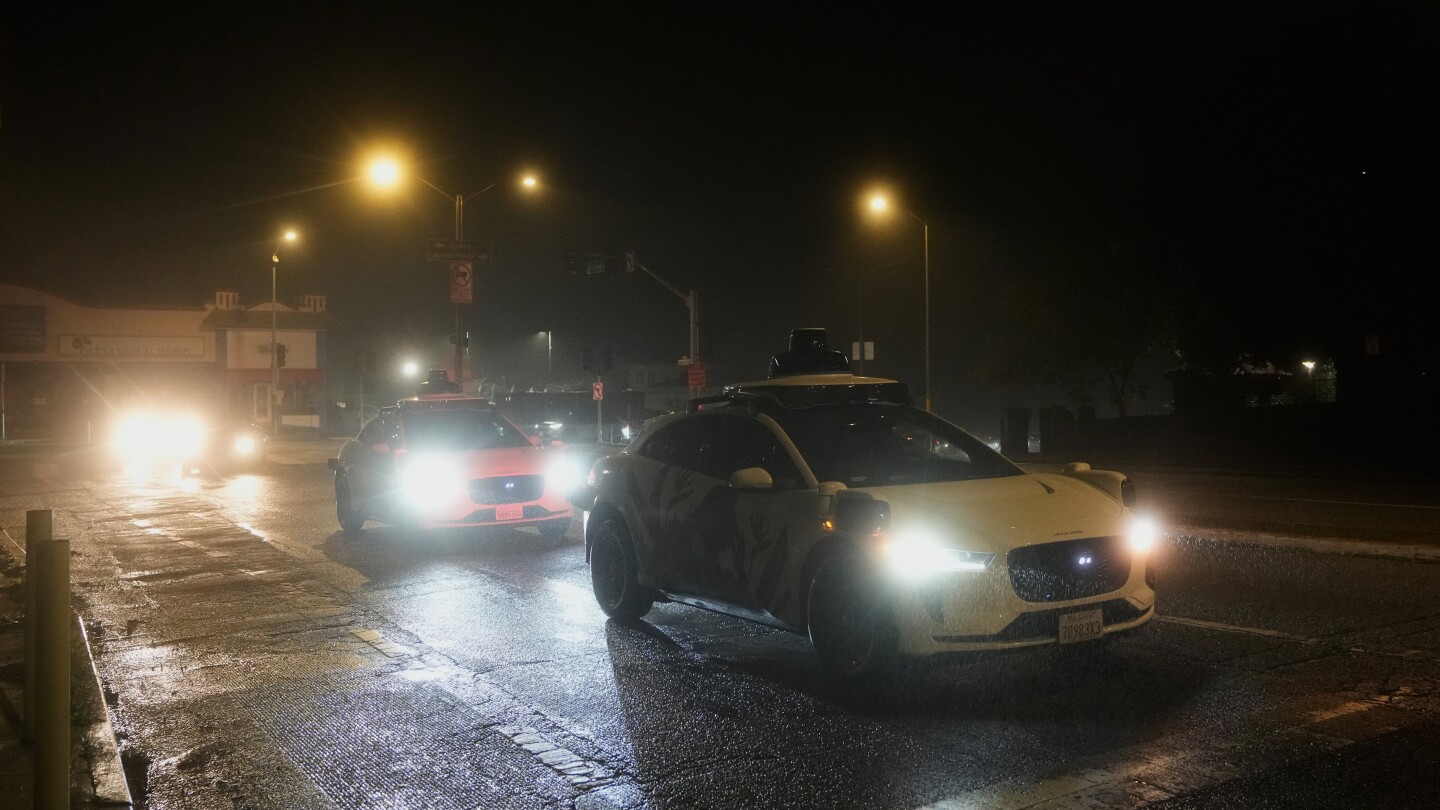
Social media quickly filled with videos showing Waymo’s autonomous vehicles struggling to navigate intersections with non-functioning traffic lights. Some vehicles stopped with hazard lights blinking before entering intersections, while others halted mid-crossing, forcing human drivers to maneuver around them.
“While the failure of the utility infrastructure was significant, we are committed to ensuring our technology adjusts to traffic flow during such events,” a Waymo spokesperson said. “Throughout the outage, we closely coordinated with San Francisco city officials.”
The company acknowledged the disruption, explaining that its vehicles are programmed to treat non-functioning traffic signals as four-way stops, but claimed the unprecedented scale of the outage created unusually challenging conditions. Waymo suspended service Saturday evening and didn’t resume operations until Sunday afternoon.
Tyler Cervini, a Mission District resident, described a scene of five Waymo vehicles crowding an intersection outside his apartment as he attempted to catch an Uber to the airport. “He had to swerve through them to pick me up,” Cervini said of his driver. “He seemed extremely frustrated by what was going on.”
Philip Koopman, professor emeritus at Carnegie Mellon University and an expert on autonomous vehicle safety, characterized the incident not as a software failure but as an “operational management failure.” He explained that self-driving vehicles typically stop when confronted with unclear situations, requesting remote assistance.
“If you have thousands of robotaxis that stop, you have a problem,” Koopman said. “What if this had been an earthquake? You would have thousands of robotaxis blocking the road.”
The incident revives concerns that San Francisco officials raised before California regulators approved Waymo’s commercial service in August 2023. In the months leading up to that approval, the city’s transportation and fire departments documented numerous instances of robotaxis stopping unexpectedly and blocking traffic. Beyond mere inconvenience, officials worried these incidents could impede emergency responders during critical situations.
Waymo, which originated as a Google research project in 2009, has steadily expanded beyond San Francisco to other California cities including Los Angeles and San Jose, as well as markets in Texas, Arizona, Florida, and Georgia. The company reports its fleet is on pace to complete more than 14 million rides this year, more than tripling last year’s figure.
This disruption comes at a sensitive time for the autonomous vehicle industry in California. State regulators are currently considering expanding approvals for heavy-duty autonomous trucks and vehicles carrying up to 15 passengers, a move strongly opposed by transportation labor unions.
Shane Gusman, director of Teamsters California, seized on the incident, calling it “a clear warning that turning our roads and lives over to autonomous vehicles is premature and dangerous.”
“We live in a state where blackouts, wildfires, floods and earthquakes affecting power and roadways are all too common,” Gusman said. “AVs stalled in streets and intersections threaten the safety of AV passengers, and others on the road, and inhibit emergency response when we need it most.”
The incident highlights a critical question about autonomous vehicle deployment: while the technology may function well under normal conditions, its reliability during widespread infrastructure failures—increasingly common due to extreme weather, aging infrastructure, and other factors—remains problematic and potentially dangerous.
Fact Checker
Verify the accuracy of this article using The Disinformation Commission analysis and real-time sources.

20 Comments
This power outage incident highlights the ongoing challenges for self-driving car companies like Waymo. Navigating unexpected infrastructure failures is an important area for continued development in autonomous vehicle technology.
Absolutely. As these vehicles become more common, their ability to adapt to real-world conditions will be crucial for their widespread adoption and public acceptance.
The power outage in San Francisco seems to have caused some chaos for Waymo’s self-driving cars. It highlights the need for further advancements in autonomous vehicle technology to handle unexpected situations.
Absolutely. Waymo’s acknowledgment of the disruption and commitment to improving their technology is a step in the right direction.
It’s interesting to see how Waymo’s self-driving cars reacted to the power outage in San Francisco. This incident underscores the need for continued advancements in autonomous vehicle technology to handle a variety of real-world scenarios.
Agreed. As self-driving cars become more prevalent, their ability to adapt to unexpected situations will be crucial for ensuring public safety and trust in the technology.
This power outage situation highlights some of the challenges self-driving cars still face. It’s good to see Waymo working with city officials and recognizing the need to further develop their systems to handle such disruptions.
Absolutely. As autonomous vehicles become more common, their ability to adapt to real-world conditions will be crucial for their widespread adoption and public trust.
The Waymo vehicles’ struggles during the San Francisco power outage are a good example of the ongoing development needed for autonomous driving technology. Handling unexpected infrastructure failures is an important area for improvement.
The power outage in San Francisco seems to have exposed some limitations in Waymo’s autonomous vehicle technology. It’s good to see the company acknowledging the disruption and committing to improving their systems to handle such events.
The Waymo vehicles’ struggles during the San Francisco power outage are a good reminder that autonomous driving technology is still a work in progress. Dealing with infrastructure failures is an important area for continued development.
Agreed. As self-driving cars become more prevalent, ensuring they can handle a wide range of scenarios will be crucial for public safety and acceptance.
Interesting to see how Waymo’s self-driving cars reacted to the power outage. I wonder if this highlights the need for more robust systems to handle unexpected infrastructure failures.
Yes, it seems like the cars struggled to adapt to the situation. Coordinating with city officials was a good move, but the technology may need further development to handle such disruptions.
While self-driving cars are making progress, this power outage incident shows they still have room for improvement when it comes to navigating unexpected real-world challenges. It will be interesting to see how Waymo and other companies address these issues.
The Waymo vehicles’ struggles during the San Francisco power outage demonstrate that autonomous driving technology still has room for improvement, particularly when it comes to handling unexpected disruptions to infrastructure. It will be interesting to see how Waymo and others in the industry address these challenges.
Waymo’s response to the power outage incident seems reasonable, acknowledging the disruption and committing to improving their technology. Navigating unexpected events is a key challenge for autonomous vehicles.
The power outage exposed some vulnerabilities in Waymo’s autonomous vehicle technology. It’s important for self-driving cars to be able to navigate safely during unexpected events like this.
Agreed. As self-driving cars become more prevalent, they’ll need to be able to handle a variety of real-world conditions and challenges, not just ideal scenarios.
This is an interesting case study on the limitations of current self-driving car technology. Waymo will likely need to improve their systems to better handle infrastructure failures and traffic disruptions.