


Listen to the article
DC Mayor Unveils Final $21.2 Billion Budget Amid Revenue Challenges
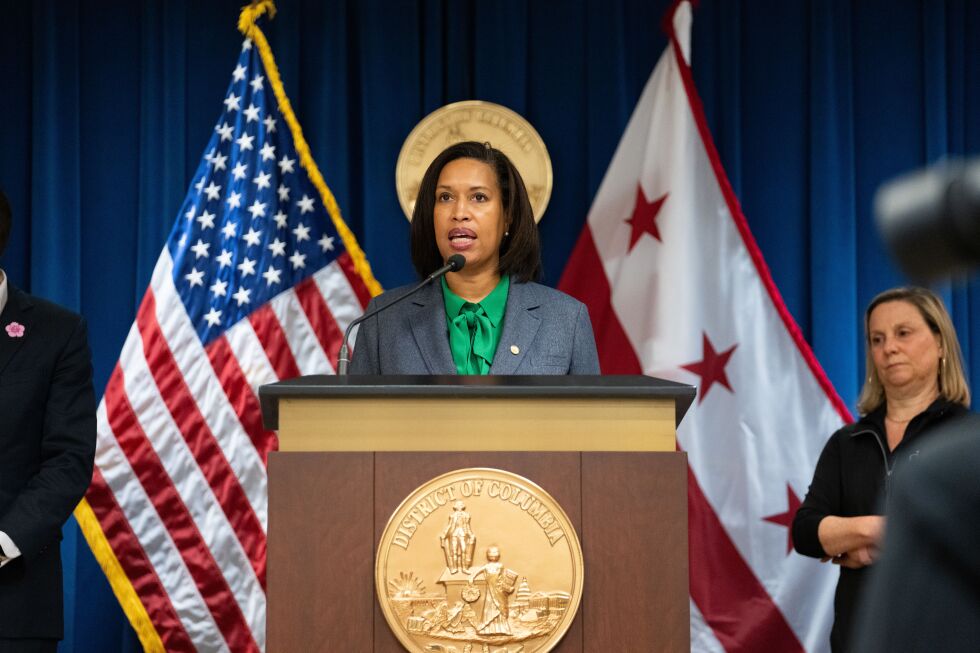
Mayor Muriel Bowser presented her farewell budget to the District Council on Friday, proposing a $21.2 billion spending plan that reflects significant fiscal challenges facing the nation’s capital. The budget, Bowser’s last before leaving office later this year, prioritizes education and healthcare while implementing cuts in several areas.
Most notably, the proposal reduces the general funds budget—which finances essential city services—to $12.7 billion, representing a 3.3% decrease from 2026. The plan also slashes $127 million previously earmarked for collective bargaining agreements and non-union pay increases for municipal employees.
“We are not broke,” Bowser assured Council members during her presentation, framing her tenure as mayor since 2015 in three distinct economic phases: growth, COVID disruption, and post-pandemic recovery. However, she emphasized that Washington faces substantial fiscal headwinds requiring pragmatic adjustments.
“I think we all have to be clear-headed about where we are and what it will take to keep growing,” said Bowser, who has announced she will not seek reelection this year.
The budget contraction stems from multiple factors, including significant reductions in the federal workforce orchestrated by the Department of Government Efficiency (DOGE) under the previous administration. These cutbacks have profoundly impacted Washington’s economy, with the D.C. Office of Revenue Analysis estimating a net loss of 22,000 federal jobs representing more than $3 billion in annual compensation.
City Administrator Kevin Donahue reported that federal workforce reductions cost the District approximately $325 million in lost revenue from eliminated jobs and associated consumer spending. Economic experts predict these losses will intensify in fiscal year 2027.
Terry Clower, director of the Center for Regional Analysis at George Mason University, estimated that the broader Washington region lost over 50,000 jobs due to federal downsizing. Beyond direct employment impacts, these losses have created ripple effects throughout the local economy, affecting businesses that serve government workers.
Rising costs have further strained the District’s finances. The budget addresses increased Medicaid expenses and higher administrative costs for the Supplemental Nutrition Assistance Program (SNAP), resulting from federal legislation that transferred certain expenses to states and local jurisdictions.
Council members questioned several aspects of the mayor’s proposal during the presentation, particularly targeting cuts to childcare support programs. The budget would cap the District’s childcare subsidy program, which assists low-income families, at 6,000 children, though families currently receiving subsidies would maintain their benefits. Additionally, it would eliminate a pandemic-era program that supplemented wages for childcare providers—a sector historically plagued by low compensation.
These proposed cuts come at a time when Washington families face substantial financial pressures, with the average annual cost of infant care exceeding $25,000, according to advocacy group Child Care Aware of America.
The District’s budget process has grown increasingly complex in recent years. In 2025, the House passed federal funding legislation that would force Washington’s government to revert to its 2024 budget parameters, effectively cutting $1.1 billion from its previously balanced budget midway through the fiscal year—highlighting the unique challenges of governing a city under congressional oversight.
Council Chairman Phil Mendelson indicated that the council would likely vote on the final budget in June, setting the stage for what promises to be contentious deliberations as legislators weigh competing priorities amid fiscal constraints.
The budget reveals the delicate balancing act facing District leaders: maintaining essential services while adapting to diminished revenue streams in a city where federal policies and economic trends have outsized local impact compared to other American municipalities.
Fact Checker
Verify the accuracy of this article using The Disinformation Commission analysis and real-time sources.

19 Comments
While the budget cuts may be necessary, I hope the city can find ways to protect critical programs and services that directly impact the lives of DC residents. Careful prioritization will be key.
The reduction in the general funds budget is concerning, as that could potentially impact essential city services. I hope the city can find ways to maintain a high level of service delivery to residents.
Agreed. Careful prioritization and transparency will be key to ensuring the budget cuts don’t disproportionately harm vulnerable communities or critical infrastructure.
The proposed $21.2 billion budget for DC is a sizable figure. I wonder how the spending priorities on education and healthcare compare to previous years and if there are any notable funding shifts in those areas.
Reducing the general funds budget by 3.3% could be a tricky balancing act. Curious to see which specific services or programs may be impacted and how the city plans to maintain essential functions.
Interesting to see how DC is navigating the fiscal challenges after the pandemic disruption. Curious to know more about the proposed budget cuts and their potential impact on city services and infrastructure.
The Mayor’s emphasis on pragmatism and keeping the city growing despite the headwinds seems prudent. It will be important to monitor how the budget is implemented and its effects on the community.
As a resident of the DC metro area, I’m curious to see how this budget will impact the city’s infrastructure, public services, and overall quality of life for residents. Transparency and community engagement will be key.
Cutting $127 million from collective bargaining agreements and employee pay raises is a bold move. I hope the city can find ways to retain and support its municipal workforce through these challenging times.
The Mayor’s comments about not being ‘broke’ but still facing fiscal headwinds are thought-provoking. I wonder what specific revenue challenges the city is grappling with and how they plan to address them.
Agreed. Understanding the underlying revenue and cost drivers will be crucial for the city to develop a sustainable fiscal strategy, especially with the change in administration on the horizon.
A $21.2 billion budget is no small feat, and the Mayor’s challenge will be to balance the needs of various stakeholders while ensuring fiscal responsibility. I’m curious to see how this plan evolves.
The proposed education and healthcare spending priorities sound promising, but the details will be important to understand the real-world impact. Transparent reporting on outcomes will be essential.
Agreed. Monitoring how the budget is implemented and its effects on the community will be crucial. Citizen engagement and feedback should be a priority.
As a taxpayer, I’m always interested to see how government budgets are allocated. I hope the city can find ways to invest in long-term solutions that benefit the community as a whole.
The $21.2 billion figure is certainly substantial, but the real question is how well the funds will be allocated and utilized to benefit the citizens of Washington, DC. Prudent financial management is crucial.
I agree that the Mayor’s emphasis on pragmatism and keeping the city growing is important. Balancing fiscal responsibility with maintaining essential services will be a delicate task.
The Mayor’s framing of the city’s economic phases is an interesting perspective. It will be worth following how the post-pandemic recovery efforts unfold and what that means for DC’s long-term fiscal health.
With the Mayor not seeking re-election, it will be important for the next administration to build on this budget proposal and continue navigating the city’s fiscal challenges.