


Listen to the article
Amid a growing shortage of skilled tradespeople across the United States, Walmart has launched an ambitious training program aimed at building its own workforce of maintenance technicians. These critical employees ensure conveyor belts run smoothly, refrigeration units stay cold, and infrastructure from parking lots to electrical systems remains functional across the retail giant’s vast network of stores and distribution centers.
The initiative comes as America grapples with a widening gap in skilled trade workers, a sector facing unprecedented staffing challenges. Walmart, the country’s largest retailer and private employer, revamped its training program last year specifically to address the dwindling pipeline of qualified maintenance professionals.
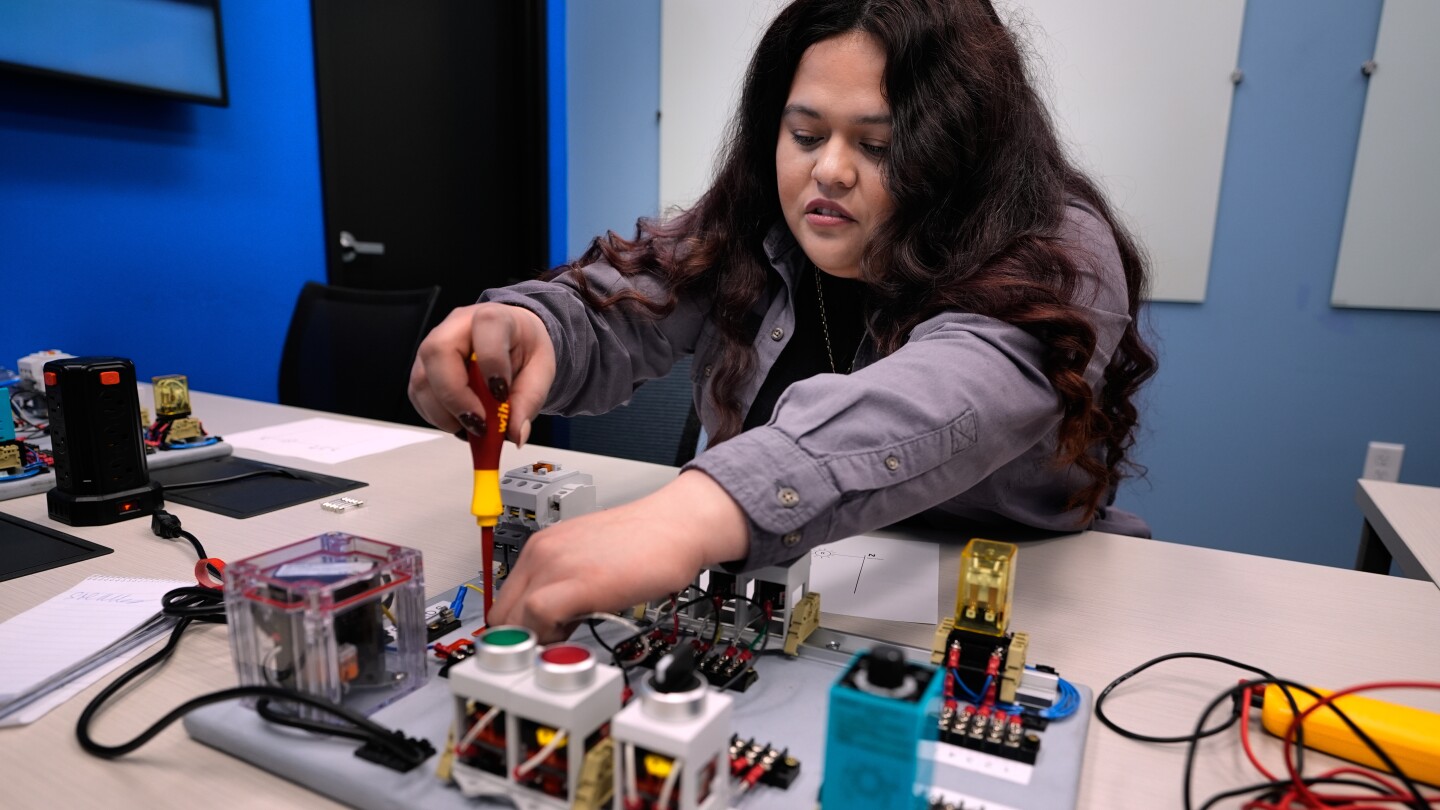
For employees like Liz Cardenas, the program has opened doors to significant career advancement. In just one year, Cardenas transitioned from an automation equipment operator at a Texas distribution center to a skilled technician responsible for repairing critical conveyor systems. The career move nearly doubled her hourly wage to $43.50 and transformed her financial situation.
“I was able to move out of my parents’ house,” Cardenas said. “I have my own apartment. I was able to get a car, and I’m able to give more to my 401(k).”
The labor shortage plaguing skilled trades stems from multiple factors, including a wave of retirements and declining immigration that began during the pandemic and is accelerating under stricter immigration policies. According to consulting firm McKinsey, the imbalance in skilled trades is particularly severe, with an estimated 20 job openings for every new employee entering fields such as maintenance, welding, and carpentry between 2022 and 2032.
This “extraordinary rate of churn” could cost companies more than $5.3 billion annually in talent acquisition and training expenses, McKinsey reports. The shortages persist even as some sectors experience layoffs due to rising operational costs from new tariffs, changing consumer behavior, and increased investment in artificial intelligence technologies.
Recognizing the severity of the problem, the Business Roundtable—a lobbying group representing CEOs from approximately 150 major companies—launched an initiative in June to address shortages in skilled trades. The effort, co-led by home improvement retailer Lowe’s, focuses on raising awareness beginning in elementary, middle, and high schools.
“While technology continues to evolve, it cannot replace plumbers, electricians, construction workers, maintenance and repair pros, or other tradespeople,” said Marvin Ellison, chairman and CEO of Lowe’s, which has invested $43 million since 2023 in technical colleges and non-profit organizations to support skilled trades education.
Economist Mervin Jebaraj of the University of Arkansas’s Walton College of Business cautions that while these corporate training programs will help, they won’t completely eliminate the gap, particularly given current immigration policies. “For as long as somebody physically needs to fix this, the shortage will persist, even though on the margins it’ll mitigate some of the shortage,” he explained. “We don’t have enough people.”
Walmart CEO Doug McMillon believes part of the challenge involves public awareness. “I think most Americans probably don’t know what a tech makes that helps take care of our stores and clubs and that we can help them learn how to be a tech,” he told The Associated Press. “So we have a need to get the word out so that people know there are some great jobs.”
Walmart’s revamped program, launched in spring 2024, offers tuition-free training initially in the Dallas-Fort Worth area, later expanding to Vincennes, Indiana, and Jacksonville, Florida. The curriculum combines hands-on instruction with classroom learning in critical fields including HVAC, electrical work, and general maintenance.
By mid-November, nearly 400 employees had completed the program, with Walmart targeting 4,000 graduates by 2030. The first class of 108 associates who completed the Dallas-Fort Worth pilot all secured technician roles, putting them on a path to earn an average of $32 per hour.
R.J. Zanes, vice president of facility services for Walmart’s U.S. divisions, noted that the program has attracted workers from diverse backgrounds, including former cashiers. The importance of these roles becomes particularly evident during high-volume periods like the holiday shopping season.
“If a refrigeration system goes down within a Walmart store, it could cost up to $300,000 to $400,000 worth of lost product,” Zanes explained. “We’ve got to stay out in front of that. We have to ensure that we’ve got the right skills there to do preventative maintenance, and when we do have a breakdown, to make sure that we get it back up as fast as possible to minimize that cost of downtime.”
Fact Checker
Verify the accuracy of this article using The Disinformation Commission analysis and real-time sources.

10 Comments
The shortage of skilled tradespeople is a real challenge facing many industries. Walmart’s program to train their own technicians is a proactive approach to addressing this critical labor gap.
Initiatives like this can make a meaningful difference in helping workers gain valuable skills and secure better-paying jobs. It’s a win-win for the company and the employees.
Walmart’s training program for maintenance technicians is a smart move to strengthen their workforce and fill critical roles. Equipping existing employees with in-demand skills is a sensible approach to the labor shortage.
The story of Liz Cardenas shows how these training opportunities can dramatically improve people’s lives. Transitioning to a higher-paying, skilled position is life-changing.
It’s encouraging to see companies like Walmart investing in their workforce and providing opportunities for career advancement. Upskilling existing employees is an effective way to build a pipeline of qualified tradespeople.
The story of Liz Cardenas is a great example of how these training programs can transform lives. Doubling her wage and allowing her to move out on her own is a significant achievement.
This is an interesting initiative by Walmart to address the skilled trades shortage. Investing in training and development for their employees is a smart move that can benefit both the company and the workers themselves.
It’s great to see companies taking an active role in building up the pipeline of skilled tradespeople. This type of training program could serve as a model for other large employers.
The skilled trades shortage is a widespread problem, so it’s good to see major employers like Walmart taking steps to address it. Their revamped training program could serve as a model for other companies to follow.
Investing in employee development and creating clear career paths is an important strategy for companies looking to build a reliable, skilled workforce. Walmart’s initiative seems well-designed to achieve that goal.