


Listen to the article
U.S. stocks rallied Wednesday following the Federal Reserve’s decision to cut its benchmark interest rate, with the S&P 500 climbing toward an all-time high as investors welcomed the central bank’s move to bolster economic growth.
The S&P 500 rose 0.8%, putting it on track to surpass its previous closing record set in October. The Dow Jones Industrial Average gained a robust 559 points, or 1.2%, while the tech-heavy Nasdaq composite added 0.4% in late afternoon trading.
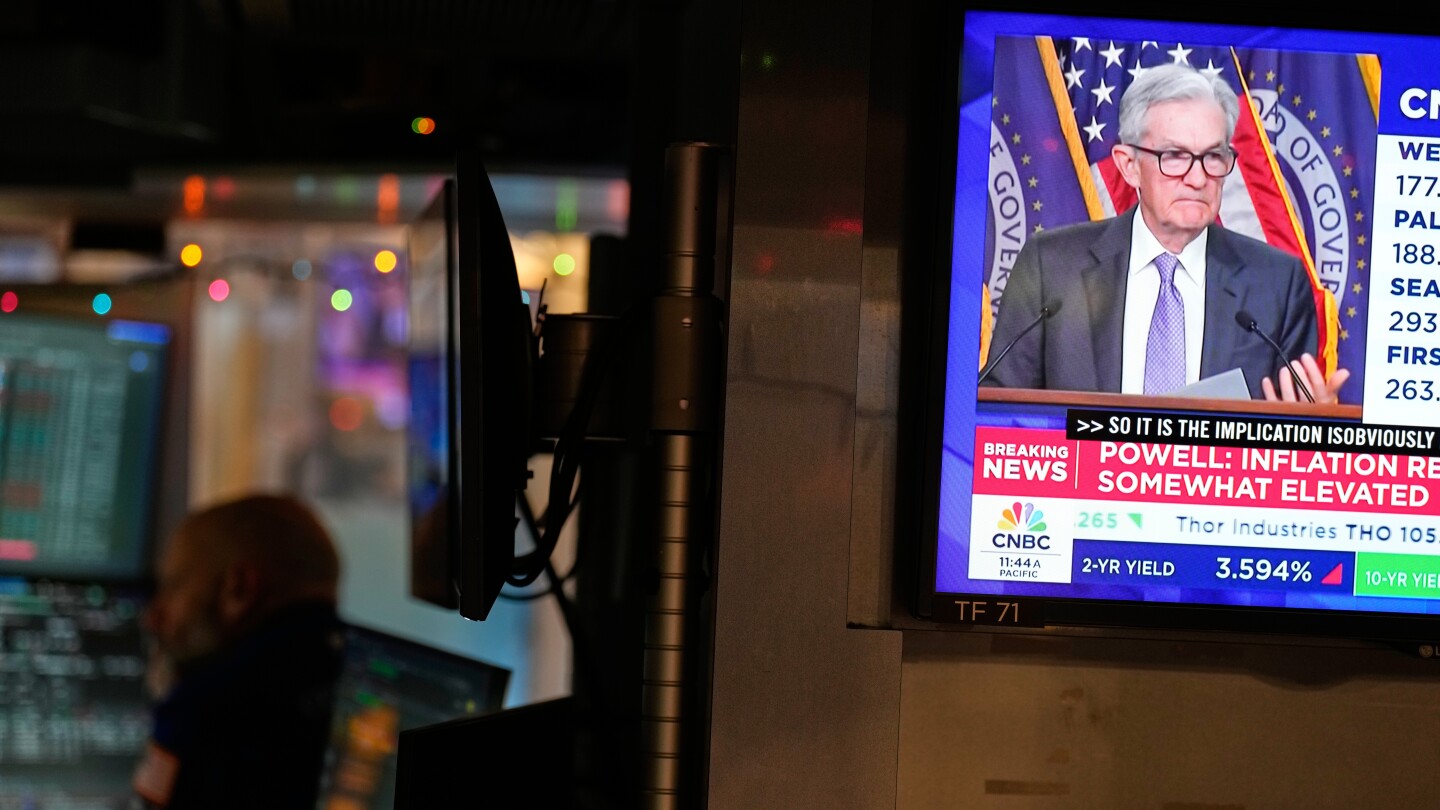
The Fed’s quarter-percentage-point rate reduction marks its latest effort to support the labor market while balancing persistent inflation concerns. In his press conference, Fed Chair Jerome Powell acknowledged the delicate balancing act facing policymakers.
“We are well positioned to wait and see how the economy evolves,” Powell told reporters. He noted that interest rates are now approaching a neutral level that neither stimulates nor restricts economic activity, providing the Fed flexibility to assess incoming data before determining future rate moves.
Powell emphasized that no Federal Reserve officials anticipate rate increases in their “base case” scenarios anytime soon, a comment that appeared to reassure markets concerned about potential policy reversals.
The central bank’s decision wasn’t unanimous, highlighting the divergent views among policymakers. Two Fed officials voted against the cut, believing no reduction was necessary at this time, while another dissented in favor of a more aggressive half-point cut. This split reflects ongoing debates about whether inflation or employment concerns should take precedence.
Fed officials’ median projection shows expectations for one additional rate cut by the end of 2025, unchanged from their previous forecast three months ago. This modest pace of future cuts comes as inflation remains stubbornly above the Fed’s 2% target, prompting some officials to prioritize price stability.
Bond markets responded positively to the Fed’s actions, with the yield on the benchmark 10-year Treasury note falling to 4.14% from 4.18%. The more policy-sensitive two-year yield dropped more significantly to 3.54% from 3.61%, indicating growing confidence that the Fed will maintain its easing path.
In corporate news, GE Vernova emerged as one of the day’s standout performers, surging 16.8% after the energy company raised its long-term revenue forecast, doubled its dividend, and expanded its share repurchase program. Investors viewed these moves as signs of management’s confidence in the company’s growth trajectory and financial health.
Technology firm Palantir Technologies gained 4.6% after announcing that the U.S. Navy will utilize its artificial intelligence technology as part of a $448 million program, highlighting the growing integration of AI capabilities within defense operations.
Restaurant chain Cracker Barrel Old Country Store rose 3.9% despite a mixed financial picture. While the company, which has recently faced controversy regarding its logo design, exceeded quarterly earnings expectations, it simultaneously reduced its annual revenue forecast, signaling potential challenges ahead.
GameStop shares declined 3.2% after the video game retailer reported quarterly revenue that fell short of analyst expectations, though its profit surpassed forecasts. The company continues to face headwinds as it navigates the evolving retail landscape and digital gaming trends.
Global markets showed limited reaction to the Fed’s move, with European and Asian indices trading in narrow ranges as investors digested the implications of U.S. monetary policy for international economic conditions.
The Fed’s latest rate cut comes amid a complex economic backdrop, with inflation pressures persisting even as concerns about labor market softness grow. Investors will now closely monitor upcoming economic data for clues about the path forward for monetary policy and its implications for financial markets.
Fact Checker
Verify the accuracy of this article using The Disinformation Commission analysis and real-time sources.

16 Comments
Interesting to see the market’s reaction to the Fed’s decision. I wonder if this will have any meaningful impact on commodity prices and mining equities in the near term.
Good point. Metals and minerals like gold, silver, copper, lithium, and uranium could see some shifts depending on how this all plays out.
The Fed’s move to cut rates seems aimed at supporting the labor market, which is encouraging. However, I’m curious to see if this will spur more investment in the mining and energy sectors to meet growing demand.
That’s a fair question. Increased activity in mining and commodities could help offset any lingering economic headwinds.
It’s interesting to see Wall Street’s positive reaction to the Fed’s rate cut, but I’m more curious about the potential impact on commodity prices and mining equities. This could be an important development for those sectors.
Agreed. Keeping an eye on how this plays out for metals, minerals, and energy-related investments will be crucial.
The Fed’s latest rate cut is a prudent move to support the job market and economic growth. It’s encouraging to see Wall Street reacting positively, flirting with new highs. Let’s hope this helps offset any lingering inflation concerns.
Agreed, the Fed is walking a fine line here. Keeping rates low to boost employment while monitoring inflation is a delicate balance.
The Fed’s decision to cut rates is clearly aimed at supporting the job market, which is a laudable goal. However, I wonder if this could also lead to increased investment and activity in the mining and energy sectors to meet growing demand.
That’s a fair point. Any stimulative effects from the rate cut could have broader implications across the economy, including for commodities and related industries.
While the market’s reaction to the Fed’s rate cut is interesting, I’m more focused on the potential impacts for the mining, metals, and energy sectors. This could be a significant development for those industries.
Absolutely. Closely monitoring how this plays out for commodities, mining equities, and energy-related investments will be crucial.
Wall Street flirting with all-time highs is certainly eye-catching, but I’m more interested in how this will impact the real economy and employment. The Fed’s balancing act will be worth watching closely.
Absolutely, the real test will be whether this translates to meaningful job growth and economic improvement on the ground.
The Fed’s latest move seems aimed at boosting the job market, which is commendable. However, I wonder if this could also lead to increased investment and activity in mining, commodities, and energy sectors to meet growing demand.
That’s a good observation. Any increased economic activity could have ripple effects across various industries, including mining and energy.