


Listen to the article
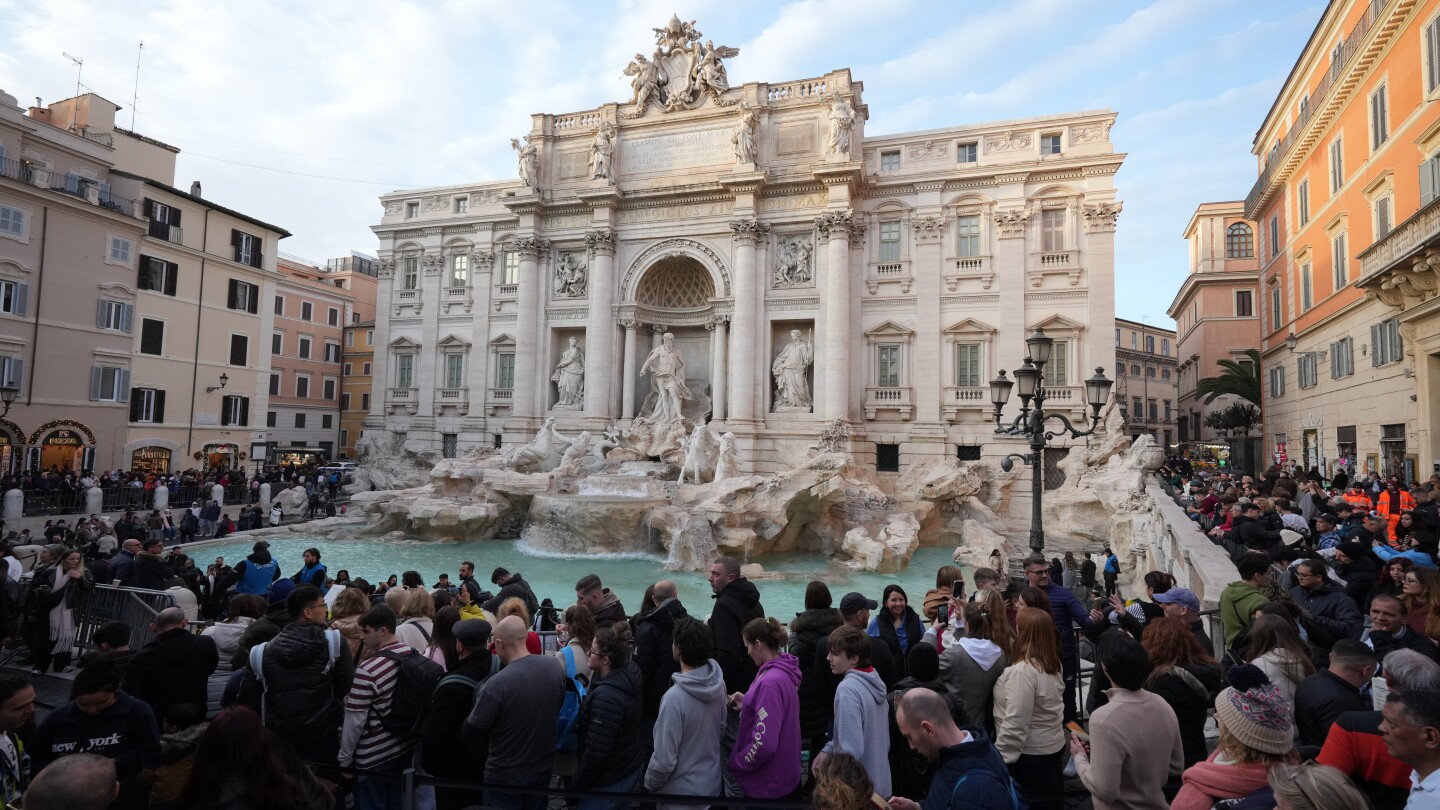
Rome’s iconic Trevi Fountain will soon come with a price tag for tourists seeking that perfect selfie, as city officials introduce a new fee structure aimed at managing overtourism and preserving cultural heritage.
Starting February 1, visitors to the famous Baroque masterpiece will pay a 2-euro ($2.35) fee to access the close-up viewing area during daytime hours from 9 a.m. to 9 p.m. The fee applies only to non-residents, with Romans exempt from payment. Tourists can still admire the fountain from the surrounding piazza free of charge, and access remains unrestricted after nightfall.
The decision follows a year-long experiment that implemented controlled pathways and limited crowds at the monument. According to Rome Mayor Roberto Gualtieri, approximately 9 million people have waited in line to approach the fountain’s basin edge this year, with daily numbers sometimes reaching 70,000 visitors.
“We believe that culture is a fundamental right of citizenship,” Gualtieri stated at a press conference announcing the changes. “We think it’s correct and positive that the citizens of Rome can enjoy our museums free of charge.”
Officials estimate the new fee could generate around 6.5 million euros ($7.6 million) annually, revenue that will help offset preservation costs for the city’s vast cultural heritage. Visitors can purchase tickets online in advance, while waiting in line, or at various tourist locations throughout Rome.
The Trevi initiative mirrors similar efforts across Italy to balance tourism demands with preservation needs. Rome recently implemented a ticketing system at the Pantheon, while Venice controversially introduced a day-tripper tax last year to combat overtourism and improve quality of life for local residents.
The fee is being implemented alongside broader changes to Rome’s cultural access policies. As part of the same initiative, the city is expanding the number of museums that registered Roman residents can visit free of charge, while introducing a new 5-euro (nearly $6) ticket fee for non-residents at certain city museums.
“The 2-euro Trevi fee is a minimal amount that shouldn’t discourage visitors,” Gualtieri explained, “but rather allow for a more organized visit.” The structured approach aims to enhance the experience by reducing overcrowding at one of Rome’s most celebrated attractions.
The Trevi Fountain has a rich history dating back to 1640 when Pope Urban VIII first commissioned the project. After a period of dormancy, Pope Clement XII revived construction in 1730, with the current design following Roman architect Nicola Salvi’s original vision. The monumental fountain features the Titan god surrounded by cascading waters flowing into a shallow turquoise pool.
The fountain gained international fame through Federico Fellini’s 1960 film “La Dolce Vita,” which featured Anita Ekberg and Marcello Mastroianni’s iconic nighttime dip in its waters. While bathing is strictly prohibited today, the tradition of tossing a coin over one’s shoulder into the fountain persists, with legend promising that those who do so will someday return to the Eternal City.
Rome’s approach represents a growing trend among European tourist destinations seeking sustainable solutions to manage their historic sites. As cities balance preservation requirements with accessibility concerns, such modest fee structures may become increasingly common at high-traffic monuments throughout the continent.
The implementation will be closely watched by tourism officials and city planners worldwide as they grapple with similar challenges of protecting cultural heritage while accommodating the millions who wish to experience it firsthand.
Fact Checker
Verify the accuracy of this article using The Disinformation Commission analysis and real-time sources.

9 Comments
This seems like a pragmatic solution to address the challenges of overtourism at the Trevi Fountain. The 2-euro fee for non-residents is not exorbitant, and it will likely help manage crowds and generate funds for maintenance. I’m curious to see how this change is received by both locals and visitors.
I agree, the fee seems reasonable and could be an effective way to balance tourism and preservation at this iconic site. It will be interesting to monitor the impact on visitor numbers and overall satisfaction with the Trevi Fountain experience.
This move by Rome is an understandable attempt to address the challenges of managing high visitor volumes at the Trevi Fountain. While the 2-euro fee may deter some tourists, it could also encourage more mindful and respectful visitation. I hope the city can find the right balance between accessibility and conservation.
That’s a good point. The fee could help promote more sustainable tourism practices and encourage visitors to truly appreciate the cultural significance of the Trevi Fountain, rather than just treating it as a backdrop for quick photos.
The introduction of a 2-euro fee for non-residents at the Trevi Fountain is an interesting approach to managing overtourism. While it may be an added cost for some visitors, it could also help ensure a more enjoyable experience for all by controlling crowd sizes. I’m curious to see how this policy is implemented and received by the public.
An interesting move by Rome to manage the crowds and preserve the Trevi Fountain. The 2-euro fee for non-residents seems reasonable to help cover maintenance costs and prevent over-tourism. I wonder how this will impact visitor numbers and the overall experience at this iconic site.
You make a good point. The fee could help ensure a more enjoyable visit for tourists while also supporting the preservation of this historic landmark.
While I understand the city’s desire to manage crowds and protect the Trevi Fountain, I’m a bit concerned that the new fee structure may price out some tourists, especially families on a budget. I hope Rome can strike a balance between conservation and accessibility.
That’s a fair concern. Ensuring the Trevi Fountain remains accessible to all visitors, regardless of their budget, is important. Perhaps Rome could consider discounted or free entry for certain groups to help address this issue.