


Listen to the article
Seniors Experience New Adventures Through Virtual Reality in Retirement Communities
Like many of their peers across the country, residents of The Terraces in Los Gatos, California, have largely left their days of international travel and bold expeditions behind them. But technology is opening new doors for these seniors, allowing them to embark on adventures without leaving their community.
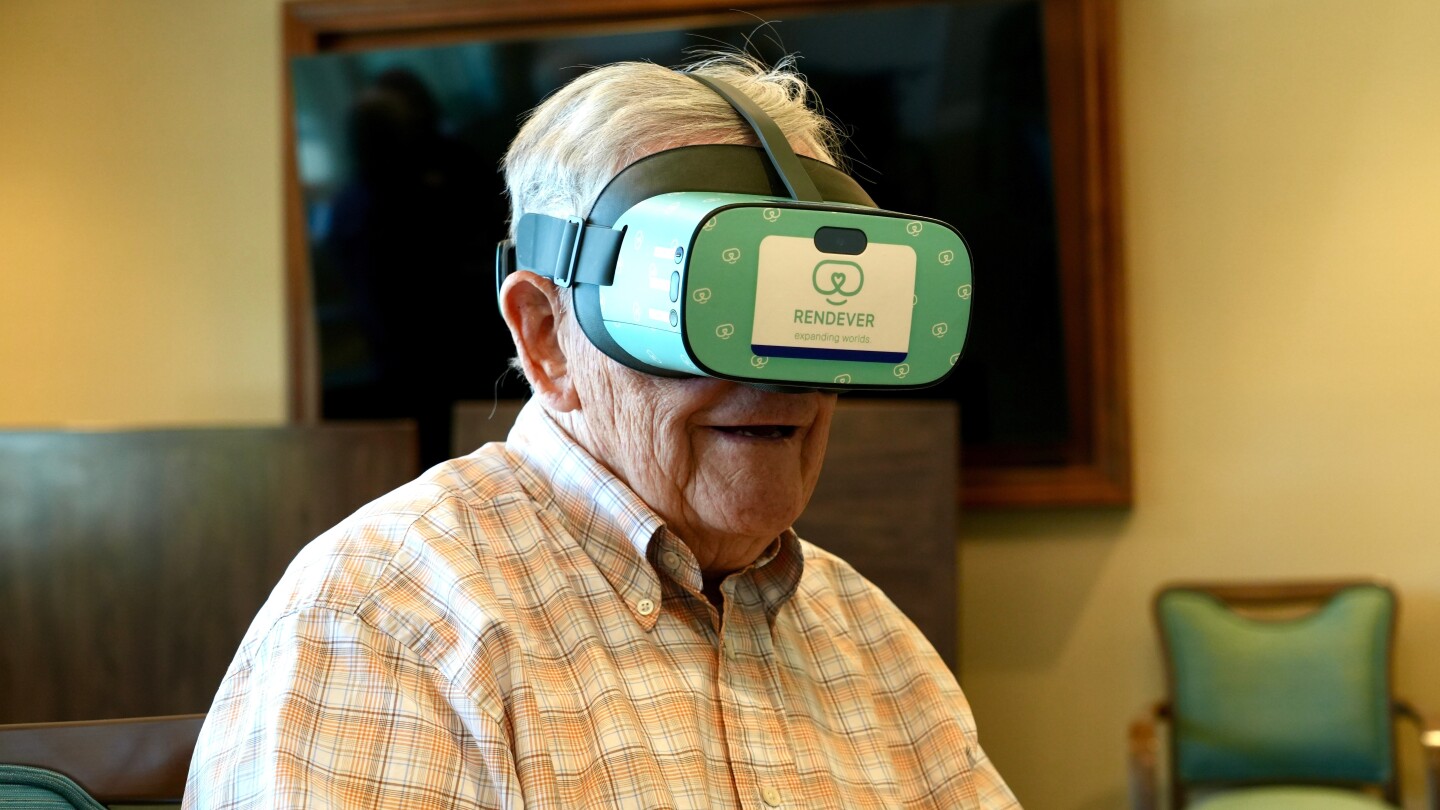
Through virtual reality headsets, residents in their 80s and 90s can now transport themselves to European landmarks, dive beneath ocean waves, or soar through the air on hang-gliding expeditions while seated comfortably among friends.
“We got to go underwater and didn’t even have to hold our breath!” exclaimed 81-year-old Ginny Baird after a virtual swimming session with dolphins. During another experience featuring a hot-air balloon ride, residents gasped with excitement and apprehension, fully immersed in their digital journey.
This technology comes from Rendever, a Massachusetts-based company that has transformed VR from what can be an isolating experience into a social catalyst. The company now provides services to 800 retirement communities across the United States and Canada, with programming specifically designed to improve cognitive function and foster connections among seniors.
Beyond exotic adventures, the technology offers something deeply personal: the ability to revisit childhood homes and neighborhoods that many haven’t seen in decades. This feature particularly resonated with Sue Livingstone, an 84-year-old resident who took a virtual trip to her childhood neighborhood in Queens, New York.
“It isn’t just about being able to see it again, it’s about all the memories that it brings back,” Livingstone explained. She believes the technology can benefit even the most hesitant residents. “There are a few people living here who never really leave their comfort zones. But if you could entice them to come down to try out a headset, they might find that they really enjoy it.”
Adrian Marshall, The Terraces’ community life director, has witnessed how VR experiences spread through word-of-mouth, eventually drawing in curious residents who might otherwise spend their time on traditional activities like board games. “It turns into a conversation starter for them. It really does connect people,” Marshall said. “It helps create a human bridge that makes them realize they share certain similarities and interests.”
The potential benefits extend beyond entertainment. Rendever recently received a $4.5 million grant from the National Institutes of Health to study ways their technology can reduce social isolation among seniors living at home and their caregivers.
Research supports the approach. Several studies have found that VR programming, when presented appropriately, can help maintain cognitive functions, enhance memories, and strengthen social connections for older adults. However, experts emphasize that virtual reality should complement rather than replace other activities.
“There is always a risk of too much screen time,” cautions Katherine “Kate” Dupuis, a neuropsychologist and professor specializing in aging issues at Sheridan College in Canada. “But if you use it cautiously, with meaning and purpose, it can be very helpful. It can be an opportunity for the elderly to engage with someone and share a sense of wonder.”
VR headsets may also offer technological advantages for seniors who struggle with smartphones or other devices requiring dexterity to operate buttons or touch screens. Pallabi Bhowmick, a researcher at the University of Illinois Urbana-Champaign, notes that the stereotype of technology-resistant seniors needs revision.
“Older adults are willing and want to adapt to technologies that are meaningful to them,” Bhowmick said. Beyond stress relief and entertainment, VR can create intergenerational connections when younger family members discover their elders using cutting-edge technology.
The market for senior-focused VR is growing, with companies like Dallas-based Mynd Immersive also competing in the space. Both companies offer programming that may help slow the effects of dementia, a use case being explored at The Forum, another Silicon Valley retirement community.
For 83-year-old Bob Rogallo, who has lost his speech to dementia, a virtual hike through Glacier National Park brought visible joy as he nodded and smiled during his birthday celebration. His wife of 61 years, Sallie, noted how the experience conjured memories of their three decades traveling across the country in their RV.
“It made me wish I was 30 years younger so I could do it again,” she reflected. “This lets you get out of the same environment and either go to a new place or visit places where you have been.”
For 93-year-old Almut Schultz, a virtual classical music performance at Colorado’s Red Rocks Amphitheatre sparked delight, as did an encounter with a virtual puppy. Removing her headset after the session, she summed up the experience with a broad smile: “That was quite a session we had there.”
Fact Checker
Verify the accuracy of this article using The Disinformation Commission analysis and real-time sources.

8 Comments
I’m curious to learn more about the Rendever company and how their VR services are being implemented in retirement communities. It’s an innovative approach to combating social isolation.
Yes, the article highlights an interesting application of VR technology. I wonder what other ways it could be leveraged to improve the lives of seniors.
Fascinating how virtual reality is bringing new adventures to senior residents. It’s wonderful that technology can enhance social connections and quality of life for this demographic.
Agreed, VR seems like a great way for older adults to explore the world safely and with others. The immersive experiences must be quite thrilling for them.
The article highlights an innovative use of virtual reality to improve quality of life for seniors. Providing immersive experiences that allow older adults to explore the world in new ways is a thoughtful application of this technology.
While virtual reality is often associated with gaming, it’s inspiring to see how it’s being used to enhance the lives of older adults. The reactions of the residents suggest this can be a powerful tool.
This is a great example of how technology can be harnessed to address challenges facing the aging population, like limited mobility and social isolation. The virtual experiences seem to provide a sense of adventure and connection.
Absolutely, VR could be a game-changer for retirement communities, opening up new worlds for residents. I’m curious to see how this technology continues to evolve and be applied in elder care settings.