


Listen to the article
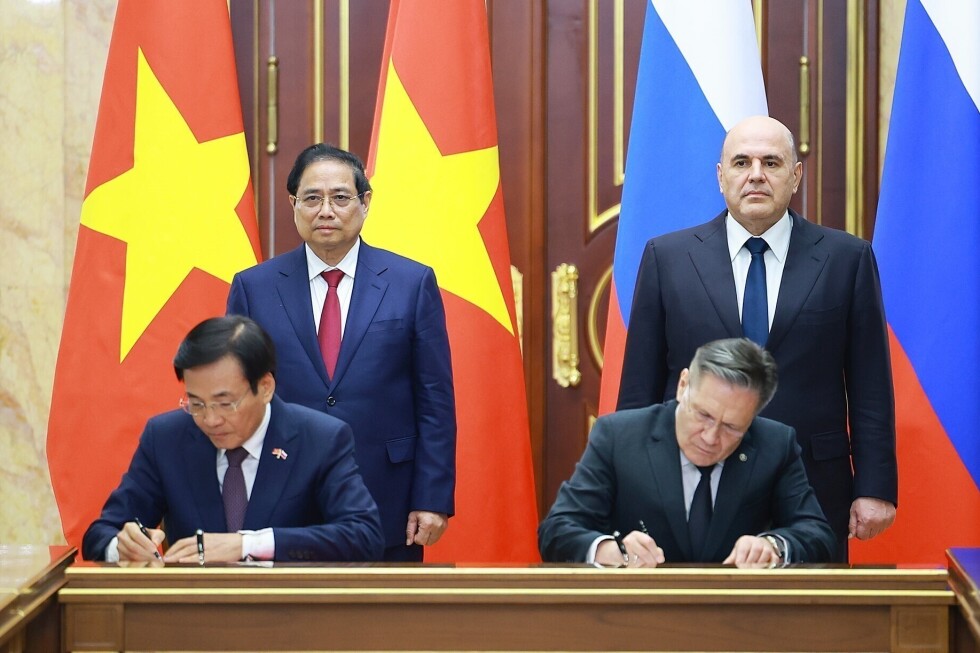
Vietnam and Russia have signed a significant agreement to construct a nuclear power plant in Vietnam, marking a revival of the Southeast Asian nation’s nuclear ambitions. The deal for the Ninh Thuan 1 plant was finalized during Vietnamese Prime Minister Phạm Minh Chính’s official visit to Moscow, where he met with Russian Prime Minister Mikhail Mishustin.
According to Vietnamese state media, both countries have characterized the plant as a “symbolic project” of their longstanding friendship. The agreement comes after Vietnam shelved two similar nuclear projects in 2016 due to escalating costs and safety concerns following the 2011 Fukushima disaster in Japan.
The new facility will feature two Russian-designed reactors with a combined capacity of 2,400 megawatts, based on existing technology currently operating in Russia. For Vietnam, the project represents a critical step toward achieving energy security and reducing greenhouse gas emissions while supporting its ambitious economic growth targets.
Energy security has become increasingly important for Vietnam in recent years, particularly as global energy market volatility has led to higher prices for imported fossil fuels. The country’s rapid industrialization has created growing power demands that its current energy infrastructure struggles to meet.
“Vietnam’s decision to revive nuclear energy comes at a time when the country is experiencing power shortages in its northern regions and facing increasing difficulty in financing new coal power projects,” said an energy analyst familiar with the Southeast Asian market. “Nuclear power offers a stable baseload generation option with minimal carbon emissions.”
The nuclear plant aligns with Vietnam’s vision to transform into Asia’s next “tiger economy” and achieve high-income status by 2050. With electricity demand projected to grow by 8-10% annually over the coming decade, diversifying its energy mix has become a national priority.
Vietnam is not alone in its nuclear pursuits. Across Southeast Asia, rapidly developing economies are increasingly considering nuclear power as a solution for cleaner, more reliable energy. Advocates point to technological advancements that have made modern reactors safer, smaller, and more economical than previous generations.
The Philippines has recently revived discussions about nuclear energy, while Indonesia and Thailand have also expressed interest in developing nuclear capabilities to reduce their carbon footprints while ensuring stable power supplies.
Beyond the nuclear agreement, Monday’s meeting in Moscow covered expanded cooperation in oil and gas development, technology transfer, and infrastructure projects. The discussion reflects both countries’ desire to deepen their economic relationship, which has historically lagged behind their political ties.
Vietnam and Russia have maintained diplomatic relations since 1950, rooted in Cold War alliances. Despite this long-standing connection, economic links remain relatively modest. Bilateral trade increased from $3.63 billion in 2023 to $4.77 billion in 2025, figures that pale in comparison to Vietnam’s trade volumes with major partners like China and the United States.
Russia continues to be an important arms supplier to Vietnam, although Hanoi has been working to diversify its military procurement sources in recent years, establishing defense relationships with partners including the United States, Japan, and South Korea.
The nuclear deal represents one of the most substantial agreements between the two countries in recent years and could signal a new chapter in their economic relationship. Implementation will require overcoming significant regulatory, financial, and technical hurdles, with construction likely to take several years once all approvals are secured.
Environmental groups have expressed mixed reactions to Vietnam’s nuclear revival, with some supporting the low-carbon benefits while others raise concerns about waste management and safety protocols. Vietnamese officials have pledged to implement stringent safety measures based on international standards.
Fact Checker
Verify the accuracy of this article using The Disinformation Commission analysis and real-time sources.

11 Comments
Interesting development in Vietnam’s energy strategy as they partner with Russia on nuclear power. Diversifying their energy mix to include nuclear could help improve energy security and reduce emissions.
Vietnam’s growing energy needs make nuclear an attractive option, though safety and cost concerns will be critical factors to address.
This nuclear deal between Vietnam and Russia is a significant milestone, though I wonder about the long-term geopolitical implications given the complex regional dynamics in Southeast Asia.
It will be important to monitor how this project progresses and whether it faces any pushback or opposition from other regional powers.
The revival of Vietnam’s nuclear ambitions is an intriguing development, especially given the previous shelving of similar projects. Cost and safety will be crucial factors to monitor.
I wonder how this nuclear deal fits into Vietnam’s broader energy strategy and commitment to renewable sources like solar and wind.
This nuclear power agreement between Vietnam and Russia seems to be a strategic move by both countries to enhance energy security in the region. It will be interesting to see how it unfolds.
Curious to see how Vietnam’s shift toward nuclear power will impact its overall energy mix and greenhouse gas emissions profile. Nuclear could be a key part of their low-carbon energy transition.
Glad to see Vietnam taking steps to diversify its energy mix and explore nuclear power. However, the safety and environmental aspects will need to be carefully considered.
The partnership with Russia on this project raises some geopolitical questions that will be worth watching as it progresses.
Vietnam’s nuclear ambitions are understandable given its growing energy needs, but the country will need to carefully weigh the costs, risks, and long-term implications of this deal.