


Listen to the article
Venezuela Opens Oil Sector to Private Investment, Reversing Two Decades of State Control
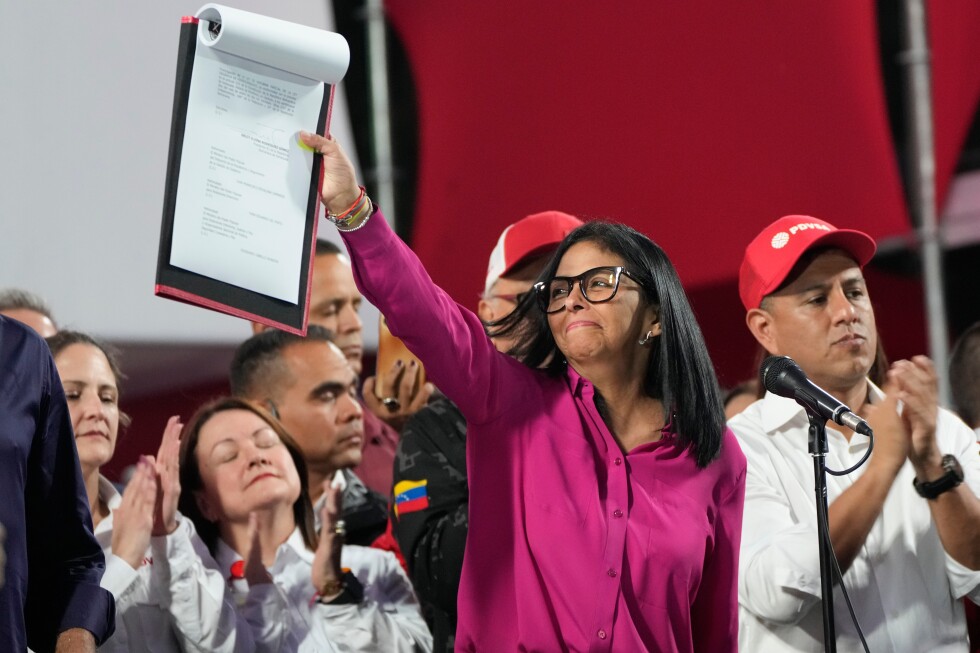
Venezuela’s acting President Delcy Rodríguez signed landmark legislation Thursday that opens the country’s vital oil sector to privatization, marking a dramatic reversal of the socialist policies that have dominated the nation for over 20 years.
The reform allows private companies to take full control of oil production and sales, ending the monopoly of state-owned Petróleos de Venezuela SA (PDVSA). The move comes less than a month after former President Nicolás Maduro was removed from power in a U.S. military operation in Caracas.
“We’re talking about the future. We are talking about the country that we are going to give to our children,” Rodríguez said at the signing ceremony, which took place just hours after the National Assembly approved the bill.
Simultaneously, the U.S. Treasury Department began easing economic sanctions on Venezuelan oil that were imposed during the first Trump administration. The policy shift will expand opportunities for U.S. energy companies to operate in Venezuela, which possesses the world’s largest proven crude reserves.
Rodríguez spoke directly with U.S. President Donald Trump and Secretary of State Marco Rubio following the bill’s approval. Trump recently announced his administration would take control of Venezuela’s oil exports and revitalize the struggling industry by attracting foreign investment.
The legislation enables private companies to manage oil production activities “at their own expense, account, and risk” after demonstrating financial and technical capacity through business plans approved by Venezuela’s Oil Ministry. While private entities will gain operational control, the law maintains that ownership of the hydrocarbon reservoirs remains with the state.
A critical provision for potential investors is the introduction of independent arbitration for resolving disputes. This removes the previous requirement that disagreements be settled exclusively in Venezuelan courts, which are widely seen as controlled by the ruling party. Foreign investors consider independent arbitration essential protection against future expropriation risks.
The reform also modifies extraction taxes, establishing a royalty cap of 30% and allowing the executive branch flexibility to set percentages for individual projects based on capital investment needs and competitiveness.
“This will change the country’s economy,” said ruling-party lawmaker Orlando Camacho, who heads the assembly’s oil committee.
Opposition lawmaker Antonio Ecarri pushed for the inclusion of transparency provisions in the legislation, including a public website to disclose funding and operational information. “Let the light shine on in the oil industry,” Ecarri urged, highlighting how the current lack of oversight has facilitated systemic corruption.
The reform represents a complete reversal of policies established under Hugo Chávez, Maduro’s predecessor and mentor. Chávez made state control of the oil industry a cornerstone of his socialist revolution after being elected in 1998. His 2006 modifications to the oil industry law required PDVSA to be the majority stakeholder in all major oil projects.
Chávez’s nationalization program tore up contracts that foreign companies had signed in the 1990s, seizing assets from American and other Western firms that refused to comply with the new terms. ExxonMobil and ConocoPhillips were among those affected and are still awaiting billions in arbitration awards.
Venezuela’s oil industry, once the economic engine of the country, generated an estimated $981 billion in revenues between 1999 and 2011 during a period of soaring crude prices. This bonanza funded Chávez’s extensive social programs, including housing and education initiatives.
However, PDVSA’s fortunes declined dramatically in subsequent years due to plummeting oil prices, corruption, and mismanagement. By 2013, Venezuela had fallen into a severe economic crisis that eventually drove more than 7.7 million citizens to emigrate. U.S. sanctions further crippled the once-mighty oil industry.
Oil workers celebrated the bill’s approval, gathering at the legislative palace in their red jumpsuits and hard hats, waving Venezuelan flags alongside lawmakers and ruling-party supporters.
The Rodríguez government hopes these reforms will provide the necessary assurances to attract major U.S. oil companies that have been hesitant to return to Venezuela. For a country sitting atop the world’s largest proven oil reserves, the legislation represents a pragmatic pivot toward rebuilding its shattered economy through renewed international investment and cooperation.
Fact Checker
Verify the accuracy of this article using The Disinformation Commission analysis and real-time sources.

6 Comments
I’m curious to see how this overhaul of Venezuela’s oil industry plays out. Attracting foreign capital and expertise could boost production, but concerns remain around transparency, corruption, and the stability of the new regulatory framework.
This policy shift signals a potential shift in Venezuela’s economic approach. Easing state control and welcoming more private participation in the oil industry could help attract needed investment and expertise. However, political instability remains a key risk factor.
The easing of U.S. sanctions on Venezuelan oil is an interesting development. This could open doors for American energy companies to get involved, but the country’s political and economic challenges will likely require a cautious approach.
This is a significant policy shift for Venezuela, but the success of its implementation will depend on the government’s ability to create a welcoming and stable environment for foreign investment in the oil sector.
Venezuela’s move to privatize parts of its oil industry is a dramatic shift from its previous socialist policies. It will be important to see if this strategy can attract sufficient investment to revive the country’s struggling energy sector.
Interesting to see Venezuela opening up its oil industry to more private investment after decades of state control. This could provide opportunities for energy companies but will likely face challenges in rebuilding the sector’s infrastructure and production capacity.