


Listen to the article
Venezuelan lawmakers have begun debating a landmark mining regulation bill that could reshape the country’s resource industry and attract critical foreign investment after decades of strained international economic relations.
The legislation, proposed by acting President Delcy Rodríguez, aims to overhaul Venezuela’s mining sector by establishing clear regulatory frameworks, categorizing operations by scale, and crucially, providing for independent arbitration of disputes—a provision viewed as essential protection for foreign investors wary of the country’s history of expropriations.
This initiative follows a similar reform in Venezuela’s oil industry earlier this year that opened possibilities for privatization, marking a significant departure from the socialist principles that have guided the country’s economic policy for more than two decades. The changes reflect Venezuela’s urgent need for capital infusion to revitalize its struggling economy.
Rodríguez announced the measure during U.S. Secretary of the Interior Doug Burgum’s recent visit to Caracas. The timing is significant as the Trump administration seeks to counter China’s growing dominance in critical minerals markets—many of which Venezuela possesses in abundance.
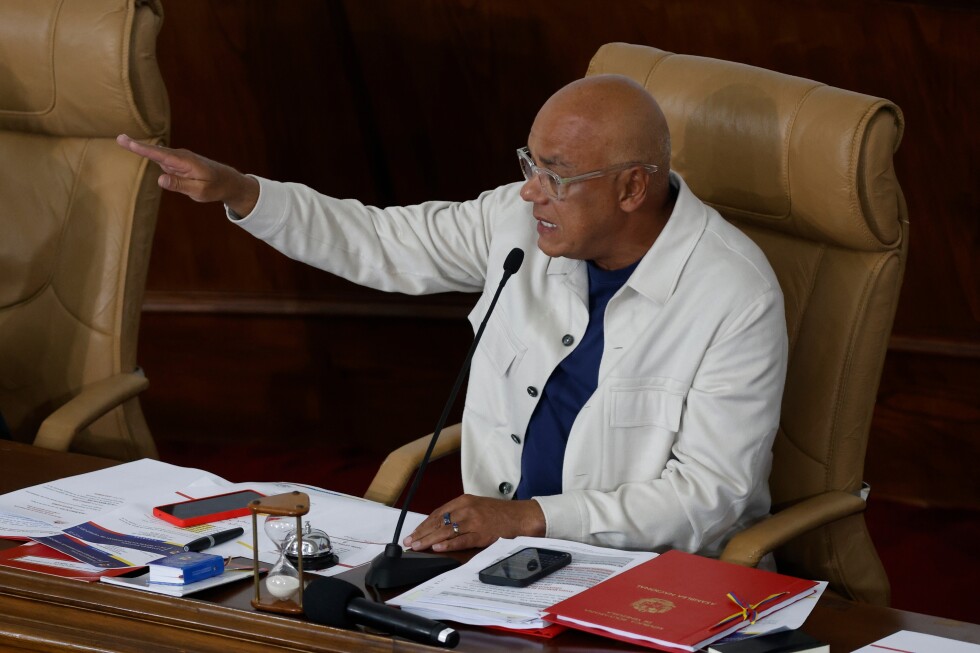
“The restoration of relations between Venezuela and the United States has led the world’s leading mining corporations to evaluate the possibility of investing significant capital,” lawmaker Félix Freites explained during the parliamentary session, highlighting the potential for job creation and economic revival.
Venezuela’s mineral wealth extends far beyond its famous oil reserves. The country possesses substantial deposits of gold, copper, coltan, bauxite, and diamonds. Of particular strategic importance are niobium and tantalum—critical minerals extracted from coltan that are essential components in smartphones and electric vehicle batteries. The country’s bauxite reserves also represent a valuable source of aluminum, another mineral deemed critical by the United States.
However, Venezuela’s mining industry has long operated under problematic conditions. Following widespread expropriations approximately two decades ago, many foreign companies abandoned their Venezuelan operations. The situation further deteriorated in 2016 when then-President Nicolás Maduro established a massive mining development zone in central Venezuela as the country’s oil revenues plummeted due to mismanagement, corruption, and U.S. sanctions.
Since then, Venezuela’s mining sector has evolved into a complex landscape where illegal wildcat operations flourish under brutal conditions, often controlled by criminal gangs with tacit approval from military and government officials who profit from these arrangements. Many ordinary Venezuelans, desperate to escape poverty, continue to risk their lives working in these dangerous mines.
The proposed legislation explicitly bans high-ranking government officials—including the president, vice president, ministers, and governors—from holding mining titles, seemingly addressing concerns about corruption and conflicts of interest that have plagued the sector.
In a parallel development signaling warming U.S.-Venezuelan relations, the United States recently issued a sanctions license authorizing dealings with Minerven, Venezuela’s state-owned gold mining company.
When announcing the bill, Rodríguez framed it as beneficial for Venezuelans’ social well-being. “May the Venezuelan people also see the good aspects of having good relations with the world and with the United States of America,” she stated.
The legislation represents another step in Venezuela’s complex transition following the dramatic U.S. military action in January that removed President Nicolás Maduro from power after nearly 13 years of rule marked by economic collapse and humanitarian crisis.
As debate continues in the Venezuelan legislature, mining industry analysts will be watching closely to determine whether the proposed safeguards and regulatory frameworks will be sufficient to overcome the deep skepticism of international investors who still remember the expropriation waves of previous decades. The outcome could prove pivotal for Venezuela’s economic recovery and for global supplies of the critical minerals increasingly essential to modern technologies.
Fact Checker
Verify the accuracy of this article using The Disinformation Commission analysis and real-time sources.

7 Comments
The timing of this bill is intriguing, coinciding with the U.S. push to counter China’s dominance in critical minerals. Venezuela may be trying to position itself as an alternative supplier, but it will need to demonstrate transparency and stability to attract serious investment.
This could be an opportunity for Venezuela to diversify its economy beyond oil. Mining for critical minerals like lithium and copper could be lucrative if done responsibly. However, the country’s political instability remains a concern for many investors.
The proposed mining bill sounds like an attempt to balance Venezuela’s socialist principles with the need for foreign capital. Independent arbitration is a smart move to reassure skittish investors given the country’s history of expropriations.
Agreed, the independent arbitration provision is key. It will be important to see how it’s implemented in practice to build trust with potential foreign partners.
Interesting move by Venezuela to attract foreign mining investment. This could be a positive step if the regulatory framework is transparent and fair. Curious to see how this will impact the country’s economy and relations with international partners.
This is a bold move by Venezuela, but I have questions about how it will be implemented in practice. The country’s track record on honoring contracts and protecting foreign investments is not strong. Cautious optimism is warranted until we see concrete progress.
I’m skeptical about Venezuela’s ability to effectively reform its mining sector and attract significant foreign capital given the country’s history of mismanagement and political turmoil. Clear regulatory frameworks and independent dispute resolution will be crucial.