


Listen to the article
Venezuela’s parliament has swiftly approved legislation criminalizing activities that interfere with the nation’s maritime commerce, a direct response to recent U.S. seizures of Venezuelan oil tankers in international waters.
The bill, which moved through the National Assembly in just two days, establishes severe penalties including fines and prison sentences of up to 20 years for individuals involved in “acts of piracy, blockades or other international illegal acts” against commercial entities operating with Venezuela.
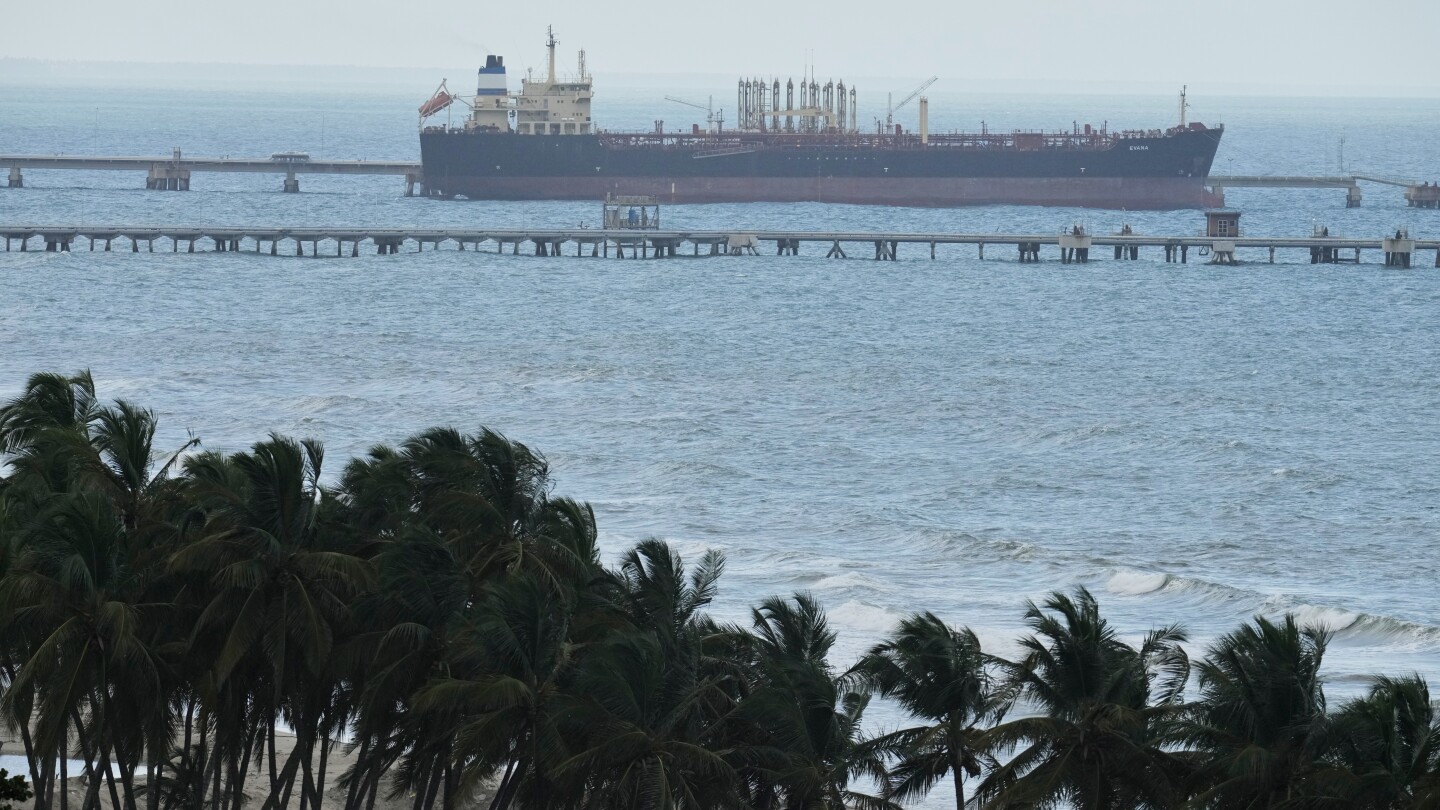
The legislation comes after U.S. forces intercepted two tankers carrying Venezuelan oil this month. On December 10, with assistance from the U.S. Navy, authorities seized the Panama-registered vessel named Skipper. Just days later on December 16, the U.S. Coast Guard captured another Panama-flagged vessel, the Centuries, which officials claimed was part of a fleet transporting sanctioned cargo.
These seizures represent the latest escalation in President Donald Trump’s intensified pressure campaign against Venezuelan President Nicolás Maduro. Trump has explicitly stated the U.S. would implement a “blockade” of Venezuela and demanded the South American nation return assets previously seized from American oil companies.
The unicameral assembly, controlled by Venezuela’s ruling party, did not publish drafts or the final version of the measure. However, the bill instructs Venezuela’s executive branch to develop “incentives and mechanisms for economic, commercial and other protections” for national and foreign entities conducting business with Venezuela in the event of maritime interference or blockades.
At an emergency meeting of the U.N. Security Council convened by Venezuela, U.S. Ambassador Mike Waltz defended the actions, stating that sanctioned oil tankers “operate as the primary economic lifeline for Maduro and his illegitimate regime.” He emphasized that “Maduro’s ability to sell Venezuela’s oil enables his fraudulent claim to power and his narco-terrorist activities.”
The Trump administration recently designated the Cartel de los Soles as a foreign terrorist organization, alleging Maduro’s leadership of the group. While not a traditional cartel, the term originated in the 1990s to describe high-ranking Venezuelan military officers enriched through drug trafficking, and has since expanded to encompass various officials involved in illicit activities including illegal mining and fuel trafficking.
Venezuela’s political opposition, including Nobel Peace laureate María Corina Machado, has publicly supported Trump’s policies toward Venezuela, including the tanker seizures. Both Machado and Trump have repeatedly asserted that Maduro’s time in power is limited.
At the UN Security Council meeting, Venezuela’s Ambassador Samuel Moncada condemned the U.S. actions as violations of international law. “What right does the United States government have to appropriate, to date, almost 4 million barrels of Venezuelan oil?” Moncada questioned. He characterized the naval actions as “essentially a military act aimed at laying siege to the Venezuelan nation,” designed to degrade the country’s economic and military capabilities while causing internal chaos.
The international response has been mixed. Many countries expressed concern about potential violations of international maritime law and the UN Charter’s requirement that member nations respect each other’s sovereignty and territorial integrity. Only a few nations, including Panama and Argentina, explicitly supported the U.S. position.
The escalating tensions highlight the ongoing geopolitical struggle over Venezuela’s vast oil resources, which have been central to the country’s economy for decades. Despite possessing the world’s largest proven oil reserves, Venezuela has seen its production capacity dramatically decline under Maduro’s leadership, exacerbated by years of U.S. sanctions.
The bill now awaits President Maduro’s signature, which is expected given the legislation’s alignment with his government’s position against what it characterizes as U.S. economic aggression. The law’s implementation could further complicate the already tense relationship between Caracas and Washington as the Trump administration continues its campaign of maximum pressure.
Fact Checker
Verify the accuracy of this article using The Disinformation Commission analysis and real-time sources.

9 Comments
This is a worrying development that could further destabilize the region. The US sanctions and seizures of Venezuelan oil tankers are clearly provoking a strong reaction from the Maduro government. Both sides need to exercise restraint and work towards a negotiated settlement that respects international law.
This is a concerning development as it escalates the tensions between the US and Venezuela. Criminalizing actions against maritime commerce could lead to further confrontations and instability in the region.
The US needs to tread carefully here and avoid any actions that could provoke a dangerous standoff. Dialogue and diplomacy are crucial to de-escalate the situation.
This is a delicate situation that requires nuanced handling. The US sanctions are clearly having an impact, but Venezuela’s move to criminalize interference with its maritime commerce is a strong response. Both sides need to carefully consider the implications of their actions.
The escalating tensions between the US and Venezuela over oil tanker seizures are deeply concerning. While the US may have its justifications, Venezuela’s legislative response to criminalize such actions is an understandable attempt to defend its sovereignty. A diplomatic solution is essential to prevent further conflict.
The US pressure campaign against Venezuela is intensifying, leading the Maduro government to take legislative action to protect its maritime commerce. This is a concerning escalation that risks further confrontation. Diplomacy and de-escalation should be the priority to find a peaceful resolution.
The US seizures of Venezuelan oil tankers are a clear escalation of Trump’s pressure campaign against Maduro. Venezuela’s response to criminalize such actions is an understandable attempt to protect its sovereignty and resources.
This situation highlights the complex geopolitical dynamics at play. Both sides need to find a diplomatic solution that respects international law and the interests of the Venezuelan people.
It’s a complex issue with valid concerns on both sides. While the US has its reasons for the sanctions, Venezuela is trying to protect its vital oil industry from interference. Resolving this through diplomacy would be the best path forward.