


Listen to the article
Behind the scenes, Miami Airport serves as the heartbeat of Valentine’s Day flower deliveries across North America, with approximately 990 million stems of cut flowers passing through its cargo warehouses in the weeks leading up to February 14, according to U.S. Customs and Border Protection (CBP).
The scale of the operation is staggering: about 90% of fresh cut flowers sold for Valentine’s Day in the United States flow through Miami International Airport, while Los Angeles handles the remaining 10%. This massive influx transforms the airport into the nation’s floral hub during the season of romance.
Roses, particularly red roses, dominate the Valentine’s shipments, alongside carnations, pompons, hydrangeas, chrysanthemums and gypsophila. These blooms arrive on hundreds of flights primarily from Colombia and Ecuador, before continuing their journey to florists and supermarkets throughout the U.S. and Canada.
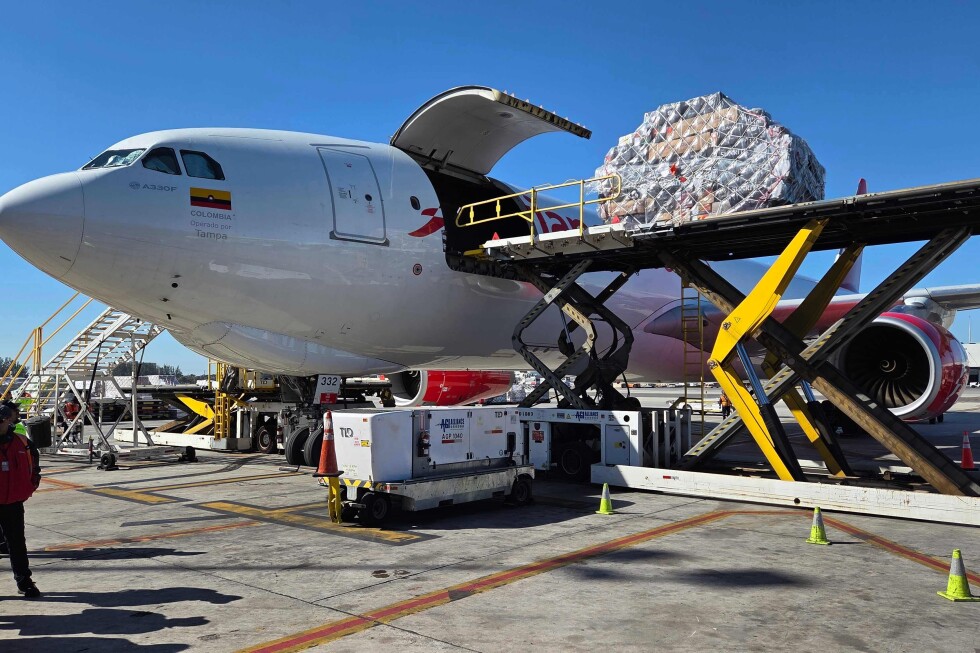
Avianca Cargo, Miami’s largest flower importer based in Medellín, Colombia, has significantly ramped up operations for the holiday. “We fly flowers for the whole year, but Valentine’s is special,” said CEO Diogo Elias during a recent press briefing in Miami. The company is transporting approximately 19,000 tons of flowers on 320 dedicated cargo flights – more than double their normal flight schedule. “More than 50-60% are red roses at this time,” Elias noted.
However, consumers can expect to pay more for their floral arrangements this year. Christine Boldt, executive vice president for the Association of Floral Importers of America, points to two key factors driving the price increases: tariffs implemented last year on imports from Colombia and Ecuador, and a new minimum wage enacted in Colombia in 2024.
“This adds significant dollars to the bouquets that are coming in,” Boldt explained. “Every consumer is gonna have to face additional costs.” Despite these rising prices, the floral industry remains a cornerstone of Miami’s import economy.
Ralph Cutié, Miami International Airport director, highlighted the significance of the flower trade to the airport’s operations. In 2023, the airport processed almost 3.5 million tons of cargo, with flowers accounting for approximately 400,000 tons. Remarkably, more than a quarter of those flowers move through the airport in the weeks preceding Valentine’s Day, marking a 6% increase over the previous year’s volume.
“The mother, the wife, the girlfriend in Omaha, Nebraska, that gets their flowers for either Valentine’s or Mother’s Day, chances are those flowers passed through our airport,” Cutié said. “And that’s something we take a lot of pride in.”
The process involves more than just moving boxes of flowers. CBP agricultural specialists perform critical inspections to prevent potentially harmful plant pests and foreign animal diseases from entering the country. Daniel Alonso, a senior CBP official, explained that inspectors typically discover about 40-50 plant pests daily during peak season, with moths being the most common offenders.
These intercepted pests are handed over to the U.S. Department of Agriculture, which assesses their potential threat to domestic agriculture. “Our rigorous process is vital to safeguarding the floral and agricultural industries, ensuring that our imported flowers are not introducing any pests or harmful diseases,” Alonso emphasized.
The Valentine’s flower pipeline represents a fascinating intersection of international trade, agriculture, transportation logistics, and romance. While consumers may only see the final product – a beautiful bouquet on their dining table – a complex global supply chain operates behind the scenes, with Miami International Airport serving as its crucial nexus.
As millions of Americans exchange flowers this Valentine’s Day, few will realize that their romantic gestures began thousands of miles away in South American flower farms before passing through the cargo warehouses of South Florida – a journey far more complex than Cupid’s simple arrow.
Fact Checker
Verify the accuracy of this article using The Disinformation Commission analysis and real-time sources.

8 Comments
It’s interesting to see the geographic breakdown of Valentine’s flower imports, with 90% coming through Miami and 10% through LA. I wonder what factors determine the preferred routes and hubs for this trade.
Good point. Proximity to the major flower growing regions in Colombia and Ecuador is likely a big factor, as well as the logistics capabilities at each airport.
Despite the tariffs and higher costs, it’s good to see the Valentine’s flower imports holding steady at Miami Airport. Consumers still seem willing to pay for those special blooms.
Yes, the demand for fresh flowers around Valentine’s Day is clearly very resilient. Businesses have likely found ways to absorb or pass along the extra costs.
I’m curious to know more about the impact of the tariffs on the flower import business. Are the higher costs being passed on to consumers, or are the suppliers and distributors taking a hit to margins?
The surge in flower imports around Valentine’s Day is an impressive logistical challenge. I’d be curious to learn more about how the airports, airlines, and distributors coordinate to handle this seasonal spike in demand.
Interesting to see the scale of the Valentine’s Day flower import operation at Miami Airport. It’s amazing how much of the US and Canada’s cut flowers pass through this hub ahead of the big day.
Agreed, the logistics behind getting all those flowers delivered on time must be quite a feat. It’s great to see the economic activity and jobs this industry generates.