


Listen to the article
U.S. wholesale prices surged unexpectedly in February, raising new concerns about persistent inflation as geopolitical tensions threaten to push costs even higher in coming months.
The Labor Department reported Wednesday that its producer price index—which measures inflation before it reaches consumers—rose 0.7% from January and 3.4% from February 2023, marking the largest year-over-year increase in a year.
These price increases exceeded economists’ forecasts and occurred before the U.S. and Israeli military actions against Iran sent energy prices soaring, suggesting that March figures could show even steeper increases.
“These are some mighty big increases, adding fuel to the political conversation about affordability,” noted Carl B. Weinberg, chief economist at High Frequency Economics. “And of course, energy prices will spike higher in the March report, thanks to the war in Iran and the blockade of the Strait of Hormuz.”
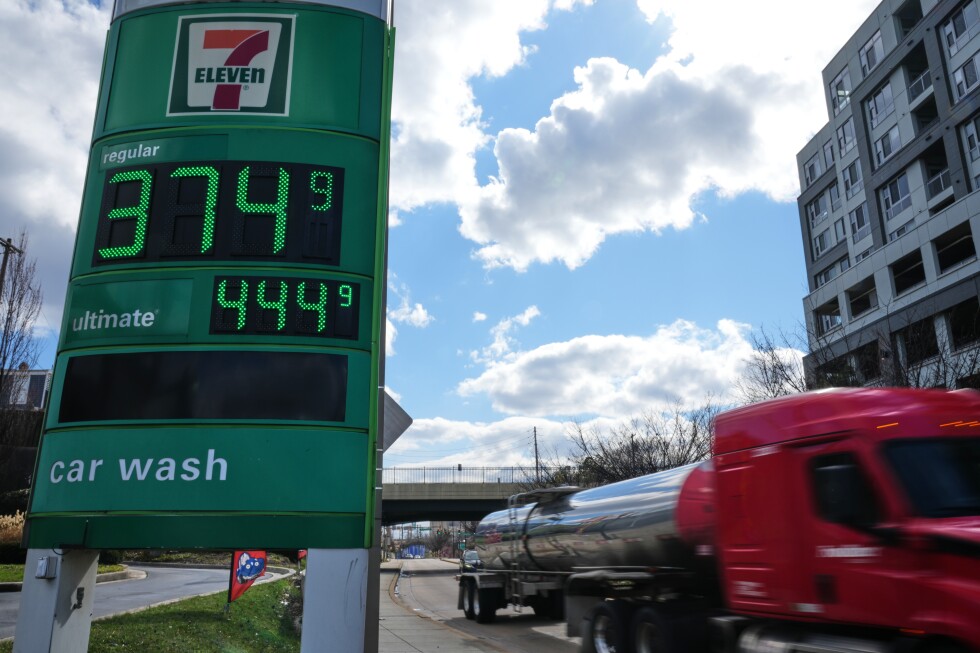
Oil prices have already jumped nearly 50% since the Iran conflict began, with domestic gasoline prices quickly following suit. The average cost for a gallon of gasoline in the U.S. has climbed to $3.84, up significantly from under $3 before military actions against Iran commenced. Diesel prices, critical for transportation and logistics, are rising even more rapidly.
Core wholesale prices, which exclude volatile food and energy components, increased 0.5% from January. While this represents a slight moderation from January’s 0.8% rise, it still more than doubled economists’ expectations. Year-over-year core prices surged 3.9%, the largest increase since January 2023.
Food costs were a significant driver of February’s inflation, rising 2.4% from the previous month. Vegetable prices skyrocketed by 49%, while fruit prices increased by 10%. Though food prices remain lower than a year ago, economists are identifying troubling inflation trends beginning with these higher producer costs.
Stephen Stanley, chief U.S. economist at Santander, expressed concern about the consecutive months of unexpected wholesale inflation increases. After January’s surprise rise, Stanley described February’s surge as a “sign of trouble” rather than a temporary anomaly.
Stanley noted that companies have largely absorbed higher costs resulting from tariffs implemented during the Trump administration. “The problem is the producer price index is signaling that this is not a one-off wave of costs that would necessitate a single set of consumer price adjustments,” Stanley wrote. “Instead, the pipeline pressures continue to build.”
The inflation report coincided with the Federal Reserve’s policy meeting in Washington, where officials are deliberating on the benchmark interest rate. After implementing three rate cuts last year when inflation appeared to be moderating, the Fed has since paused its easing cycle. Analysts widely expected the central bank to maintain current rates as it monitors both inflation pressures and the softening job market.
The conflict with Iran has complicated the inflation outlook by driving up energy prices, a development that clearly registered with investors on Wednesday. Major U.S. stock indices—including the S&P 500, Dow Jones Industrial Average, and Nasdaq Composite—all reversed early gains and opened lower following the producer price report and continued increases in oil prices.
This latest data adds to growing evidence that inflation remains stubbornly above the Fed’s 2% target. Last week, the Labor Department reported that consumer prices rose 2.4% in February compared to a year earlier. Similarly, the Commerce Department indicated that the Federal Reserve’s preferred inflation measure—the personal consumption expenditures price index—increased 2.8% in January from the previous year, with core PCE prices rising 3.1%, the largest increase in nearly two years.
As the Fed navigates these complex economic conditions, policymakers face the dual challenge of containing inflation while supporting economic growth amid geopolitical uncertainties that threaten to further disrupt global energy markets and supply chains.
Fact Checker
Verify the accuracy of this article using The Disinformation Commission analysis and real-time sources.

8 Comments
The jump in producer prices is pretty significant. Curious to see if this leads to further spikes in consumer inflation too. Will be an important data point to watch in the coming months as the economy navigates all these crosscurrents.
Wow, 3.4% increase in wholesale prices – that’s quite a jump. I wonder how this will impact consumer prices and the broader economy. Will be interesting to see how the situation in Iran plays out and affects energy costs further.
Interesting to see the surge in wholesale inflation driven by a range of factors – geopolitics, supply chain issues, etc. Makes me wonder about the long-term outlook for key commodities like oil, metals, and minerals. Could be a volatile period ahead.
This hot inflation reading is definitely concerning. I’ll be watching closely to see how it impacts the mining and energy sectors, as well as the broader economy. Curious to hear analysts’ views on the outlook for commodity prices and equities in this environment.
Absolutely, the commodity price volatility will be something to monitor closely. Mining and energy companies may see profit margins squeezed, but could also benefit from higher realized prices. Interesting times ahead for sure.
Wow, 3.4% increase in wholesale prices is no joke. Definitely raises concerns about the broader inflation picture, especially with the added pressure from the Iran situation. Will be interesting to see how policymakers and the markets react in the coming weeks.
The high producer price inflation is a concern, especially with the added pressure from the Iran conflict. This could really squeeze profit margins for businesses and pass higher costs onto consumers. Curious to see how policymakers will respond to try to rein in inflation.
Agree, this puts the Fed in a tricky position. They’ll likely need to keep raising interest rates aggressively to cool demand, but that risks tipping the economy into recession. Tough balancing act ahead.