


Listen to the article
In a groundbreaking demonstration of nuclear mobility capabilities, the Pentagon and Energy Department successfully airlifted a microreactor from California to Utah last weekend, marking the first such transport of its kind in U.S. history.
The nearly 700-mile flight carried a 5-megawatt microreactor—about the size of a minivan—aboard a C-17 military aircraft. While the reactor contained no nuclear fuel during transport, officials touted the operation as a significant step toward rapid deployment of nuclear power for both military applications and civilian use.
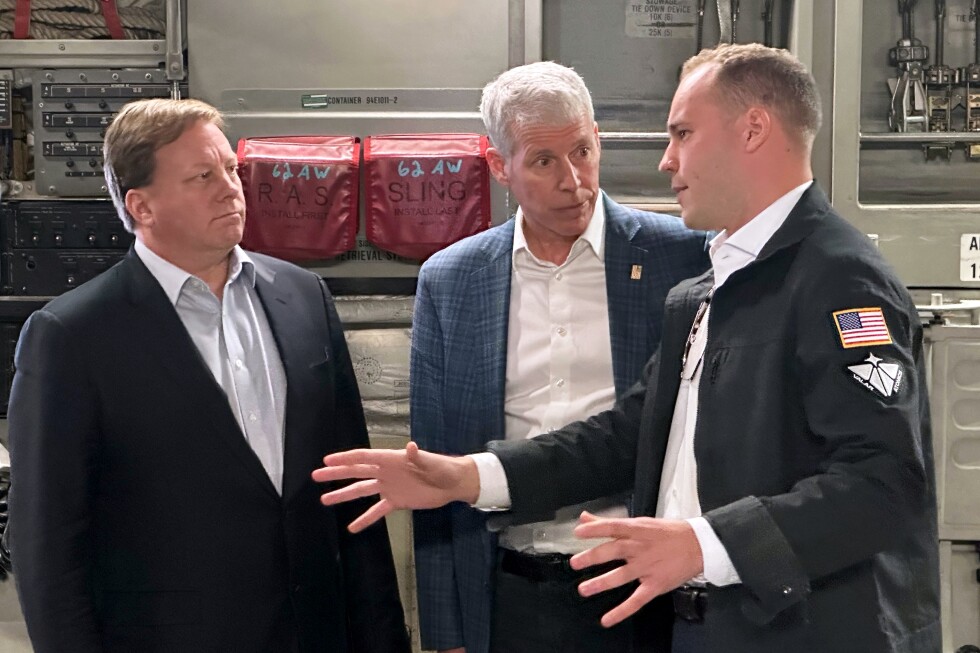
Energy Secretary Chris Wright and Undersecretary of Defense Michael Duffey, who accompanied the reactor on its journey from March Air Reserve Base to Hill Air Force Base, characterized the February 15 flight as a milestone in the administration’s efforts to accelerate commercial licensing for microreactors.
“Today is history. A multi-megawatt, next-generation nuclear power plant is loaded in the C-17 behind us,” Wright declared before the two-hour flight. “That’s speed, that’s innovation, that’s the start of a nuclear renaissance.”
The demonstration aligns with the Trump administration’s broader energy strategy, which has positioned nuclear power as a reliable, carbon-free electricity source. This approach stands in contrast to the administration’s generally skeptical stance toward renewable energy while favoring fossil fuels like coal.
The transported reactor, built by California startup Valar Atomics, represents one of at least three reactors that officials claim will reach “criticality”—the point at which a nuclear reaction becomes self-sustaining—by July 4, fulfilling a timeline promised by President Trump.
According to Isaiah Taylor, CEO of Valar Atomics, the reactor will generate up to 5 megawatts of electricity, enough to power approximately 5,000 homes. The company aims to begin selling power on a test basis next year before achieving full commercial operation in 2028.
The push for microreactors comes amid significant changes in America’s nuclear landscape. Currently, 94 operable nuclear reactors generate about 19% of the country’s electricity, down from 104 reactors a decade ago. Recent additions include two new commercial reactors in Georgia—the first large reactors built from scratch in a generation in the United States.
Industry and government focus has increasingly shifted toward more efficient, smaller designs that can be deployed more rapidly than traditional large-scale facilities. This trend responds to growing electricity demands, particularly from energy-intensive sectors like artificial intelligence data centers.
Defense officials emphasized the strategic value of portable nuclear power. “Microreactors can accelerate the delivery of resilient power to where it’s needed,” Duffey said, noting that such technology could eventually provide energy security on military bases independent of the civilian grid.
However, critics have raised concerns about safety, feasibility, and economics. Edwin Lyman, director of nuclear power safety at the Union of Concerned Scientists, dismissed the transport operation as “a dog-and-pony show” that merely demonstrated the ability to ship heavy equipment.
“The flight doesn’t answer any questions about whether the project is feasible, economic, workable or safe—for the military and the public,” Lyman said. He noted that the administration has yet to address crucial safety considerations regarding the secure transport of microreactors once loaded with nuclear fuel.
Questions also remain about nuclear waste management, though Secretary Wright indicated that the Energy Department is in discussions with Utah and other states regarding potential sites for fuel reprocessing or permanent disposal.
Following its arrival in Utah, the microreactor will undergo testing and evaluation at the Utah San Rafael Energy Lab, with fuel to be provided by the Nevada National Security site.
Wright characterized the initiative as part of a broader shift in energy policy: “The answer to energy is always more. Now we’re trying to set everything free. And nuclear will be flying soon.”
Fact Checker
Verify the accuracy of this article using The Disinformation Commission analysis and real-time sources.

9 Comments
Interesting development in nuclear mobility. Airlifting a microreactor is an impressive technical feat, showcasing the military’s capabilities. I’m curious to see how this technology is leveraged for both military and civilian applications going forward.
From an energy security perspective, the ability to rapidly deploy nuclear power in remote locations is intriguing. However, I hope the administration balances this with a comprehensive strategy that addresses waste, proliferation, and environmental justice concerns.
Absolutely. A holistic view is essential when it comes to nuclear power. The benefits need to be weighed against the risks and long-term implications.
The administration’s push to accelerate commercial licensing for microreactors is an ambitious goal. Rapid deployment of nuclear power could have significant implications for energy security and emissions reduction, if done safely. I’d like to see more details on the regulatory process and safety protocols.
Nuclear power is a complex and often controversial topic. While this demonstration highlights technological advances, I hope the administration also prioritizes public acceptance, environmental safeguards, and long-term waste management in their nuclear strategy.
Agreed. Gaining public trust will be crucial as they move forward with this agenda. Transparent communication and addressing safety concerns will be key.
Microreactor technology could be a game-changer, but I have some reservations about the administration’s apparent haste. Careful planning and rigorous testing should come before rapid deployment, to ensure these systems are truly safe and reliable.
That’s a fair point. Rushing the rollout of new nuclear technology, even for military uses, could introduce unintended risks. A cautious, well-regulated approach would be prudent.
This demonstration highlights the technological capabilities of the US military and the administration’s ambitions in the nuclear sector. While I’m interested to see how this technology progresses, I hope they prioritize safety, transparency, and environmental sustainability above all else.