


Listen to the article
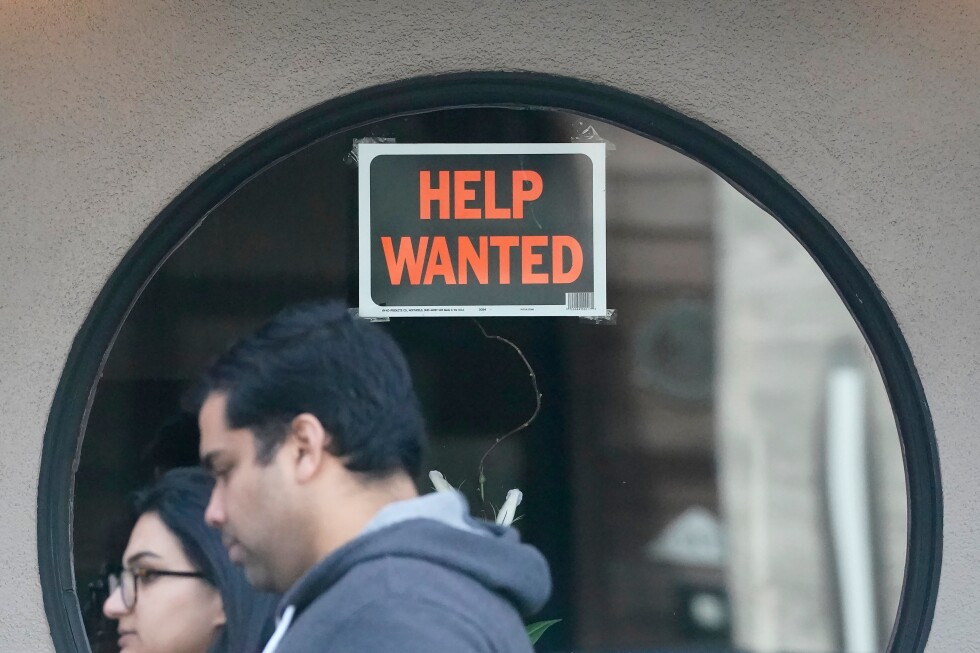
U.S. job openings plunged to their lowest level in more than three years last December, further evidence of a persistently sluggish labor market despite robust economic growth.
The Labor Department reported Thursday that vacancies dropped to 6.5 million in December from 6.9 million the previous month, marking the lowest figure since September 2020 during the COVID-19 pandemic. This decline came in below economists’ forecasts and coincided with a slight uptick in layoffs. Meanwhile, the number of workers quitting their jobs – typically viewed as a barometer of confidence in finding new employment – remained essentially unchanged at 3.2 million.
This latest data underscores an increasingly perplexing economic scenario where strong growth coexists with lackluster job creation. While gross domestic product surged at its fastest pace in two years during the July-September quarter, employment growth has stagnated dramatically since early 2023.
Since March, employers have added an average of just 28,000 jobs monthly – a stark contrast to the robust pace of 400,000 jobs per month during the post-pandemic hiring boom from 2021 to 2023. When the Labor Department releases January’s employment figures next Wednesday, economists anticipate a modest improvement with approximately 70,000 new jobs, up from December’s meager 50,000.
Other employment indicators point to similar weakness. ADP’s private sector employment report, released Wednesday, showed businesses added only 22,000 jobs in January, falling far short of market expectations. Meanwhile, outplacement firm Challenger, Gray & Christmas reported that companies cut more than 108,000 jobs in January – the highest monthly total since October and the worst January for job eliminations since 2009 during the Great Recession aftermath.
“The hiring recession isn’t going to end anytime soon,” said Heather Long, chief economist at Navy Federal Credit Union. “It’s yet another sign of how little hiring – or interest in hiring – is happening in this economy.”
The dichotomy between strong economic output and weak employment has economists puzzling over several potential scenarios. Some wonder if hiring might eventually accelerate to match the robust GDP growth, while others question whether economic expansion might slow to align with the tepid labor market conditions.
A third possibility gaining traction involves technological disruption. The rapid advancement and deployment of artificial intelligence and automation technologies could be enabling businesses to increase productivity and output without corresponding workforce expansion – potentially heralding a fundamental shift in the relationship between economic growth and job creation.
This employment slowdown comes at a critical juncture for the U.S. economy. The Federal Reserve has maintained high interest rates to combat inflation, which has shown signs of cooling in recent months. How the central bank interprets these conflicting economic signals – strong growth but weakening employment – could significantly influence its monetary policy decisions in coming months.
For job seekers and employers alike, this unusual economic landscape creates significant uncertainty. Industries most affected by recent layoffs include technology, financial services, and retail, according to the Challenger report, suggesting structural changes rather than merely cyclical adjustments.
As policymakers and economists continue monitoring these trends, the coming months will be crucial in determining whether this represents a temporary misalignment or a more fundamental shift in how the American economy functions in a post-pandemic, increasingly automated world.
Fact Checker
Verify the accuracy of this article using The Disinformation Commission analysis and real-time sources.

14 Comments
This drop in job openings is a bit surprising given the robust economic growth we’ve seen. Suggests employers may be tightening their belts a bit amid economic uncertainty. Curious to see how the labor market fares in the months ahead.
Agreed, the labor market seems to be out of sync with the broader economic picture. Could be employers taking a more cautious approach to hiring as they navigate potential headwinds.
Interesting to see job openings declining, even as the economy remains strong. Seems like a complex labor market dynamic at play. Wonder what’s driving the disconnect between GDP growth and sluggish hiring?
Could be a mix of factors – companies being more cautious with new hires, skills mismatches, or workers being more selective. Curious to see how this evolves over the coming months.
The drop in job openings is an unexpected development given the robust GDP growth. Seems like the labor market is not quite in sync with the broader economic picture. Curious to see what’s driving this disconnect and how it plays out.
Agreed, the divergence between GDP and hiring is puzzling. Could be a sign of employers taking a more cautious approach to staffing amid economic headwinds. Will be interesting to see how this dynamic unfolds.
The declining job openings and stagnant employment growth are intriguing, especially against the backdrop of strong GDP. Wondering if this indicates a shift in hiring strategies or broader economic trends to watch out for.
Definitely a puzzling dynamic. Could be signs of an impending slowdown or employers becoming more selective in their hiring. Will be interesting to see how this develops in the coming months.
The declining job openings amidst strong GDP growth is an intriguing data point. Suggests the labor market may be lagging the broader economic recovery. Curious to see if this is a temporary blip or part of a larger trend.
Definitely an interesting dynamic to keep an eye on. The disconnect between GDP and hiring could be indicative of employers adopting a more cautious stance on new hires. Will be worth monitoring how this situation evolves.
The drop in job openings is an interesting data point, especially given the robust GDP growth. Seems like the labor market is not quite keeping pace with the broader economic picture. Curious to see how this evolves.
Agreed, the disconnect between GDP and hiring is intriguing. Could be a sign of employers being more cautious or selective in their staffing decisions. Will be worth monitoring how this plays out.
The decline in job openings is a bit surprising given the strong economic growth. Suggests the labor market may be lagging behind the broader recovery. Curious to see if this is a temporary blip or part of a broader trend.
Definitely an interesting data point. Could be a sign of employers becoming more selective or cautious in their hiring amid economic uncertainty. Will be worth watching how the labor market evolves in the coming months.