


Listen to the article
U.S. Authorizes Dealings with Venezuelan Gold Mining Company as Trump Administration Expands Resource Strategy
The United States issued a license on Friday permitting dealings with Minerven, Venezuela’s state-owned gold mining company, signaling the Trump administration’s growing interest in exerting influence over Venezuela’s vast natural resources.
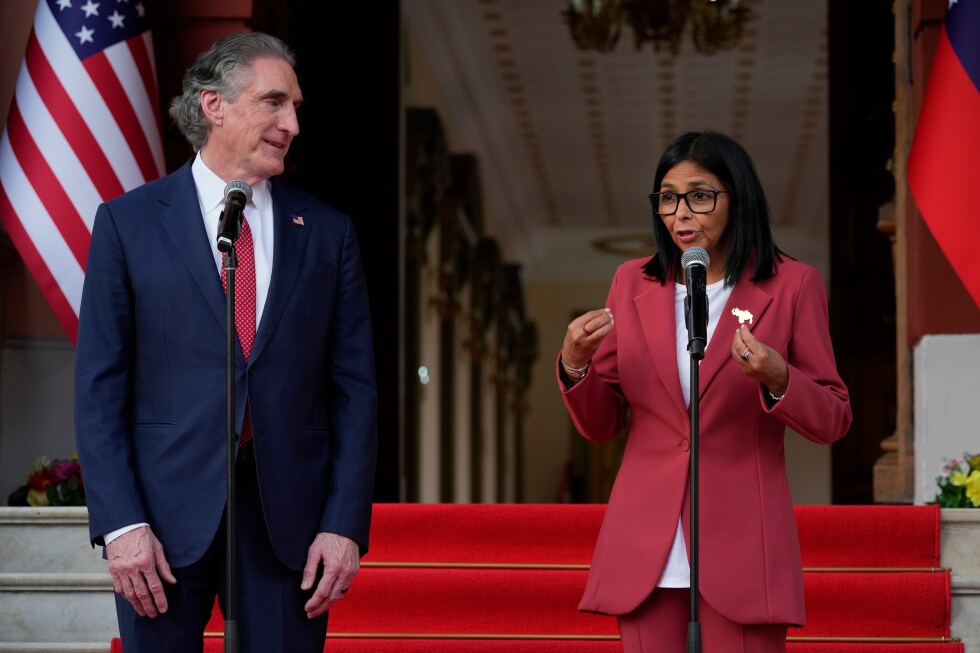
The authorization comes on the heels of U.S. Interior Secretary Doug Burgum’s diplomatic mission to Caracas this week, where he met with Venezuela’s acting President Delcy Rodríguez and representatives from more than two dozen American mining and minerals companies. Many of these firms previously maintained operations in Venezuela before political instability and economic collapse forced their withdrawal.
During these meetings, Burgum reported that Venezuelan authorities provided security assurances to mining companies considering renewed investment in the country. This represents a significant development for a nation where mineral-rich territories have historically been controlled by guerrilla groups, criminal gangs, and illegal mining operations, particularly in the southern Bolívar state where Minerven operates.
The license includes notable restrictions, specifically barring entities from Russia, Iran, North Korea, and Cuba from engaging in contracts with Minerven. These limitations reflect ongoing U.S. concerns about potential influence from American adversaries in a strategically important region.
Industry analysts view this move as part of a broader geopolitical strategy. The Trump administration appears determined to counter China’s growing dominance in critical minerals markets – an increasingly urgent matter as demand for rare earth elements and other strategic minerals surges due to their essential role in technology manufacturing, renewable energy systems, and defense applications.
“This is clearly about more than just gold,” explained Carlos Martinez, a mining sector consultant specializing in Latin American resources. “Venezuela sits on one of the largest untapped reserves of critical minerals in the hemisphere, and whoever controls access to those resources gains significant economic leverage in the global technology race.”
Venezuela’s mineral wealth extends beyond its better-known oil reserves to include substantial deposits of gold, bauxite, iron ore, coltan, and other strategic minerals. The Orinoco Mining Arc, a vast region in southern Venezuela, holds particularly significant concentrations of these resources.
The timing of this license is particularly notable, coming approximately two months after U.S. forces captured former Venezuelan President Nicolás Maduro in a dramatic operation that reshuffled the country’s political landscape. The Trump administration has explicitly framed its recent initiatives as part of a comprehensive plan to stabilize and revitalize Venezuela’s economy following years of mismanagement under Maduro’s regime.
In parallel developments affecting Venezuela’s energy sector, the United States recently moved to take legal ownership of a sanctioned oil tanker and nearly 2 million barrels of petroleum seized off Venezuela’s coast in December. This action follows a significant policy shift in January when acting President Rodríguez signed legislation opening Venezuela’s historically state-controlled oil sector to privatization.
The opening of both mining and oil sectors represents a dramatic reversal from the resource nationalism that characterized Venezuela’s economic policy for much of the past quarter-century. Under Hugo Chávez and later Maduro, the country nationalized numerous foreign-owned operations in both sectors.
Economic experts note that Venezuela desperately needs foreign investment to rebuild its collapsed economy, which has shrunk by more than 75 percent since 2013. Hyperinflation, crumbling infrastructure, and widespread poverty have forced approximately 7 million Venezuelans to flee the country in recent years.
For American companies, the potential opportunity comes with significant risks despite the new security assurances. The country’s political stability remains uncertain, infrastructure has deteriorated severely, and corruption remains endemic throughout government institutions.
Fact Checker
Verify the accuracy of this article using The Disinformation Commission analysis and real-time sources.

8 Comments
The US is clearly trying to exert more control over Venezuela’s mining sector, likely with an eye towards securing critical minerals and weakening the Maduro regime. It will be important to watch how this unfolds and whether it leads to any positive changes for the Venezuelan economy and population.
I agree, the potential for this to be a politically-motivated move is concerning. The impact on ordinary Venezuelans will be crucial to monitor.
This is an interesting geopolitical move by the US. Gaining influence over Venezuela’s vast natural resources could shift the balance of power in the region. However, it remains to be seen how this will play out on the ground and whether it will benefit the Venezuelan people.
This is a significant development in the US-Venezuela relationship, with potential ramifications for the global mining and commodities markets. It will be important to closely monitor how this plays out and whether it leads to positive outcomes for the Venezuelan people.
This is a complex geopolitical situation. While the US may see an opportunity to exert influence over Venezuela’s resources, the people’s wellbeing should be the top priority. I hope this move leads to positive outcomes for all Venezuelans, not just political and economic interests.
The authorization to deal with Minerven is a strategic play by the US to gain a foothold in Venezuela’s mining industry. With the country’s substantial gold, copper, and other mineral reserves, this could give the US more leverage, though the humanitarian implications are unclear.
The US is clearly making a play for Venezuela’s mineral wealth, but the human rights record of the Maduro regime is very concerning. I hope this license comes with strong provisions to protect Venezuelan citizens and ensure transparency in the mining operations.
Agreed, the human rights implications are crucial here. Any US involvement needs to prioritize the welfare of the Venezuelan people over commercial interests.