


Listen to the article
Iran, US and Israel Agree to Two-Week Ceasefire Amid Lingering Tensions
Iran, the United States and Israel reached a fragile two-week ceasefire agreement Wednesday as President Donald Trump stepped back from threats to destroy Iranian civilization. The deal temporarily halts the regionwide conflict but has immediately revealed conflicting interpretations of its terms.
The agreement includes provisions to reopen the strategic Strait of Hormuz, a vital shipping channel that carries 20% of global oil and natural gas in peacetime. Iran has insisted it will charge tolls to passing ships and continue uranium enrichment activities, while Trump suggested American warships would maintain a presence in the waterway – creating a potential flashpoint despite the ceasefire.
“Big money will be made. Iran can start the reconstruction process,” Trump stated on social media, seemingly endorsing Iran’s plan to collect fees from vessels transiting the strait.
Iranian Foreign Minister Abbas Araghchi announced passage through the strait would resume under Iranian military management, though the extent of Iran’s control remains unclear. According to a regional official speaking anonymously, both Iran and Oman would charge shipping fees, with Iran using the proceeds for reconstruction efforts following weeks of devastating airstrikes.
This arrangement would fundamentally alter decades of maritime policy that treated the strait as an international waterway with free transit rights. Gulf Arab states, themselves needing to rebuild after Iranian attacks on their oil infrastructure, are likely to oppose such terms.
The deal has sparked immediate confusion as officials released contradictory information. Trump initially characterized Iran’s proposal as “workable” before later calling it “fraudulent” without elaboration. Israel’s Prime Minister Benjamin Netanyahu supported the US-Iran ceasefire but insisted it wouldn’t affect Israel’s operations against Hezbollah in Lebanon, which continued throughout Wednesday morning.
This contradicted statements from Pakistan, a key mediator in the negotiations, which claimed the ceasefire encompassed the Lebanon conflict. Pakistan also announced that talks to solidify a peace plan would begin in Islamabad as early as Friday.
The announcement brought some immediate economic relief, with oil prices falling and Asian stock markets rising as trading opened Wednesday. However, the ceasefire appeared to trigger a final round of attacks, with Iran launching missiles at targets in the United Arab Emirates, Saudi Arabia, Israel, Bahrain, and Kuwait shortly after the agreement was announced. Officials reported a gas processing facility in Abu Dhabi was set ablaze following Iranian strikes.
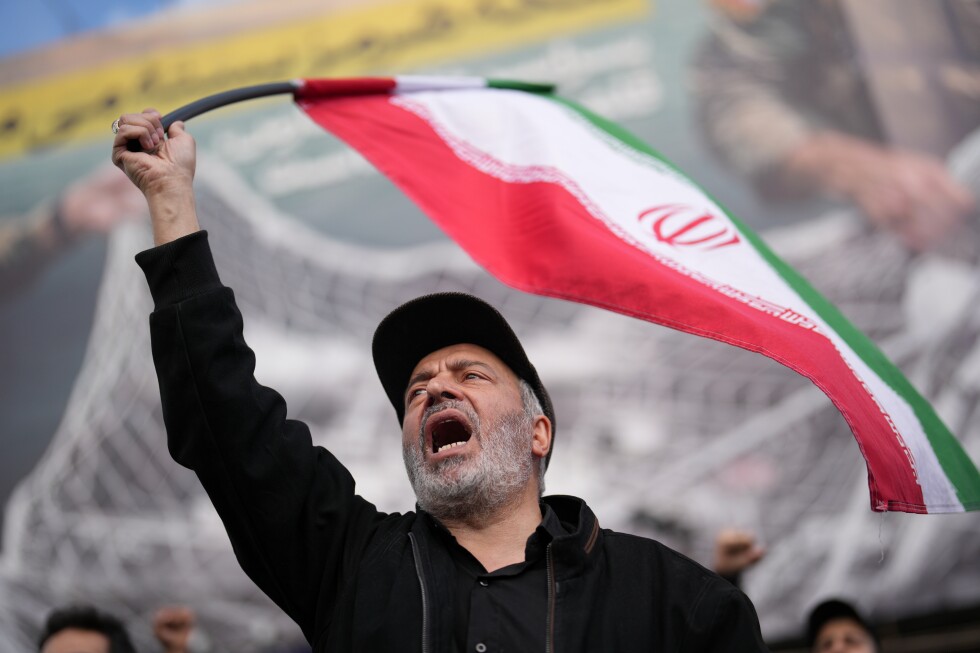
On Tehran’s streets, pro-government demonstrators burned American and Israeli flags while chanting “Death to America, death to Israel, death to compromisers!” The protests highlighted the deep-seated opposition from Iranian hardliners who had been bracing for a potentially catastrophic conflict with the United States.
The agreement leaves major issues unresolved, including Iran’s nuclear program, ballistic missile development, and support for regional militant groups—the very issues cited by the US and Israel as justifications for initiating the conflict on February 28. Iran’s demands for a permanent peace include US troop withdrawals from the region, sanctions relief, and the release of frozen assets—conditions likely to face resistance from Washington and its allies.
The human toll of the conflict has been severe. Iran reported more than 1,900 deaths as of late March, though updated figures have not been released for days. In Lebanon, where Israel continues to battle Hezbollah militants, over 1,500 people have been killed and a million displaced. The fighting has also claimed the lives of eleven Israeli soldiers, more than two dozen people in Gulf Arab states and the West Bank, 23 in Israel, and 13 US service members.
Since the war began, Trump has repeatedly extended deadlines before they expire. His latest decision came after conversations with Pakistan’s Prime Minister Shehbaz Sharif and Army Chief General Asim Munir.
A senior Israeli official, speaking anonymously about private diplomatic discussions, said the United States had coordinated the ceasefire with Israel in advance. The official added that Israel credits “the massive crushing of the regime’s infrastructure” with securing the agreement and claimed Washington had committed to pressing for the removal of nuclear material and dismantling of Iran’s missile program.
As the two-week ceasefire clock begins ticking, the critical question remains what happens when this temporary pause expires without resolution of the fundamental issues that triggered the conflict.
Fact Checker
Verify the accuracy of this article using The Disinformation Commission analysis and real-time sources.

12 Comments
This ceasefire is a small step in the right direction, but the underlying issues between the US, Israel, and Iran remain unresolved. I hope the parties can use this time to engage in more substantive negotiations and work towards a lasting solution.
Agreed. A true, durable peace will require compromises and concessions from all sides. The temporary nature of this ceasefire highlights the fragility of the situation.
The control of the Strait of Hormuz is a critical component of this agreement. Iran’s insistence on collecting tolls and the US maintaining a presence there could be a recipe for renewed conflict. Careful management of this waterway will be essential.
Considering the volatility of the region, a two-week ceasefire seems quite fragile. I’m curious to see if this can lead to more substantial negotiations or if it’s just a temporary pause before the conflict escalates again.
Agreed. The conflicting interpretations of the ceasefire terms are worrying. Sustaining this agreement will require good faith efforts from all parties involved.
While a ceasefire is always preferable to outright conflict, the lingering tensions and differing interpretations of the terms raise concerns about the long-term viability of this agreement. Careful diplomacy will be crucial in the weeks ahead.
Interesting development in the ongoing tensions between the US, Israel, and Iran. A temporary ceasefire could provide some breathing room, but the terms seem a bit murky. I wonder how the control of the Strait of Hormuz will be handled during this period.
Yes, the situation in the Strait of Hormuz remains a potential flashpoint. Iran’s insistence on collecting tolls could lead to further clashes if the US maintains a presence there.
The economic implications of this ceasefire are intriguing. If Iran can start the reconstruction process, it could provide a boost to their economy, but the US presence in the Strait of Hormuz may complicate matters.
That’s a good point. The potential for economic gains could incentivize Iran to uphold the ceasefire, but the control of the Strait remains a sticking point that could derail the agreement.
While a ceasefire is always preferable to open conflict, the details of this agreement seem murky and open to interpretation. Maintaining stability in the region will require clear communication and a shared understanding of the terms by all parties involved.
Absolutely. Transparency and good faith efforts from all sides will be crucial in ensuring this ceasefire leads to meaningful progress, rather than just a temporary lull in the tensions.