


Listen to the article
U.S. Interior Secretary Meets with Venezuelan Acting President to Discuss Mineral Resources
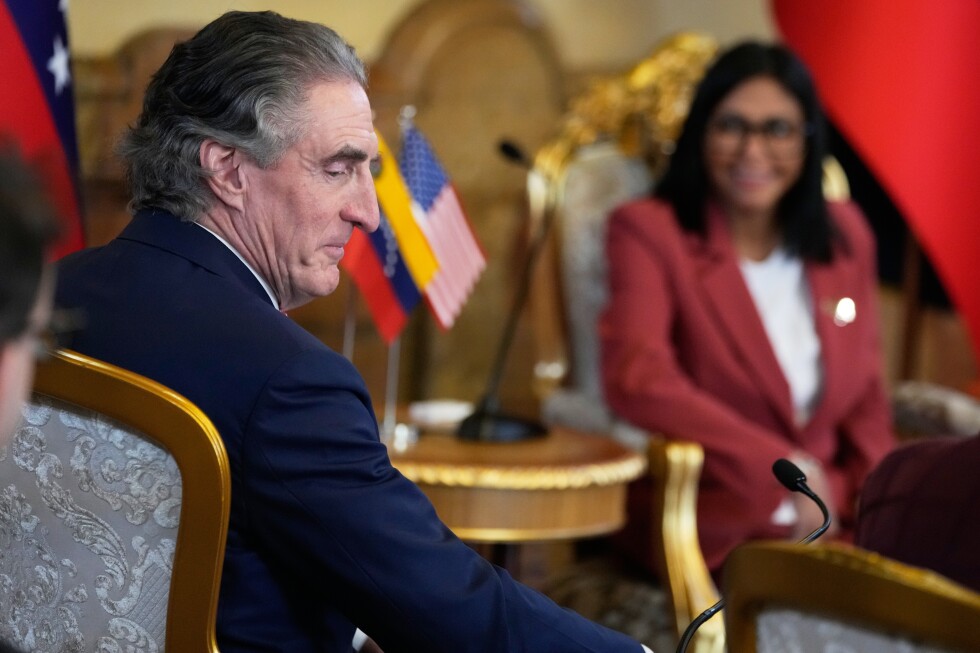
U.S. Secretary of the Interior Doug Burgum traveled to Caracas on Wednesday for high-level talks with Venezuela’s acting President Delcy Rodríguez, signaling the Trump administration’s growing interest in securing access to the South American nation’s vast mineral wealth.
The two-day visit centered around meetings with representatives from more than two dozen U.S. mining and minerals companies, many of which previously operated in Venezuela before political tensions severed business ties. Burgum, who leads President Donald Trump’s National Energy Dominance Council, framed the discussions as mutually beneficial.
“When we are working together it can only mean two things, which is prosperity for the people of Venezuela and for the citizens of the United States, and it also brings peace and stability for the world,” Burgum told reporters while standing alongside Rodríguez. He praised her efforts “to cut the red tape and allow capital investment to flow,” adding that the companies present “represent billions of dollars in investment and thousands of dollars in high-paying jobs.”
This visit follows a similar diplomatic mission in February when Energy Secretary Chris Wright traveled to Caracas to discuss Venezuela’s oil potential. Both trips reflect the administration’s strategic focus on Venezuela following the dramatic U.S. military operation that removed President Nicolás Maduro from power two months ago.
The timing of these overtures coincides with escalating trade tensions between the United States and China. The Trump administration has been working urgently to secure supplies of critical minerals necessary for electric vehicles, military equipment, and high-tech products after China restricted exports in retaliation for Trump’s tariff policies last year. While the two economic giants reached a partial truce regarding import taxes and rare earth restrictions, China’s export limitations remain tighter than before Trump took office.
Beyond its well-known oil reserves, Venezuela possesses significant deposits of gold, copper, coltan, bauxite, and diamonds. The country’s coltan mines yield niobium and tantalum, elements crucial for smartphones and electric vehicle batteries that the U.S. has designated as critical minerals. Venezuela’s bauxite reserves are also strategically important, as they can be processed into aluminum, another material on the U.S. critical minerals list.
During the meeting, Rodríguez announced plans to introduce legislation overhauling Venezuela’s mining laws, a move expected to facilitate foreign investment. “This will be a win for the social well-being of our people,” she said, adding, “May the Venezuelan people also see the good aspects of having good relations with the world and with the United States of America.”
The mining sector in Venezuela has historically been plagued by unsafe working conditions and poor regulation. Any new investment framework would need to address these longstanding issues to meet international standards.
Trump’s decision to work with Rodríguez, a loyal Maduro ally, following the January 3 ouster of the Venezuelan leader surprised many observers both within Venezuela and abroad. The president expressed his approval of the arrangement on his social media platform Truth Social, writing, “Delcy Rodríguez, who is the President of Venezuela, is doing a great job, and working with U.S. Representatives very well.”
The rapprochement carries a certain irony, as Maduro and his supporters had long claimed that U.S. hostility toward his government was motivated primarily by American interest in Venezuela’s natural resources. Now, with Rodríguez at the helm and U.S. officials making regular visits to discuss resource extraction, those assertions have gained new relevance.
Analysts note that while the potential economic benefits for both nations could be substantial, questions remain about environmental safeguards, labor standards, and the distribution of wealth from any new mining ventures. The developments also signal a significant shift in regional geopolitics, as the United States moves to counter Chinese influence in Latin America’s resource-rich nations.
Fact Checker
Verify the accuracy of this article using The Disinformation Commission analysis and real-time sources.

10 Comments
This visit seems to signal a pragmatic approach by the US, prioritizing access to critical minerals over ideological differences. If they can find common ground, it could benefit both countries economically.
Cooperation on mineral development could help Venezuela rebuild its economy, but the US will need assurances around transparency and equitable treatment of foreign investors.
The visit by the US Interior Secretary signals a potential thaw in relations between the two countries. If they can put aside their differences and collaborate on mineral development, it could be a win-win for both the US and Venezuela.
Mineral resources are increasingly important geopolitically. It will be interesting to see if this visit leads to any concrete agreements or just lays the groundwork for future negotiations.
With growing global demand for critical minerals, it makes sense for the US to explore opportunities in Venezuela. However, the political and economic challenges will require deft handling to ensure any deals benefit both sides.
Restoring business ties between US companies and Venezuela’s mineral sector could be a positive step, but trust and transparency will be key to making it work long-term.
Accessing Venezuela’s mineral wealth could be a strategic priority for the US, but the political baggage makes it a delicate negotiation. Both sides will need to compromise to find a mutually acceptable arrangement.
It’s a tricky balancing act – the US wants the minerals but also has to consider the impact on its geopolitical relationships. Careful diplomacy will be essential.
It’s interesting to see the US government engaging with Venezuela on critical mineral resources. While the political tensions have been high, there could be economic benefits for both countries if they can find common ground and work together effectively.
Securing access to key minerals like lithium and rare earths is crucial for the US to maintain its technological edge. Careful diplomacy will be needed to balance economic interests with political differences.