


Listen to the article
The U.S. is temporarily easing some sanctions on Russian oil shipments amid growing concerns over surging global crude prices triggered by supply disruptions from the Iran war. The 30-day reprieve, announced by Treasury Secretary Scott Bessent, allows deliveries of Russian oil loaded on tankers as of Thursday to proceed without violating U.S. sanctions rules.
The decision highlights how the Middle East conflict has inadvertently boosted Moscow’s ability to profit from energy exports, a critical revenue source for the Kremlin as it continues its invasion of Ukraine. Bessent characterized the move as a “narrowly tailored, short-term measure” designed to “promote stability in global energy markets” and “keep prices low.”
According to Bessent, the temporary exemption would not provide additional financial benefits to Russia, as the Kremlin has already collected taxes on the extracted oil. The broader sanctions against Russia’s two largest oil companies, Lukoil and Rosneft, remain firmly in place outside this limited exception.
Kremlin spokesman Dmitry Peskov welcomed the decision on Friday, noting it would help stabilize global energy markets, which he claimed was impossible without “significant volumes of Russian oil.” However, Ukrainian President Volodymyr Zelenskyy criticized the move, warning it “does not help peace” and could potentially channel approximately $10 billion to Russia’s war effort.
Despite the announcement, oil prices continued their upward trajectory. Brent crude briefly dipped before climbing above $100 to trade at $103.24 per barrel by Friday afternoon – significantly higher than the $72.87 price recorded on February 27, just before the outbreak of hostilities in the Middle East.
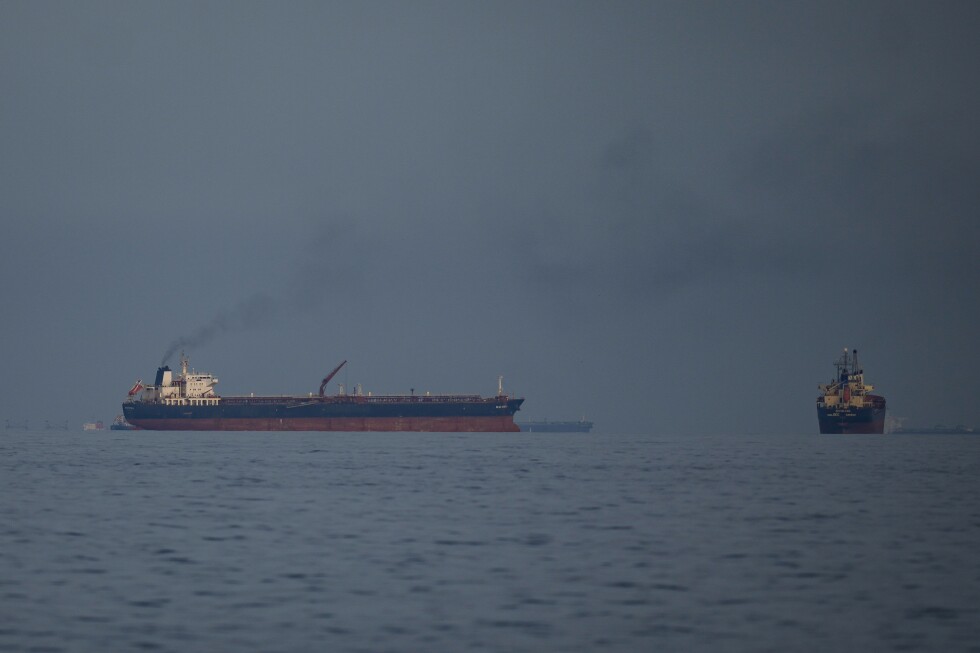
The conflict has severely restricted tanker movement through the Strait of Hormuz, a critical chokepoint through which approximately 20% of the world’s oil supply normally passes. This disruption has delivered a substantial shock to the global energy system and raised inflationary concerns worldwide.
“In the short term this slightly increases available supply on the global market, which helps contain the current spike in oil prices,” explained Simone Tagliapietra, an energy expert at the Bruegel think tank in Brussels. “The impact on prices should therefore be modestly downward, or at least stabilizing.”
Analysts estimate that approximately 125 million barrels of Russian oil are currently in transit – equivalent to five or six days of normal shipments through the Strait of Hormuz, or slightly more than one day of global consumption, which stands at roughly 101 million barrels per day.
The sanctions landscape for Russian oil has evolved considerably since Moscow’s full-scale invasion of Ukraine in 2022. The European Union, previously Russia’s largest customer, halted Russian oil imports, forcing the Kremlin to redirect shipments to China and India at discounted prices. This shift occurred amid efforts by Western allies to impose a price cap on Russian oil enforced through shipping and insurance companies.
Russia gradually circumvented these restrictions by assembling a “shadow fleet” of aging tankers with obscure ownership structures and insurance based in non-participating countries. As sanctions increasingly targeted individual vessels within this fleet, buyers in China and India demanded larger discounts to offset the risks associated with sanctions violations and payment complications.
By December, Russia’s Urals blend was trading below $40 per barrel – approximately $25 less than Brent crude – driving Kremlin oil revenues to their lowest levels since the invasion began. Oil and gas exports typically account for 20-30% of Russia’s federal budget.
The recent surge in global oil prices has improved Russia’s market position, with Russian crude now trading above $80 per barrel. According to the Centre for Research on Energy and Clean Air, Russia’s daily revenue from oil sales during the Iran conflict has averaged 14% higher than in February, generating approximately 510 million euros ($588 million) daily from oil and liquefied natural gas exports.
Nevertheless, Russian oil continues to trade at a significant discount compared to international benchmark prices due to sanctions. While the latest U.S. measure “likely narrows the Urals discount somewhat” by reducing sanctions risk, according to Tagliapietra, its limited scope “does not fundamentally change the structure of longer-term Russian oil flows or sanctions pressure.”
Former Russian Central Bank official Sergei Aleksashenko downplayed the economic impact, suggesting the oil “was going to find buyers anyway” given the disruptions in the Strait of Hormuz. He characterized the move as primarily political, noting that with rising U.S. gasoline prices, “the president should say something, that ‘I’m dealing with the problem.'”
The decision has faced criticism from U.S. allies. German Chancellor Friedrich Merz revealed that during recent G7 discussions, “six members expressed a very clear view that this is not the right signal to send.”
Fact Checker
Verify the accuracy of this article using The Disinformation Commission analysis and real-time sources.

9 Comments
Interesting move by the US to ease some sanctions on Russian oil. While it may help stabilize global energy markets in the short term, broader sanctions on major Russian oil firms remain in place. Curious to see how this plays out and impacts crude prices going forward.
Yes, it’s a delicate balance between supporting global energy stability and maintaining pressure on Russia. The administration likely weighed the potential tradeoffs carefully.
While I understand the administration’s rationale for this move, I can’t help but feel uneasy about it. Easing sanctions, even temporarily, on Russian oil exports risks sending the wrong signal and could undermine the broader economic pressure on Russia. I hope the administration is carefully weighing all the potential consequences.
This underscores the complex geopolitical dynamics at play in the global energy landscape. Easing sanctions, even temporarily, on Russian oil could be seen as a pragmatic move to mitigate price spikes, but it also risks complicating the broader sanctions regime against Russia.
Absolutely. The administration is likely trying to find the right balance between energy security and economic pressure on Russia. It will be interesting to see how this evolves in the coming weeks and months.
This is a delicate and complex issue. On one hand, the administration is trying to mitigate the impacts of supply disruptions and price spikes. On the other, any easing of sanctions on Russia could be seen as weakening the broader pressure campaign. It will be important to monitor this closely.
Agreed. This is a difficult balancing act, and the administration will need to be very strategic in how it navigates these tradeoffs. The geopolitical implications could be significant.
While I appreciate the administration’s efforts to promote stability in global energy markets, I’m somewhat skeptical of this move to ease Russian oil sanctions, even if temporary. It feels like a slippery slope that could undermine the broader sanctions regime against Russia.
I share your concerns. Maintaining a united front and consistent pressure on Russia is crucial, even if it means weathering some short-term disruptions in energy markets.