


Listen to the article
The Trump administration announced Thursday it has relaxed sanctions on several Belarus-linked financial institutions and potash companies, marking a significant shift in U.S. policy toward the Eastern European nation led by autocratic President Alexander Lukashenko.
The Treasury Department’s Office of Foreign Assets Control issued a general license allowing certain transactions with Belarusian entities that were previously banned from doing business with American companies. Among those removed from sanctions lists are the Belarussian Bank of Development and Reconstruction, Belinvest-Engineering, and major fertilizer producers including Belaruskali, Belarusian Potash Company, and Agrorozkvit.
In a statement, U.S. officials indicated they had determined “that circumstances no longer warrant the prohibitions.” However, the action does not unfreeze assets tied to these companies, and broader sanctions against Belarus remain in effect.
The move comes as the U.S. grapples with fertilizer shortages due to the ongoing conflict with Iran. The war has severely disrupted the export of nitrogen fertilizers from the Persian Gulf region and limited American farmers’ access to essential fertilizer ingredients. As a result, fertilizer prices have skyrocketed, with some U.S. farmers unable to secure supplies at any price.
During a Cabinet meeting Thursday, President Donald Trump addressed these concerns, saying he plans to implement a “variety” of policies “to support American farmers” as his administration continues military operations in the Middle East. The easing of sanctions on Belarusian potash producers appears to be part of this strategy, as Belarus is one of the world’s largest producers of potash, a critical component in fertilizer production.
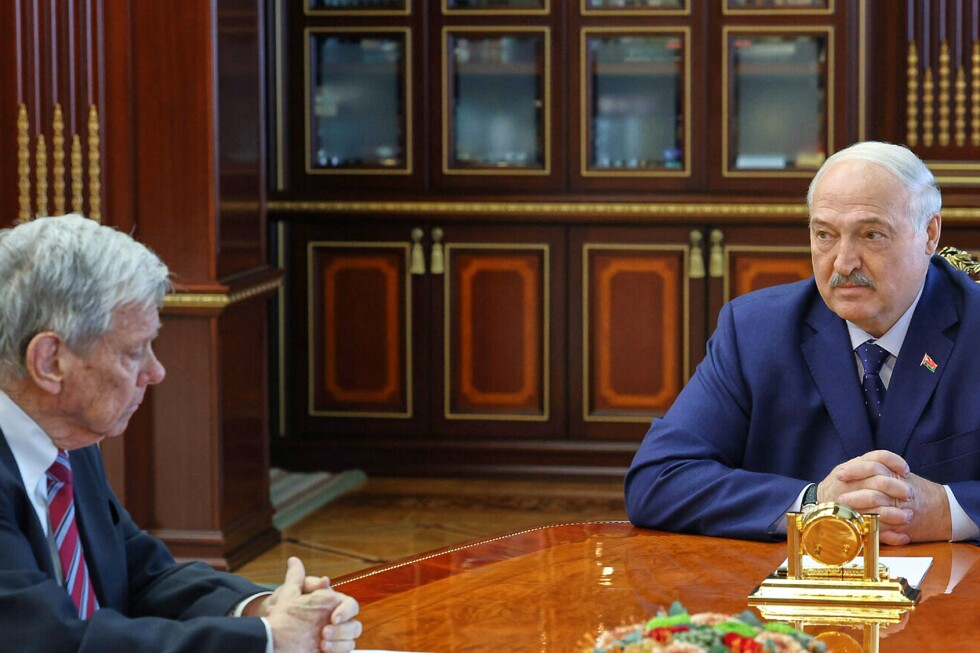
The decision follows diplomatic progress between Washington and Minsk. Earlier this month, Lukashenko met with Trump’s special envoy for Belarus, John Coale, in the Belarusian capital. As part of negotiations with the United States, Lukashenko ordered the release of 250 political prisoners—a significant concession from a leader often criticized for human rights abuses and authoritarian governance.
After the meeting in Minsk, Coale told reporters that the U.S. would lift sanctions on two Belarusian state banks and the Finance Ministry, as well as remove major Belarusian potash producers from the sanctions list—promises that Thursday’s announcement has now fulfilled.
The sanctions relief represents a dramatic shift in U.S.-Belarus relations. For years, Washington maintained a hardline stance toward Lukashenko’s government, which has ruled Belarus since 1994 and has been widely condemned for suppressing political opposition, curtailing press freedoms, and conducting elections that international observers have deemed neither free nor fair.
The timing of this policy change is significant not only for its potential impact on U.S. agriculture but also for its geopolitical implications. Belarus has traditionally maintained close ties with Russia, and any U.S. outreach to Minsk could potentially influence the complex relationships between these nations.
Market analysts suggest the relaxed sanctions could help alleviate some pressure on global fertilizer markets, which have seen unprecedented volatility since the beginning of the Iran conflict. The Belarusian potash industry accounts for approximately 20% of global production, making it a crucial supplier in international markets.
For American farmers preparing for the next growing season, increased access to Belarusian potash could provide some relief from spiraling input costs that have squeezed agricultural profits and threatened food production capacity.
While the easing of these specific sanctions signals improving bilateral relations, the broader framework of U.S. sanctions against Belarus remains intact, suggesting that Washington is taking a measured approach to diplomatic reengagement with Lukashenko’s government.
Fact Checker
Verify the accuracy of this article using The Disinformation Commission analysis and real-time sources.

11 Comments
The fertilizer shortage from the war’s disruption of exports is a serious challenge for US farmers. Easing some Belarus sanctions to boost supply seems pragmatic, though the broader policy implications bear watching.
I’m a bit skeptical of relaxing sanctions on Belarus, even if it helps with fertilizer supply. Lukashenko’s authoritarian regime remains a concern, and we should be cautious about strengthening ties.
That’s a fair point. Prioritizing near-term agricultural needs can’t come at the expense of long-term geopolitical risks and human rights issues.
This is a complex issue balancing near-term needs and longer-term geopolitical concerns. I’m curious to see how the Biden administration navigates the tradeoffs and the reaction from Congress and allies.
Kudos to the administration for trying to address the fertilizer crunch, but I share concerns about the human rights record of the Lukashenko regime. Careful diplomacy will be key as this situation evolves.
Agreed. Addressing urgent agricultural needs can’t come at the cost of compromising democratic values and principles.
Balancing economic needs and geopolitical risks is never easy. I hope the administration can find a measured approach that supports American agriculture while maintaining principled opposition to Lukashenko’s authoritarian rule.
Well said. It’s a tricky needle to thread, but getting the balance right is critical.
The fertilizer supply challenges from the war are undoubtedly creating difficulties for US farmers. While easing some Belarus sanctions may provide relief, we’ll need to closely monitor the broader implications.
Interesting move to ease Belarus sanctions as the US struggles with fertilizer shortages due to the war. Curious to see how this impacts local farmers and the broader geopolitical landscape.
The fertilizer access challenges from the conflict must be weighing heavily on US agricultural producers. Hopefully this provides some relief, though broader sanctions remain in place.