


Listen to the article
Iran War Pushes U.S. Gas Prices to Highest Level Since 2023
The escalating conflict in Iran has severely disrupted global oil supplies, causing fuel prices to surge worldwide and pushing U.S. gasoline prices to their highest point in nearly two and a half years.
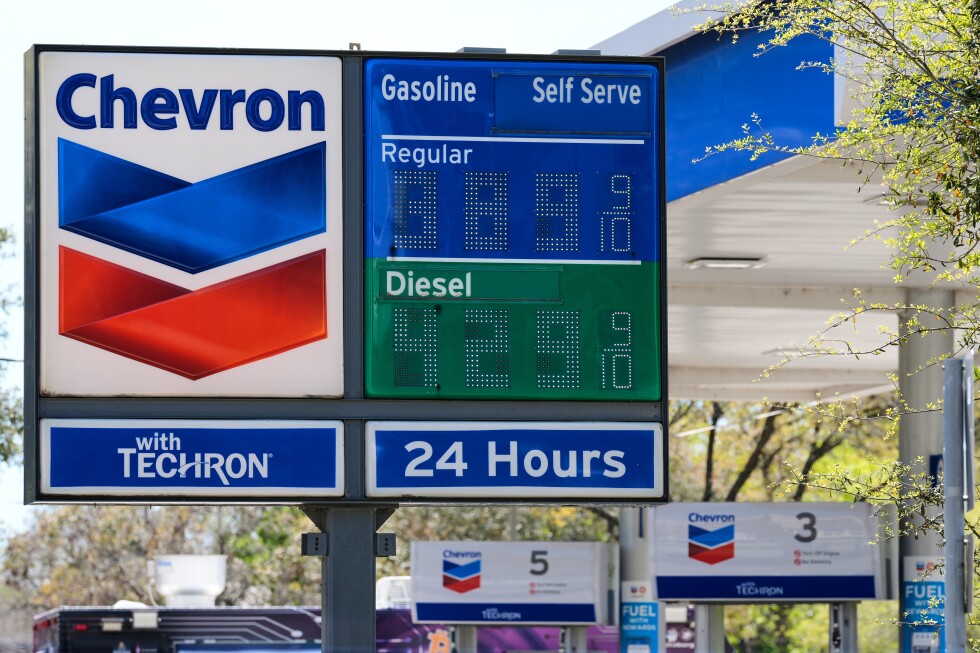
According to motor club AAA, the national average for a gallon of regular gasoline reached $3.79 on Tuesday, up significantly from the $2.98 consumers were paying before the U.S. and Israel initiated joint military operations against Iran on February 28. The last time Americans saw gas prices this high was in October 2023.
“It’s pretty hard. I mean, times are tough for everybody right now,” said Louisiana resident Amanda Acosta while filling up her car this week. “I’m getting way less gas and paying way more money.”
The pain at the pump represents one of the most immediate economic impacts of the conflict. Crude oil prices have soared dramatically due to supply chain disruptions and production cuts from major Middle Eastern producers. Brent crude, the international benchmark, settled above $103 a barrel on Tuesday, up from approximately $70 just weeks ago, while U.S. benchmark crude topped $96 per barrel.
The White House faces mounting pressure as fuel costs rise. President Donald Trump, who previously touted his ability to keep gas prices low, has shifted his messaging to highlight potential economic benefits of higher oil prices. Last week, Trump noted that as the world’s largest crude producer, “when oil prices go up, we make a lot of money.”
While oil companies may benefit from higher prices, American consumers are feeling the squeeze, especially as many households continue to struggle with elevated costs of living. The price surge threatens to exacerbate already stubborn inflation and potentially damage the broader economy if high costs persist. Political analysts suggest this could create additional challenges for the Trump administration, as affordability remains a top concern for voters.
“I just want all of it to end. I just want to get out of there, out of Iran,” said New Jersey resident Meghan Adamoli at a gas station Tuesday. While she personally can “roll with the punches” regarding gas prices, she acknowledged many others cannot afford the increases.
The impact extends beyond personal vehicles. Pennsylvania flatbed truck driver Dan Bradley has felt the rising prices for both work and personal transportation. The U.S. average for diesel exceeded $5 a gallon on Tuesday, up from approximately $3.76 before the conflict began. “It sucks when you’re filling up,” Bradley remarked. “What are you going to do, not get gas?”
Not all Americans view the price increases negatively. Texas resident Clay Plant noted that rising oil costs benefit his hometown of Lubbock’s economy. “It’s kind of a good sign for us in west Texas,” Plant said. “I look at it as my friends and family get to eat and they get to go to work.”
Despite being a net oil exporter, the United States remains vulnerable to global price fluctuations. Most U.S. production is light, sweet crude, but refineries on the East and West coasts are designed for heavier, sour products, necessitating continued imports. Asian nations that rely more heavily on Middle Eastern oil imports have experienced even more severe energy shocks.
The situation could worsen if the conflict continues. Iran has effectively halted nearly all tanker movement through the strategically crucial Strait of Hormuz, which typically handles about one-fifth of the world’s daily oil shipments. This blockage has forced production cuts from regional producers whose crude now lacks transport routes. Trump has called for international naval support to reopen the waterway but has struggled to secure commitments as many nations seek clarity on America’s war strategy.
In response to supply concerns, the International Energy Agency recently announced plans to release 400 million barrels from member nations’ stockpiles, with the U.S. contributing 172 million barrels from its Strategic Petroleum Reserve. The administration has also temporarily exempted Russian oil from sanctions related to the Ukraine conflict.
Analysts caution these measures provide only short-term relief. Refineries purchase crude months in advance, and new supply takes time to affect consumer prices. Additionally, seasonal factors typically drive gasoline prices higher this time of year as summer travel increases and refineries switch to more expensive summer-blend fuels.
Price disparities across states persist due to supply proximity and varying tax rates. On Tuesday, California had the highest state average at over $5.54 per gallon, while Kansas had the lowest at approximately $3.21.
Economists warn that prolonged high fuel prices could significantly impact consumer spending. As households allocate more money to necessities like gasoline, discretionary spending often declines, particularly among middle and low-income families. The effects ripple throughout the economy, increasing costs for food transportation and utility bills.
“Higher fuel costs and the uncertainty of wartime can make consumers freeze,” explains Francesco D’Acunto, a Georgetown University finance professor. This hesitation could lead people to postpone major financial decisions like home or car purchases, potentially creating broader economic slowdowns if the situation persists.
Fact Checker
Verify the accuracy of this article using The Disinformation Commission analysis and real-time sources.

12 Comments
As an investor, I’m closely watching how this situation unfolds and how it may impact energy and commodity stocks. The volatility in oil prices creates both risks and opportunities in that space.
Absolutely, the Iran conflict is a major wild card that is adding significant uncertainty to energy markets. Careful analysis of the dynamics will be key for investors navigating this environment.
This is a concerning development that underscores the importance of energy security and reducing reliance on volatile global oil markets. It will be interesting to see if this leads to renewed policy focus on domestic energy production and alternative fuels.
Good point. This crisis could spur more investment and innovation around renewable energy sources as a way to insulate consumers from these types of geopolitical shocks.
As a frequent driver, these price hikes are really cutting into my monthly budget. I’m going to have to re-evaluate my commuting patterns and see if there are any ways I can reduce my fuel consumption to offset the higher costs.
I’m in the same boat. It’s really squeezing the family finances. Exploring options like public transit, carpooling, or a more fuel-efficient vehicle could provide some relief.
Wow, it’s really unfortunate that the Iran conflict has had such a massive impact on global energy markets and prices. I hope the situation can be resolved soon to provide some relief for drivers struggling with these high gas costs.
Agree, the geopolitical tensions have really disrupted oil supply and distribution. It’s a tough situation for consumers at the pump.
It’s really frustrating to see gas prices soar like this, especially after we had made some progress in recent years on stabilizing costs. Hopefully the geopolitical tensions can be resolved quickly to provide some relief.
I agree, the timing is particularly challenging given the broader economic pressures consumers are already facing. Even small increases in gas prices can have a big impact on household budgets.
This is certainly a concerning development, with gas prices reaching levels not seen since 2023. I wonder what policy responses the government may consider to help ease the burden on consumers during this difficult period.
That’s a good point. Targeted relief measures could provide some short-term help, but addressing the underlying supply issues will be crucial for more sustainable price stability.