


Listen to the article
The U.S. government announced Thursday an additional $6 million in humanitarian aid for Cuba as the island nation faces deepening economic and energy crises. This brings total U.S. disaster relief to $9 million, with the previous $3 million allocated following Hurricane Melissa’s devastating impact on eastern Cuba late last year.
The new aid package includes essential food supplies such as rice, beans, pasta, canned tuna, and solar lamps, which will be distributed by the Catholic Church and Caritas. U.S. Department of State Senior Official Jeremy Lewin emphasized that embassy officials would monitor the distribution process to prevent Cuban authorities from diverting or politicizing the assistance.
“We’ll be making sure that the regime does not take the assistance, divert it, try to politicize it,” Lewin said during the announcement.
The aid comes amid escalating tensions between Washington and Havana. Cuban President Miguel Díaz-Canel held a rare, invitation-only press conference where he accused the United States of waging an “energy blockade” against Cuba. The Cuban leader pointed specifically to recent threats by U.S. President Donald Trump to impose tariffs on any country selling or providing oil to Cuba.
Díaz-Canel described the situation as a “psychological war” against his country, claiming that U.S. actions have severely impacted transportation, healthcare, education, tourism, and food production. He noted that Cuba has not received oil shipments since December when the U.S. began what he termed a “naval blockade” on Venezuela, historically one of Cuba’s primary oil suppliers.
“I know we are going to live through difficult times. But we will overcome them together, with creative resilience,” Díaz-Canel said during his two-hour appearance, where he took questions from a select group of reporters. The Associated Press was not among those invited.
Cuban officials claim that intensified U.S. sanctions, which were expanded during Trump’s second term, have cost the island more than $7.5 billion between March 2024 and February 2025. The resulting fuel shortage has led to widespread blackouts and economic hardship across the country.
Lewin rejected the Cuban government’s narrative, arguing that the humanitarian situation stems from internal mismanagement rather than U.S. policy. He accused Cuban leadership of hoarding resources for the political elite and security apparatus while neglecting the needs of ordinary citizens.
“Why can’t they get food? It’s not because we’re not letting illicit Venezuelan oil continue to make Raúl Castro rich,” Lewin said, referring to the former Cuban president. “It’s because the government can’t put food on the shelves. They have billions of dollars, but they don’t use it to buy food for ordinary Cubans.”
Lewin, who noted his own Cuban heritage through his mother who was born in Havana, also accused the Cuban government of “meddling abroad” and “colonizing Venezuela,” suggesting that Cuba’s international activities have diverted resources away from domestic needs.
Despite the sharp rhetoric from both sides, Díaz-Canel indicated a potential opening for dialogue with the United States, though with conditions. He said Cuba would be open to talks “without addressing sensitive issues that could be perceived as interference in our internal affairs” and with respect for Cuba’s sovereignty.
“Cubans do not hate the American people,” Díaz-Canel stated. “We are not a threat to the United States.”
Lewin hinted that additional U.S. support might be forthcoming if Cuba demonstrates willingness to cooperate. “If the Cuban government comes to its senses and is willing to allow the U.S. to provide more support, there might be more announcements,” he said.
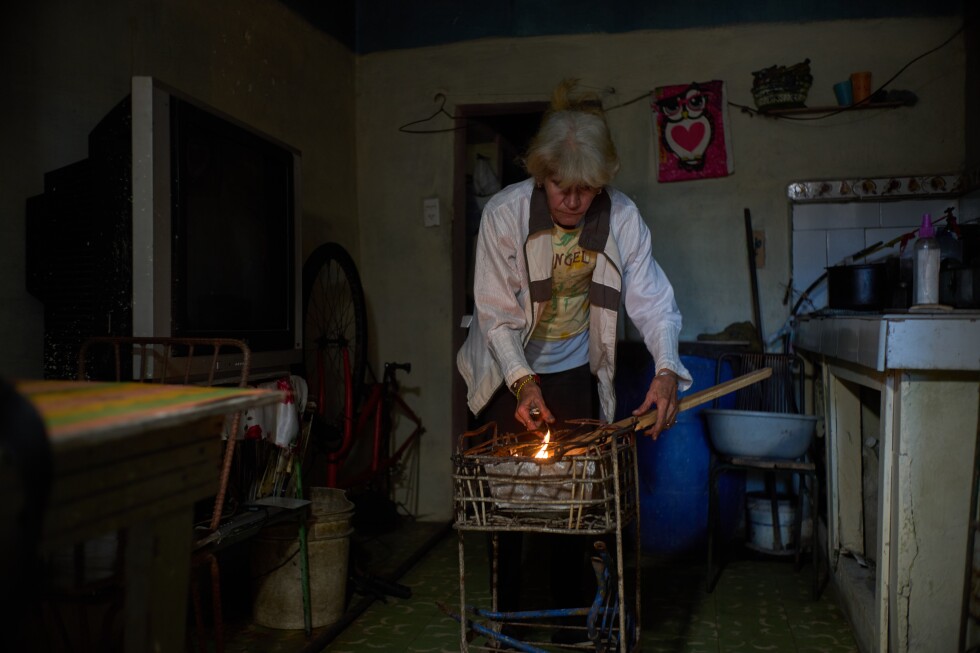
The humanitarian situation in Cuba remains precarious, with Díaz-Canel promising to share more details about the country’s current circumstances and government response plans within a week. Meanwhile, ordinary Cubans continue to face severe shortages of basic necessities, including food, medicine, and reliable electricity.
Fact Checker
Verify the accuracy of this article using The Disinformation Commission analysis and real-time sources.

19 Comments
The provision of US aid to Cuba is a positive step, but the accusations from the Cuban leader are concerning. Ensuring the assistance reaches those in need, not the regime, should be the top priority to avoid it being politicized.
The energy crisis in Cuba is a complex issue with both domestic and geopolitical factors at play. Providing humanitarian aid is the right thing to do, but it’s understandable the US wants to ensure it’s not misused.
You make a fair point. Cuba’s economic troubles are long-standing, and the US-Cuba relationship has been strained for decades. Disentangling the causes won’t be easy.
While the US-Cuba relationship is fraught, providing humanitarian aid is the right thing to do. Ensuring it reaches those in need without being politicized by the regime should be the top priority.
While the US-Cuba relationship is strained, providing humanitarian aid is the right thing to do. Transparent distribution of the aid is crucial to address the real needs of the Cuban people, not the regime’s interests.
It’s good to see the US providing aid, but the accusations from Cuba’s leader are concerning. Ensuring the assistance reaches those in need, not the regime, should be a top priority.
Absolutely. The US has to balance providing humanitarian support with preventing the Cuban government from exploiting it for political gain.
It’s good to see the US providing aid to Cuba, but the accusations from the Cuban leader are concerning. Ensuring the assistance reaches those in need, not the regime, should be the focus.
While the aid is welcomed, the accusations of an ‘energy blockade’ seem to be an attempt to shift blame away from Cuba’s own economic mismanagement. It will be important to ensure the aid reaches those in need without being diverted or politicized.
Agreed. The US has legitimate concerns about the Cuban regime diverting aid for political purposes. Transparency in the distribution process is crucial.
The energy crisis in Cuba is a complex issue, and the accusations of an ‘energy blockade’ seem like an attempt to shift blame. Transparency in the aid distribution process is critical to avoid it being misused.
While the energy crisis in Cuba is a serious issue, the accusations of an ‘energy blockade’ seem more like political posturing than a genuine attempt to address the problem. Transparent aid distribution is crucial.
The energy crisis in Cuba is a serious issue, but the accusations of an ‘energy blockade’ seem more like political posturing than a genuine attempt to address the problem. Ensuring the aid is distributed fairly and transparently should be the priority.
The energy crisis in Cuba is a complex issue with both domestic and geopolitical factors at play. Providing humanitarian aid is the right thing to do, but transparency in the distribution process is critical.
It’s good to see the US providing aid to Cuba, but the accusations from the Cuban leader raise concerns about potential misuse of the assistance. Ensuring it reaches those in need, not the regime, should be the focus.
The US-Cuba relationship has been strained for decades, and the energy crisis in Cuba is a multifaceted problem. Providing humanitarian aid is the right step, but it must be distributed fairly and transparently.
The provision of US aid to Cuba is a positive step, but the accusations from the Cuban leader are concerning. Ensuring the assistance reaches those in need, not the regime, should be the top priority.
The energy crisis in Cuba is a serious issue, but placing blame on the US seems like political posturing. Transparent distribution of the aid is crucial to help those in need, not the regime.
I agree. The Cuban government’s tendency to deflect responsibility for its own failures is concerning. The aid should be distributed impartially to address the real needs of the Cuban people.