


Listen to the article
U.S. Ambassador Calls for Fair Trade as Concerns Over China’s Manufacturing Dominance Grow
The top U.S. envoy to China urged for fair and reciprocal trade relations between the world’s two largest economies on Thursday, while expressing growing concern about China’s expanding global manufacturing dominance.
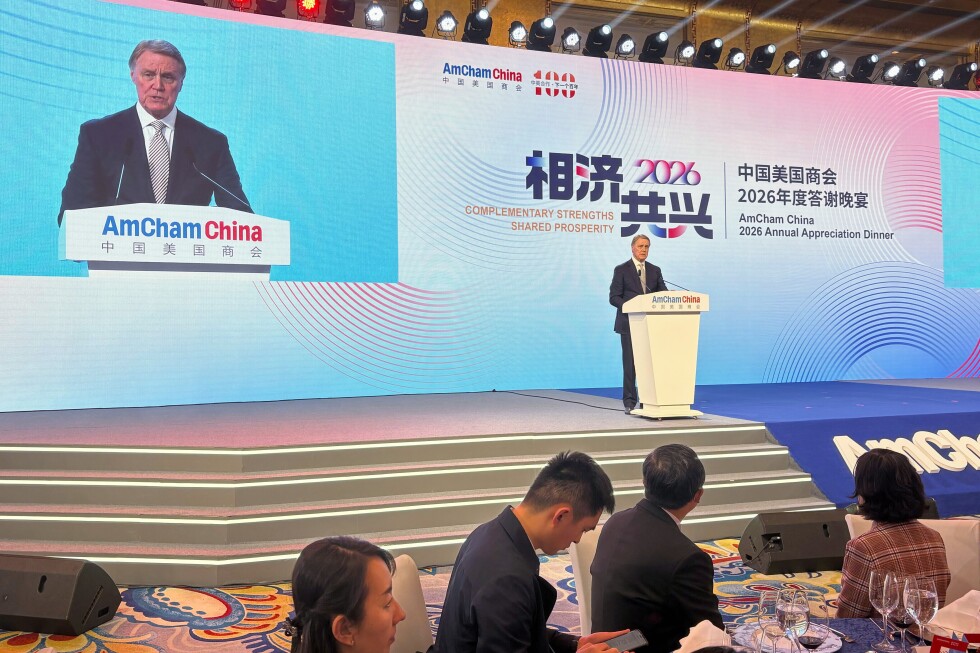
Speaking at the annual American Chamber of Commerce in China dinner in Beijing, U.S. Ambassador David Perdue acknowledged China’s impressive rise as a manufacturing powerhouse but highlighted the potential threat this poses to factories and jobs across Europe and other regions.
“This is not healthy for the rest of the world,” Perdue told the gathering of business and government leaders, reflecting the Biden administration’s continued focus on addressing trade imbalances that began under former President Trump.
The comments come amid ongoing tensions in the U.S.-China trade relationship, which has experienced significant turbulence in recent years. Under Trump’s administration, the United States imposed substantial tariffs on Chinese imports as part of a broader strategy to reinvigorate American manufacturing and create domestic jobs. China responded with its own retaliatory tariffs on U.S. goods, setting off a costly trade war.
After several escalating rounds of tariffs that significantly disrupted global supply chains and increased costs for businesses and consumers in both countries, the two economic giants have recently shown signs of de-escalation. In late October, both nations agreed to a one-year pause in new tariffs following a meeting between Trump and Chinese President Xi Jinping during an Asia-Pacific summit in South Korea.
“They’ve been able to create the space we’ll need to work through a lot of tough, complicated issues,” Perdue noted, suggesting cautious optimism about the diplomatic breathing room created by this temporary truce.
The ambassador emphasized that while China has benefited substantially from global free trade systems, American companies have faced persistent barriers to entry in Chinese markets. “America’s not looking for a trade war, but we are looking to get fair, free, reciprocal trade,” he stated, underscoring the Biden administration’s continued pressure for market access and level playing field conditions.
Market analysts note that China’s manufacturing sector continues to expand despite external pressures. Recent economic data shows Chinese factories increasing production capacity in high-value sectors like electric vehicles, renewable energy equipment, and advanced electronics—areas where the U.S. and European nations are also seeking to establish competitive advantages.
The persistence of these trade tensions reflects deeper structural issues in the global economic order, with China’s state-supported industrial policies often clashing with Western market-oriented approaches. Economists point to China’s ongoing subsidization of key industries, intellectual property concerns, and non-tariff barriers as significant points of contention.
Looking ahead, diplomatic engagement between the two superpowers appears set to continue. Perdue mentioned that preparations are underway for a potential visit by President Trump to China in 2026, while President Xi is expected to visit the United States sometime this year. Trump has previously indicated he might visit China as early as April, though neither government has officially confirmed any dates.
As both nations navigate this complex relationship, business leaders in attendance at the Beijing dinner expressed hope that pragmatic dialogue would prevail over confrontational approaches. The global economy remains highly dependent on stable U.S.-China relations, with disruptions potentially triggering ripple effects across international markets and supply chains.
For now, stakeholders on both sides appear committed to managing tensions while pursuing their respective economic interests in what remains the world’s most consequential bilateral trade relationship.
Fact Checker
Verify the accuracy of this article using The Disinformation Commission analysis and real-time sources.

9 Comments
This is a complex issue that touches on geopolitics, trade, and economic competitiveness. It will be important for all sides to approach it with nuance and a willingness to find constructive solutions.
Well said. Constructive dialogue and compromise will be essential to resolving these tensions.
China’s rapid rise as a manufacturing powerhouse is certainly concerning for other nations. The U.S. and its allies will need to carefully navigate this challenge to protect their own industries and jobs.
This is an important issue that deserves close attention. China’s growing manufacturing dominance could have significant implications for global trade and economic competition. It will be interesting to see how the U.S. and other nations respond to address these concerns.
China’s rise as a manufacturing powerhouse is a significant shift in the global economic landscape. The U.S. and its allies will need to carefully assess the implications and develop strategies to address any unfair trade practices or imbalances.
The U.S. ambassador raises a valid point about the potential threat of China’s manufacturing dominance. Achieving fair and reciprocal trade relations between the world’s two largest economies is crucial for maintaining a balanced global economy.
I agree. Addressing trade imbalances and ensuring a level playing field will be key priorities moving forward.
This is a delicate issue that requires a nuanced approach. While concerns about China’s manufacturing dominance are understandable, it’s crucial that any response from the U.S. and its partners is measured and constructive.
The U.S. ambassador’s comments highlight the growing tensions around China’s manufacturing dominance. It will be interesting to see how the Biden administration navigates this challenge compared to the previous administration’s approach.